Fitness, Nutrition, Health and Sports Blog In the HSNstore Blog you will find tips about Fitness, sport in general, nutrition, and health – HSNstore.com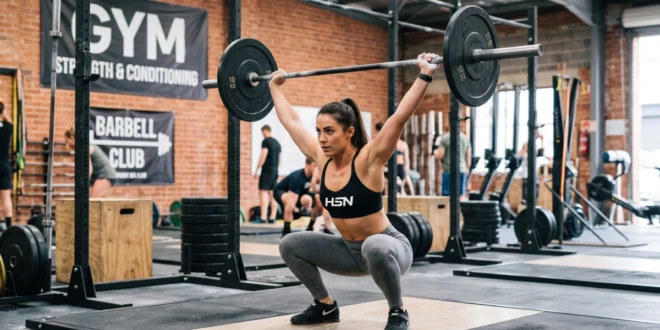

The overhead squat is commonly associated with Olympic weightlifting and experienced athletes. And understandably so: holding a load overhead while performing a deep squat requires mobility, stability, and coordination.
However, it is not an exercise exclusively for weightlifters. With the right progressions, it can also be used to work on body control, improve squat mechanics, and develop strength and stability throughout the entire body.
How to Perform the Overhead Squat Correctly
To perform an overhead squat with a barbell:
- Place your feet approximately at the width you would use for a conventional squat.
- Grip the bar with a wide grip and bring it overhead.
- Keep your elbows extended and create a stable position through your shoulders and shoulder blades.
- Brace your core and keep the load balanced over your base of support.
- Begin the descent by bending your hips and knees simultaneously.
- Descend as far as you can while maintaining control of the bar position and trunk stability.
- Keep your feet fully planted throughout the movement.
- Push into the floor to extend your knees and hips and return to the starting position.
The bar should remain stable over your base of support throughout the entire movement, avoiding excessive forward or backward displacement.
What Muscles Does the Overhead Squat Work?
Although it may appear to be primarily a leg exercise, the overhead squat requires the involvement of virtually the entire body. The main muscles involved include:
- Quadriceps: particularly involved in knee extension during the ascent.
- Gluteus maximus: contributes to hip extension.
- Adductors: assist with hip control and extension during the squat.
- Spinal erectors and core muscles: stabilise the trunk throughout the movement.
- Deltoids, trapezius, and scapular stabilisers: help keep the load stable overhead.
- Rotator cuff: contributes to stabilising the shoulder joint.
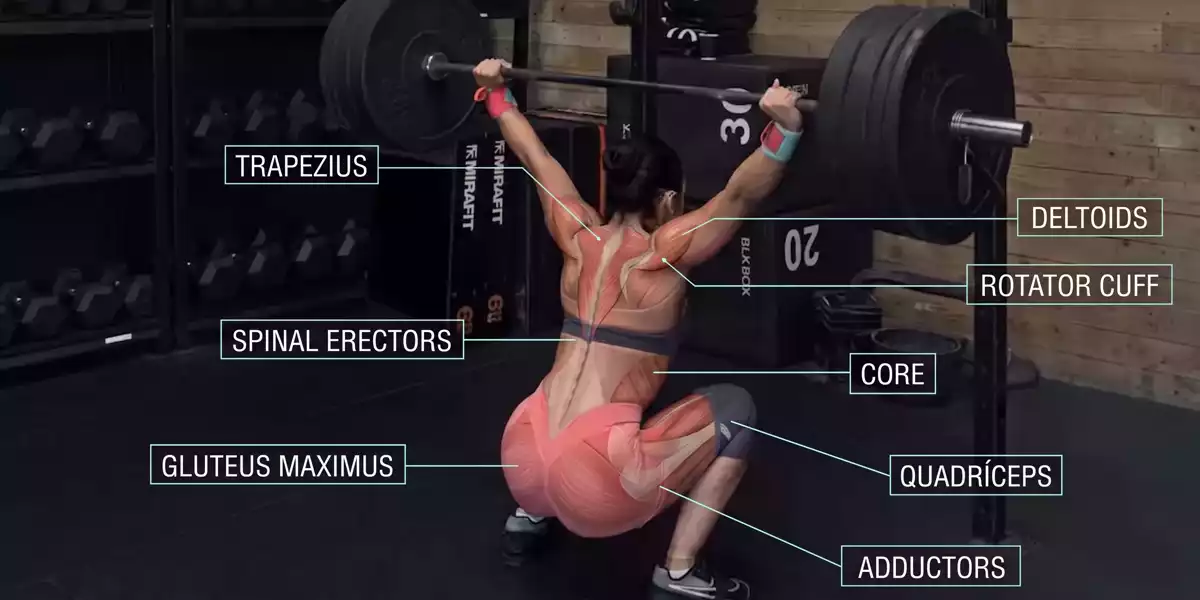
Therefore, rather than being an exercise designed to isolate a specific muscle group, it can be considered a full-body movement for strength, stability, and body control.
Why Is the Overhead Squat So Demanding?
The difficulty of the overhead squat does not depend solely on leg strength. Performing it requires different joints and muscle groups to work together in a coordinated manner.
Shoulder and thoracic spine mobility
You need sufficient mobility to keep your arms overhead and the load stable above your head without relying on excessive compensatory movements.
- Thoracic mobility is also important for maintaining a stable trunk position while the arms remain overhead.
Ankle and hip mobility
Adequate ankle dorsiflexion allows the knees to move forwards during the descent while the foot remains planted. The hips, meanwhile, need sufficient mobility to reach the required depth while maintaining a stable position.
Core stability
The trunk muscles must generate tension to maintain a stable relationship between the pelvis, spine, and rib cage while the load remains overhead.
- It is not simply a matter of preventing the bar from “pulling you forwards”, but of continuously controlling the centre of mass of the system formed by your body and the load.
Shoulder and scapular stability
Holding a bar overhead requires active involvement of the muscles that stabilise the shoulder joint and shoulder girdle.
Coordination and motor control
The ankles, knees, hips, trunk, shoulder blades, and shoulders must all work simultaneously.
- This combination of mobility, stability, and coordination is precisely what makes the overhead squat demanding even when using very light loads.
Is the Overhead Squat Only for Weightlifters?
Not necessarily. Its usefulness will largely depend on the person’s goals and experience level.
As a technical exercise for Olympic weightlifting
If you practise the snatch or want to learn Olympic lifts, mastering the overhead squat position is particularly important. It allows you to work on the deep receiving position of the bar and develop the stability required to keep it overhead.
As a mobility and control exercise
It can also be performed with very light loads to work on mobility and body control in an integrated way.
In addition, observing how the movement is performed can help identify whether there is a limitation within the movement pattern: difficulty reaching depth, loss of arm stability, heels lifting off the floor, or trunk compensations.
However, an important distinction should be made: the overhead squat can reveal that a limitation exists, but it does not automatically determine its cause.
For example, excessive forward trunk lean could be related to ankle mobility, hip mobility, motor control, body proportions, or a combination of several factors. More specific assessments are required to identify the exact cause.
When Is It Worth Including the Overhead Squat?
The overhead squat may be useful if:
- You practise Olympic weightlifting or are learning Olympic lifts.
- You want to develop stability with loads held overhead.
- You want to work on mobility and body control in an integrated way.
- You already have a good squat foundation and want to incorporate more technically complex movements.
On the other hand, a simpler progression may be preferable if you cannot yet comfortably perform a bodyweight squat, have significant difficulty keeping your arms overhead, or experience pain during the movement.
How to Start Doing the Overhead Squat
You do not need to start with a loaded barbell. In fact, learning the position first with little or no load is usually the most practical approach.
A simple progression could be:
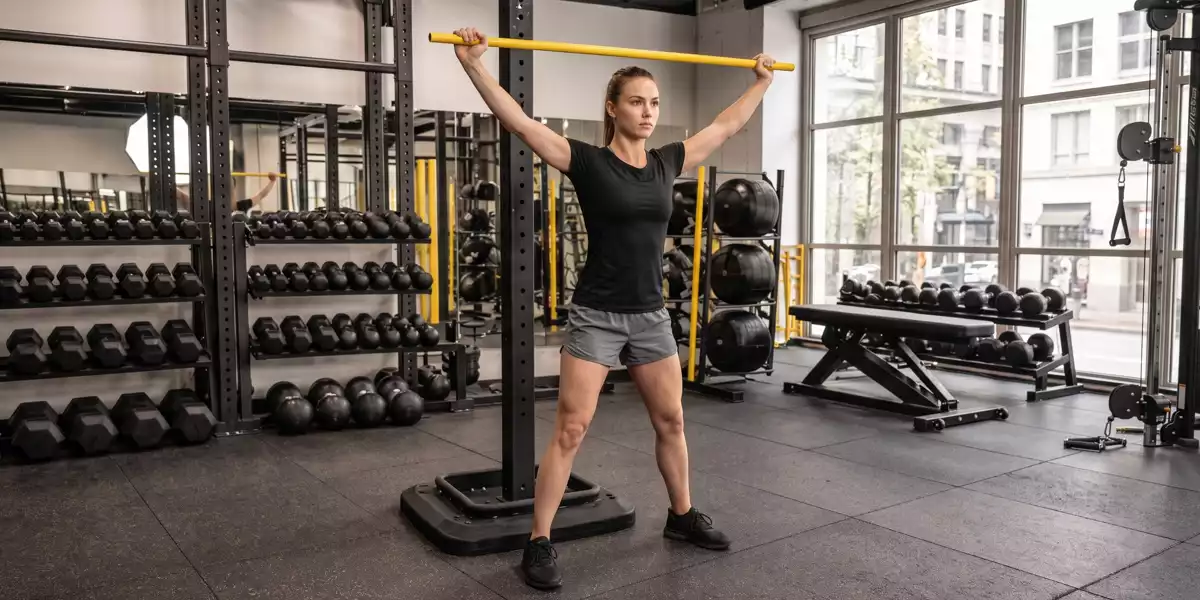
1. Overhead squat with PVC
- Use a stick or PVC pipe and focus on keeping your arms extended, your feet planted, and the movement path stable.
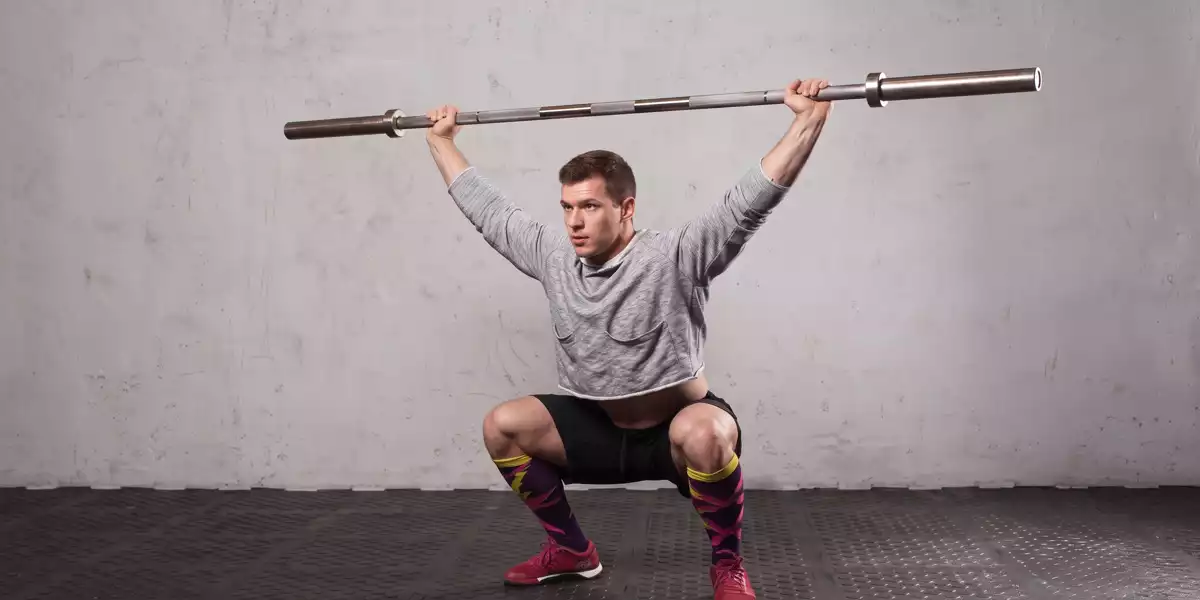
2. Overhead squat with an empty barbell
- Once you have control of the movement pattern, you can introduce a light barbell and practise before adding weight plates.
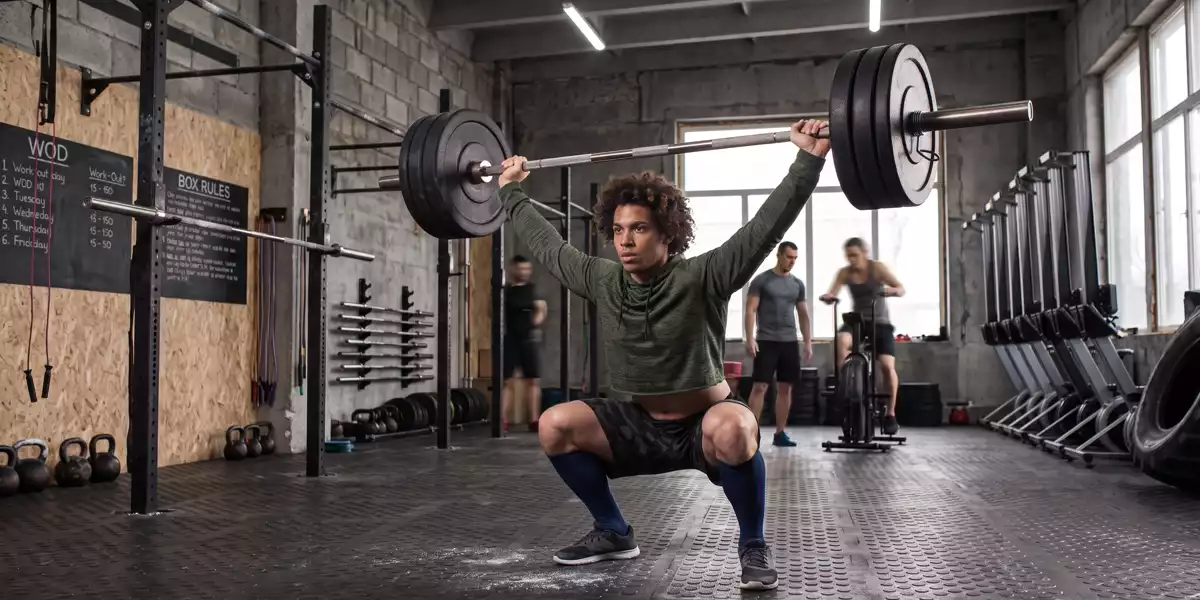
3. Increase the load progressively
- Only once you can maintain consistent technique does it make sense to increase the weight.
At the same time, you can specifically work on any factors that may be limiting the movement, particularly ankle, hip, thoracic spine, and shoulder mobility.
Common Overhead Squat Mistakes
Common mistakes include:
- Lifting the heels during the descent.
- Allowing the bar to move excessively forwards.
- Bending the elbows to compensate for a lack of stability.
- Excessively extending the lower back to keep the arms overhead.
- Trying to reach a greater depth than you can control.
- Adding weight before mastering the position.
In these cases, reducing the load or range of motion and working on the specific limitation is usually more useful than trying to force the position.
Related Posts
- Benefits of Squats
- How to Do Dumbbell Squats Step by Step
- When to Use Knee Wraps for Squats