Fitness, Nutrition, Health and Sports Blog In the HSNstore Blog you will find tips about Fitness, sport in general, nutrition, and health – HSNstore.com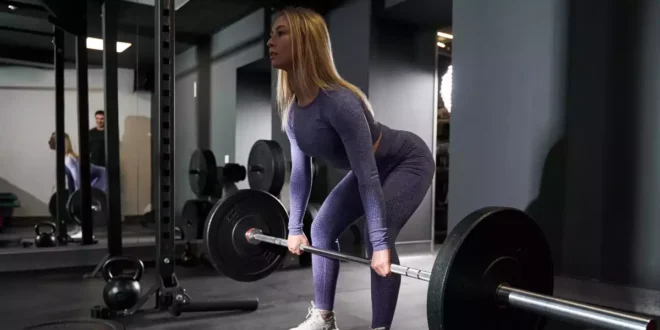

The Romanian deadlift is the exercise you need, as it’s perfect for sculpting your body while boosting your strength.
What muscles does the Romanian deadlift work?
The Romanian deadlift primarily works the glutes, hamstrings, and lower back. Stand with your feet hip-width apart and keep the bar close to your shins. Push your hips back while keeping the bar close to your legs, lowering it until you feel a stretch in your hamstrings without going below your knees. Then drive through your heels to return to the starting position, squeezing your glutes at the top.
✍️ Step-by-step correct technique for Romanian deadlift:

- Place feet hip-width apart, with the barbell close to your shins.
- Grip the bar with palms facing your body, shoulders back, and core engaged.
- Push hips back, keeping the bar close to your legs.
- Lower until you feel tension in the hamstrings (not past the knees).
- Drive through your heels and squeeze glutes to return to the starting position.
Muscles involved: gluteus maximus, hamstrings, spinal erectors, and core.
Recommended sets and reps: 3-4 sets of 10-15 reps.
Romanian deadlift variations for all levels


But it doesn’t stop there—you can start adding new variations to this all-around exercise and progress little by little. Here, we go for dumbbells and kettlebells. They’re perfect accessories for beginners, allowing a greater range of motion and adjustable load.
Romanian deadlift with kettlebells:
Romanian deadlift with dumbbells:

Also, you can do the exercise unilaterally, which is ideal for fixing imbalances and activating the gluteus medius.
Single-leg Romanian deadlift with one kettlebell:
Single-leg Romanian deadlift with one dumbbell:


Single-leg Romanian deadlift with two kettlebells:

Single-leg Romanian deadlift with two dumbbells:
Common mistakes in Romanian deadlift and how to avoid them
Pay attention to these mistakes and their fixes to get a cleaner technique and, therefore, reach your goals faster.
| Mistake | How to avoid it |
| Rounding the back | Keep your chest up and core constantly tight. |
| Locking the knees | Slightly bend knees (5-10°) throughout the movement. |
| Inadequate range of motion | Stop lowering when you feel max tension in hamstrings, without losing lumbar neutrality. |
| Bar away from the body | Keep the bar always in contact with your legs (wear tight clothes to avoid chafing). |
Tips for beginners and advanced
Jot down these tips to improve your technique:
- Use an empty bar or PVC pipe to memorize the movement pattern.
- Record yourself from the side and check that your ears, shoulders, and hips are aligned.
- Try isometric pauses at the point of max tension (2-3 seconds).
- Combine with hip thrusts to boost glute connection.
Traditional deadlift vs Romanian, which one to pick?
| Aspect | Romanian deadlift | Conventional deadlift |
| Muscles worked | Hamstrings, glutes, and lower back | Lower back, quadriceps, and traps |
| Range of motion | Short (up to knees) | Wide (from the floor) |
| Recommended for | Strength and endurance development | Max strength gain |
Related posts