Fitness, Nutrition, Health and Sports Blog In the HSNstore Blog you will find tips about Fitness, sport in general, nutrition, and health – HSNstore.com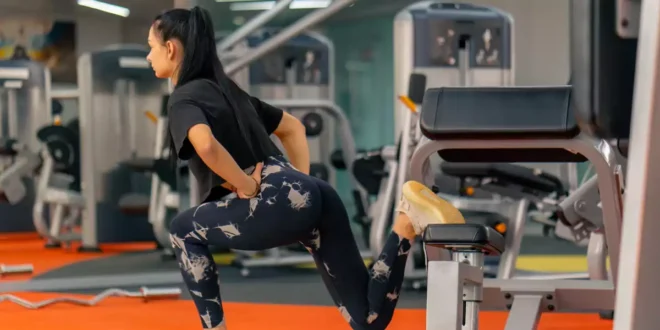

The Bulgarian split squat is one of the most effective unilateral exercises for developing lower-body strength and muscle mass. In addition, small changes in technique allow you to shift the emphasis towards either the glutes or the quads.
How to Do a Bulgarian Split Squat
To perform a Bulgarian split squat, place one foot in front of you and rest the top of the other foot on a bench behind you. Bend the front knee and lower yourself in a controlled manner while keeping your torso stable. Descend to a comfortable depth and push through the front foot to return to the starting position.
- Place a bench behind you and stand with your back to it.
- Step one foot forward and rest the top of the other foot on the bench.
- Keep your front foot fully planted on the floor and adopt a stable position.
- Bend your front knee and lower yourself in a controlled manner.
- Keep your torso stable throughout the movement.
- Lower yourself to a depth you can comfortably reach without losing your position.
- Push through the front foot to extend the leg and return to the starting position.
Bulgarian Split Squat for Quads
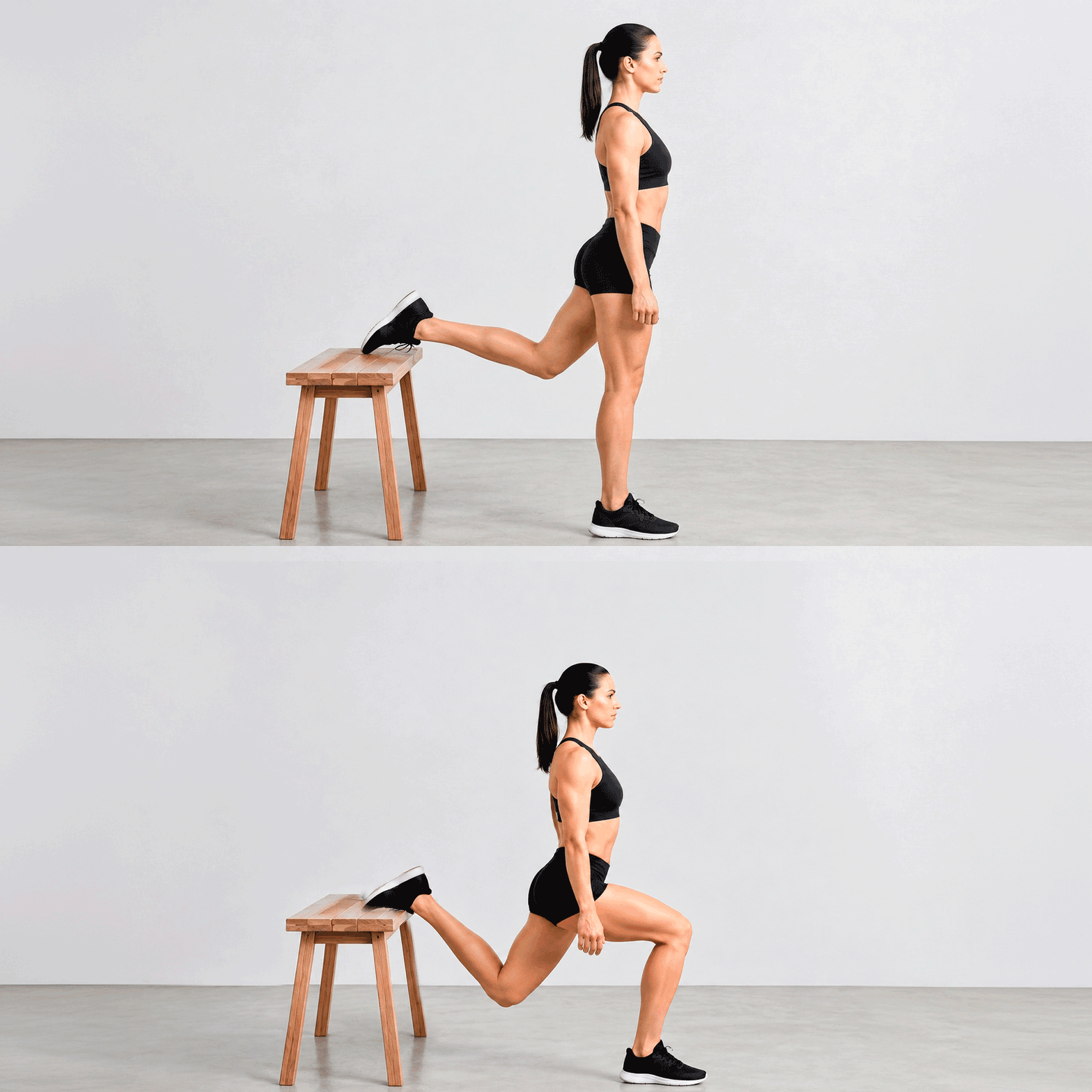
- Stand in front of a bench or raised surface. Step forward with one leg (front leg) and place the top of the foot of the other leg (rear leg) on the bench. Make sure your rear foot is securely and comfortably supported on the bench and that your front foot is positioned appropriately for the movement.
- Once your rear leg is supported on the bench, adjust the position of your front foot. Place it slightly closer to the bench. This allows the knee of the front leg to travel further forwards as you descend, increasing the emphasis on the quads.
- Lower your body until the thigh of the front leg is approximately parallel to the floor, or slightly below if your mobility and control allow it. Keep the movement controlled and allow the knee to track naturally in line with the foot.
- Keep your torso as upright as possible throughout the exercise. This increases the demand on the knee extensors and places greater emphasis on the quads.
- Push through the front leg to return to the starting position, maintaining control and stability throughout. Repeat according to your training routine.
Reps and sets: 3-4 sets of 10-12 reps per leg, with minimal forward torso lean.
Bulgarian Split Squat for Glutes
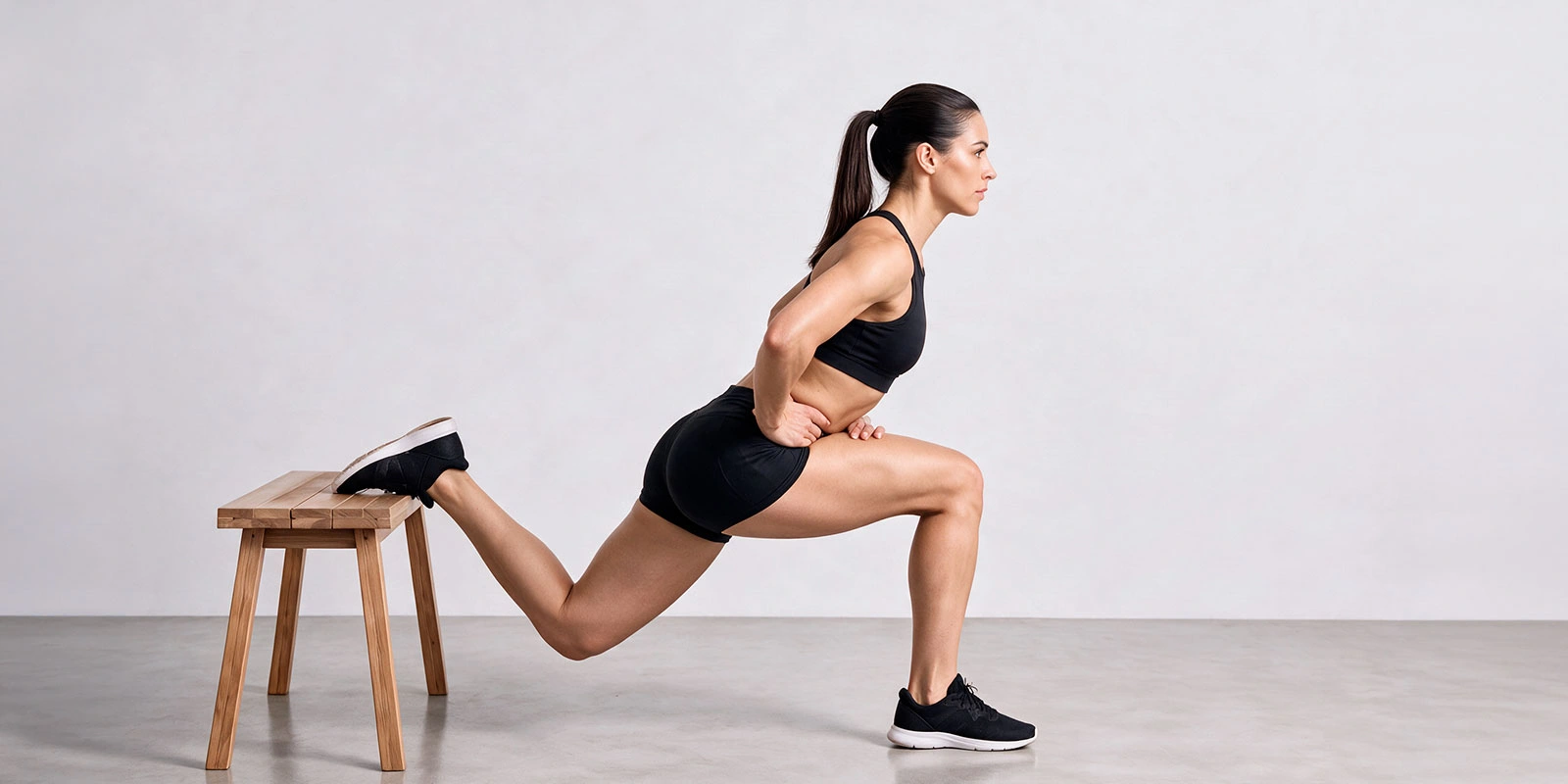
- Stand in front of a bench. Step forward with one leg (front leg) and rest the top of the foot of the other leg (rear leg) on the bench. Make sure your rear foot is securely and comfortably supported.
- Position your front foot slightly farther away from the bench. This increases hip flexion during the descent and allows for a slight forward torso lean, placing greater emphasis on the glutes.
- Bend your front leg and lower your body in a controlled manner, aiming for a comfortable depth that allows sufficient hip flexion while maintaining a stable position.
- As you descend, lean your torso slightly forwards while keeping your spine neutral. This increases the demand on the hip extensors and places greater emphasis on the glutes.
- Push through the front leg to rise and return to the starting position. Repeat for the required number of repetitions.
Reps and sets: 3-4 sets of 8-10 reps per leg, with a greater forward torso lean.
Bulgarian Split Squat Variations
Each Bulgarian split squat variation challenges the muscles in a slightly different way and offers specific benefits. Discover the different variations below.
1 Bulgarian Split Squat with Dumbbells
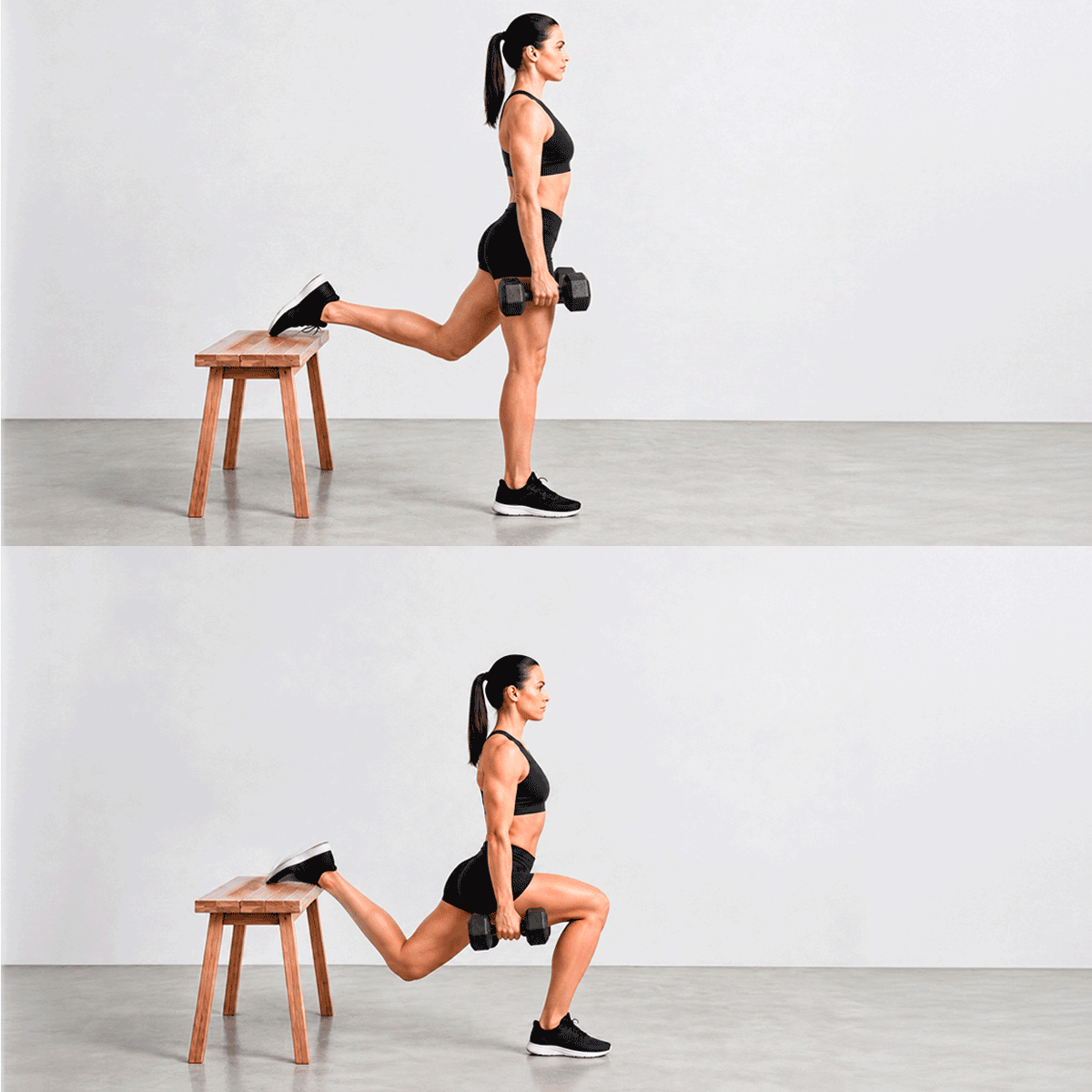
- Hold a dumbbell in each hand with your arms extended by your sides.
- Place one foot on the bench behind you and perform the split squat movement with the front leg.
2 Bulgarian Split Squat with Barbell
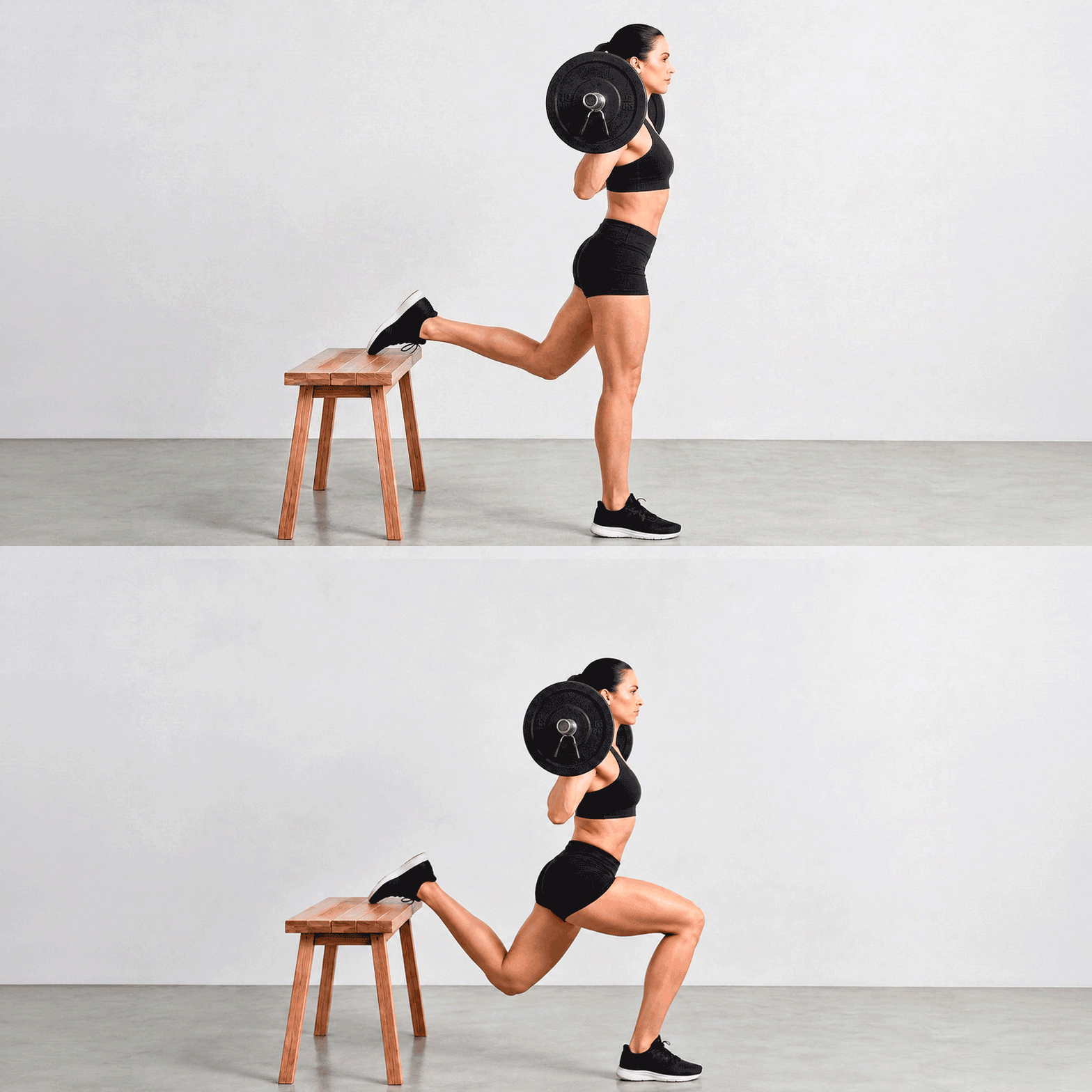
- Place a barbell across your shoulders (as you would for a traditional squat) and rest one foot on a bench behind you.
- Perform the Bulgarian split squat movement with the front leg.
3 Jumping Bulgarian Split Squat
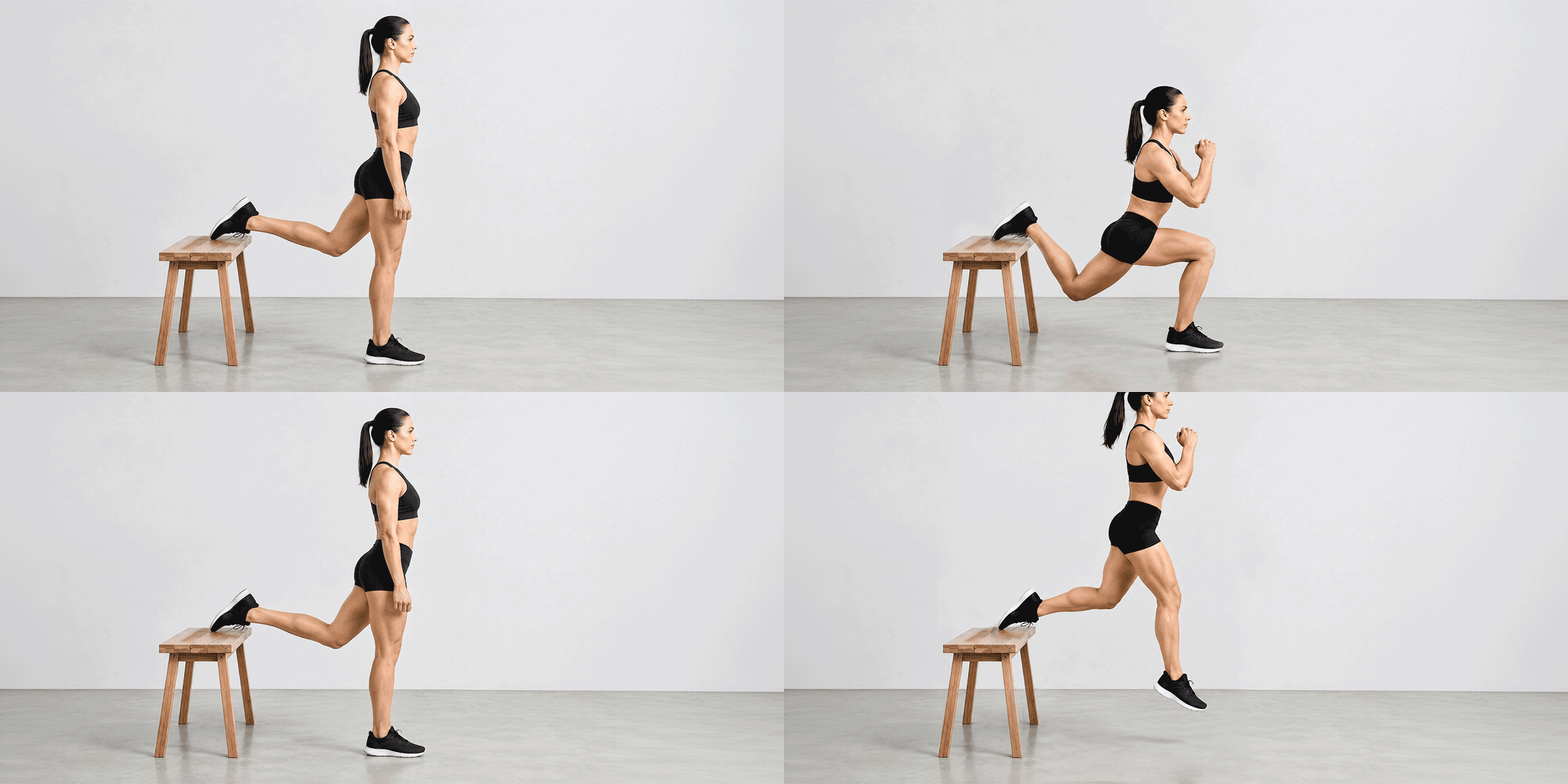
- Perform the traditional split squat movement, but as you rise, drive your body upwards into an explosive jump without using a bench.
- Switch legs in the air and land with the opposite leg in front.
4 Bulgarian Split Squat on the Smith Machine
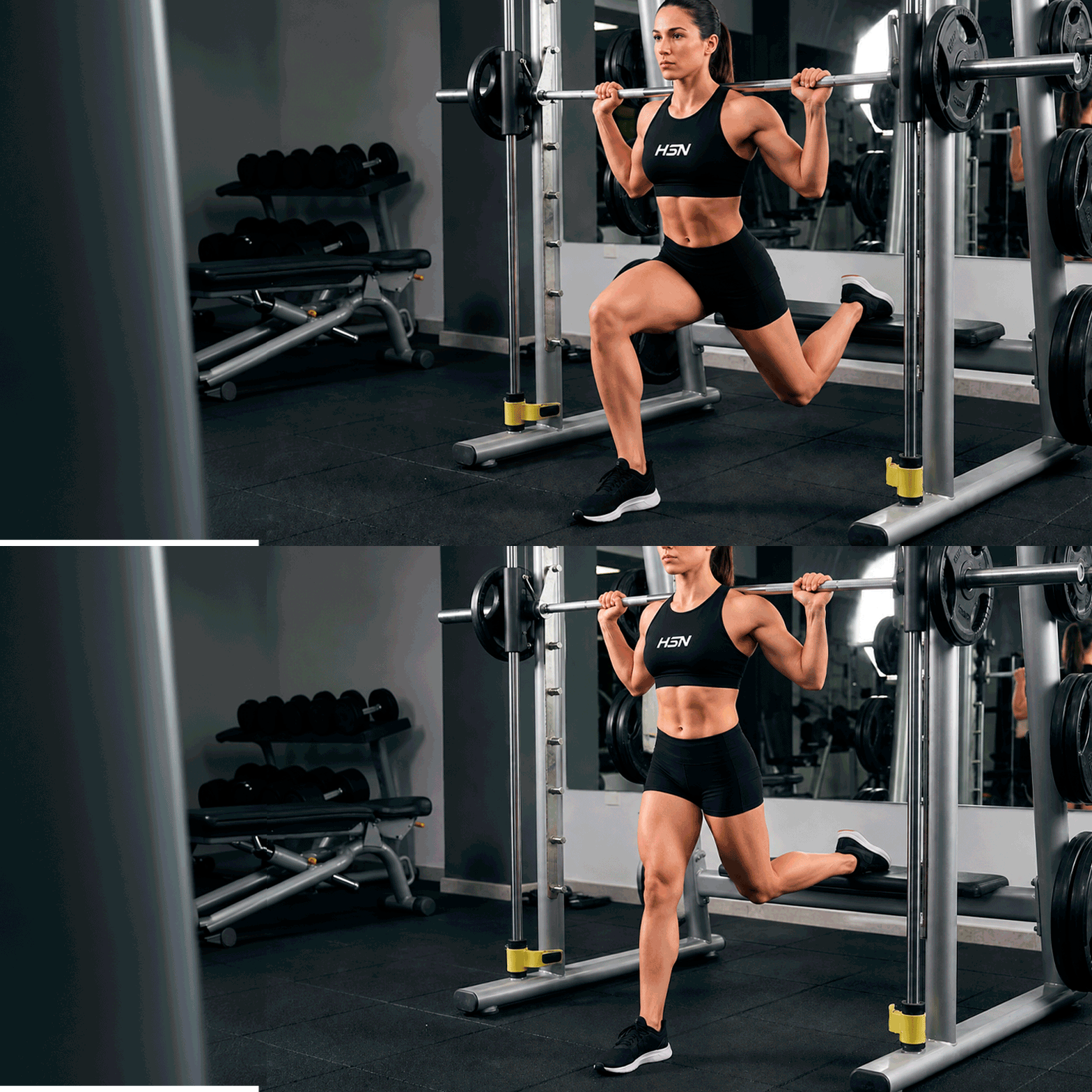
- Position yourself in the Smith machine and rest one foot on a bench behind you.
- Perform the split squat movement while the machine’s guided bar provides additional stability.
5 Contralateral Kettlebell Bulgarian Split Squat
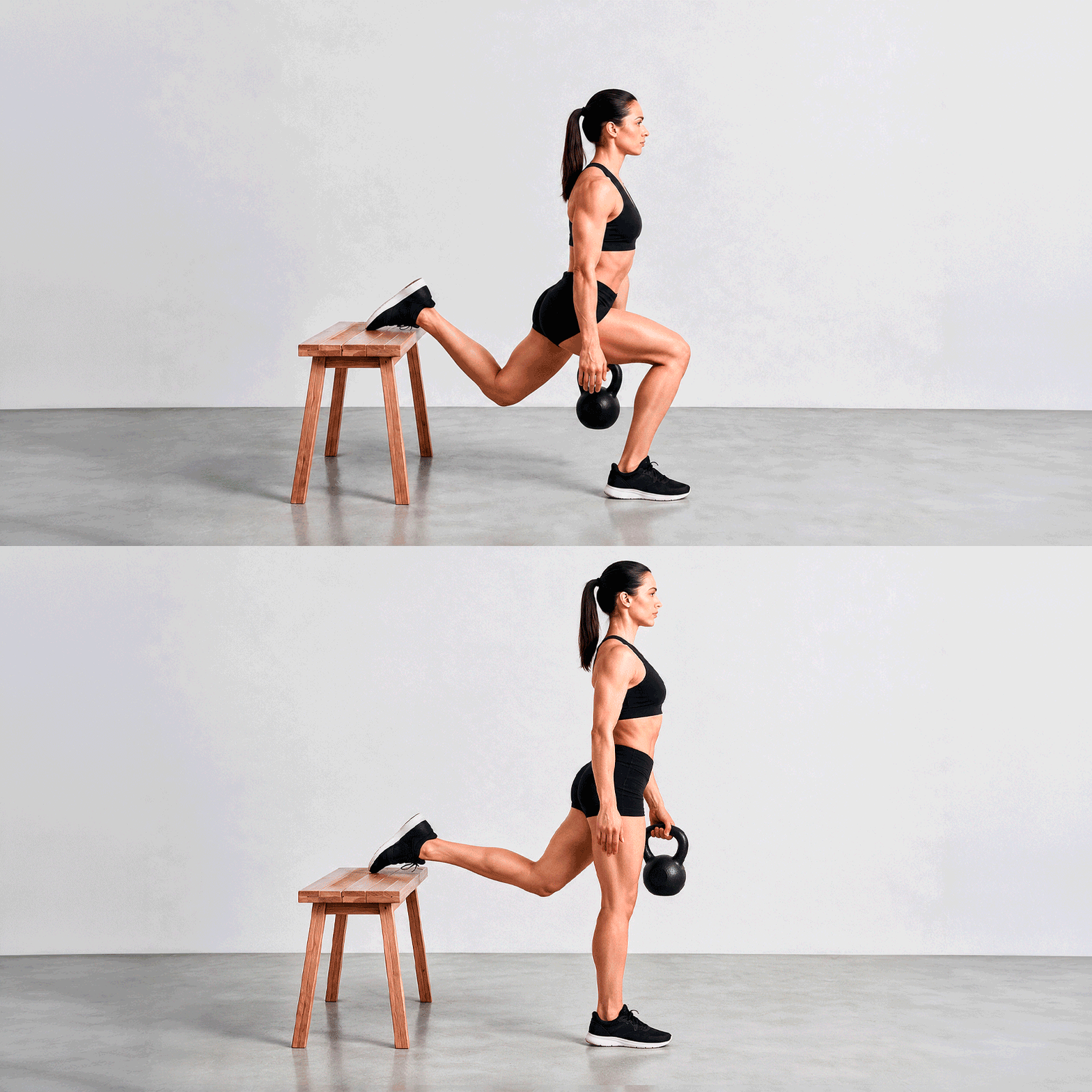
- Hold a kettlebell in one hand with your arm extended by your side. The load should be on the opposite side to the front leg.
- Rest the top of your rear foot on a bench and perform the split squat by bending the front leg, keeping your torso stable and preventing your pelvis from rotating towards the loaded side.
Tips for Performing Bulgarian Split Squats Correctly and Preventing Injuries
Follow these simple tips to improve your Bulgarian split squat technique:
- Position your front foot at a distance that allows you to descend comfortably without placing unnecessary stress on the knee. One way to estimate a suitable distance is to sit on the bench and extend one leg out in front of you with your foot on the floor. Stand up while maintaining this distance, then lift the other foot and place it on the bench.
- Perform dynamic movements such as bodyweight squats or lunges to activate the muscles. Hip mobility exercises are also recommended.
- Start without additional weight and only add dumbbells or a barbell once you have mastered the technique.
- Include deadlifts, lunges or traditional squats in your routine for a more complete lower-body workout.
- Lower yourself slowly and rise with control, avoiding bouncing or sudden movements.
- Choose shoes with flat, non-slip soles to improve balance. You can even perform the exercise barefoot if appropriate to improve stability.
- Stop if you feel pain. Do not force the movement if something does not feel right or causes discomfort. Reduce the load or remove it completely.
Related Posts
- How to Perform a Glute Bridge Correctly
- Learn How to Do the Goblet Squat
- Complete Deadlift Guide
- Complete Guide to Lunges
- Hip Mobility Exercises