If you frequent the gym or training parks, you’ll have noticed many people doing the leg raise exercise, often hanging from a bar: Leg raise.
Index
What are leg raises?
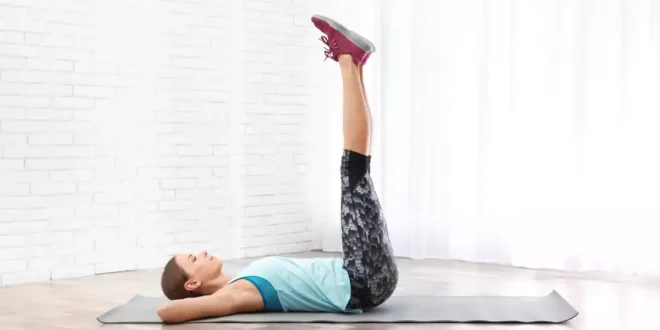
As the name suggests, this exercise consists of raising the legs either from a lying position on your back or hanging from a bar.
As a result, hip flexion occurs when raising the legs, keeping them together and the spine as stable and straight as possible.
However, as there is a high lever arm, poorly executed, the tension produced in the lumbar spine can be excessive and damaging.
The abdominal muscles must be kept active to stabilise the spine, and the breathing and activation of the deep transversus abdominis must work synergistically for correct pressure management, avoiding pushing the rectus abdominis outwards in excess.
Otherwise, either due to fatigue or lack of good activation, an outward thrust of the rectus abdominis usually occurs (see diastasis abdominis).

Consequently a weakening of the quadratus lumborum leading to a flexion of the quadratus lumborum.
How to do leg raises
- Hip flexion movement (a large lever arm – resistance – has to be used). At the same time, there’s a strong contraction of flexor muscles: Rectus Anterior Quadriceps, Psoas Iliacus and Sartorius.
- To avoid modifying the lumbar lordosis, the abdominal muscles have to be activated to stabilise the pelvis. As a result, correct activation and control of the abdominal and stabilising musculature is necessary.
If there is a lack of abdominal control and strength: the pelvis turns in retroversion and there may be some inversion of the lumbar area, and this is precisely what can result in discomfort or injury in the area.

To perform this exercise correctly, the spine must be kept in a neutral position that produces the least amount of stress on the vertebral structures.
Lying flat on your back
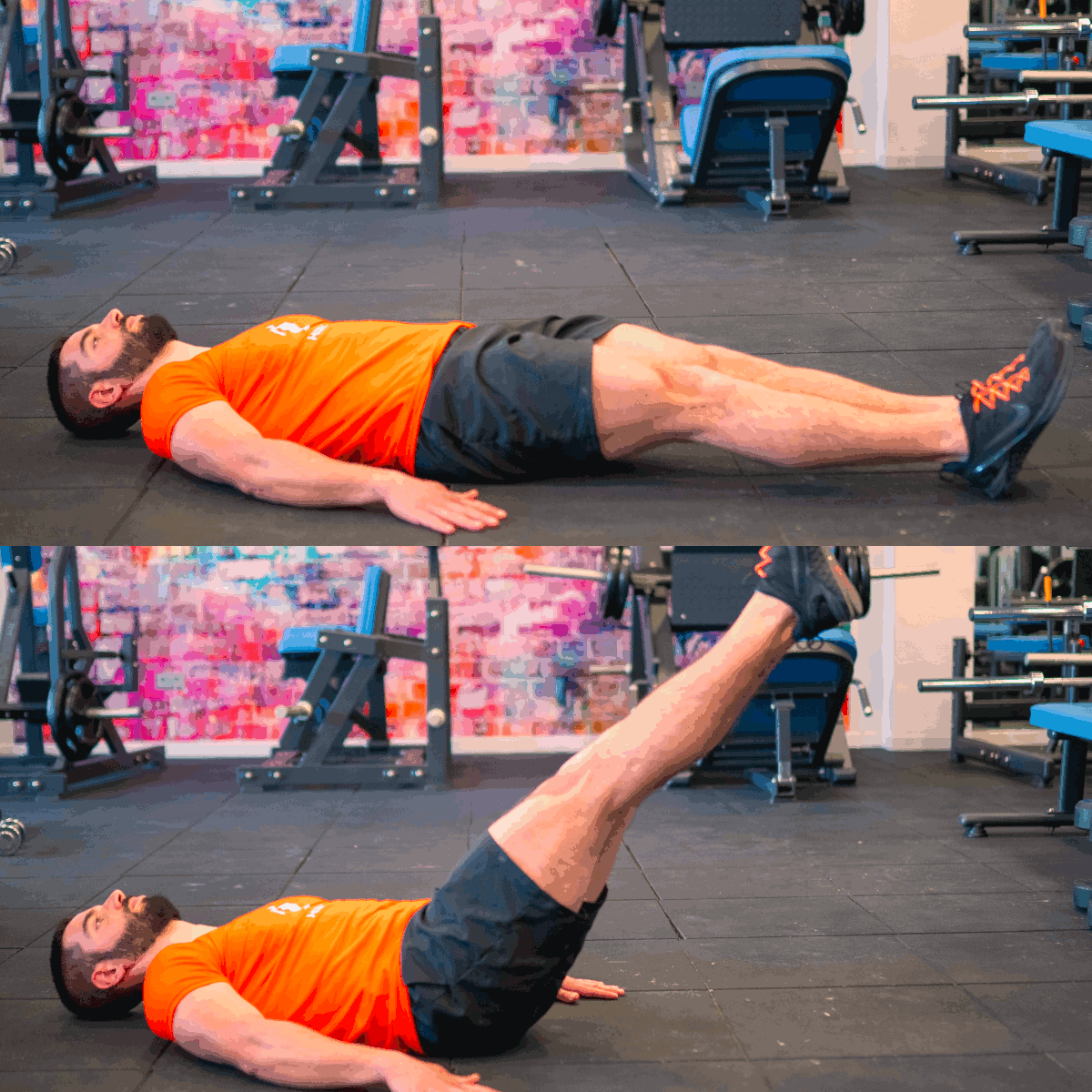
- With your hands under your glutes or on the floor parallel to the body, raise and lower the legs.
- The greater the angulation in the lowering phase (closer to the ground), the greater the resistance or lever arm, and the greater the tension to be managed.
- The movement must be carried out in a controlled manner avoiding bouncing.
The head, neck and shoulders must remain relaxed without creating tension.
If this happens, it’s an indicator that the exercise is not being performed with the correct muscles.

The back, as I have indicated, should remain in contact with the floor.
What does the leg raise work?
According to the above, this apparently simple exercise isn’t so simple – there are many muscles involved that must work synergistically.
The main focus is on working the lower abdomen, but also:
- Deep transverse;
- Rectus abdominis; and
- Dorsal stabilising muscles
On the other hand, the Iliacus Psoas works hard in the exercise, traversing and creating shear forces on the vertebrae of the quadratus lumborum. This is combined with a compressive force on the lumbar spine.
As a result, it’s not recommended for people suffering from pathologies or injuries in this area.
Benefits of the Leg Raise Exercise
As with any other exercise, the risk-benefit ratio should always be assessed according to your level of physical fitness and motor control.
For athletes with good motor control, core activation (especially the transversus abdominis), and with a high level of fitness, this exercise presents a challenge to the work of the rectus abdominis muscules.
On the other hand, given that there are different variations of this exercise, it’s possible to efficiently train the muscles of the rectus abdominis and obliques, apart from the more traditional exercises.
Types of leg raises
There are different variations of leg raises from the supine position (lying on your back):
Lateral

Lateral leg raises target the hip adductors on the inside of the thigh.
- They’re done lying on your side with one hand resting on the floor and the opposite foot on the floor in front of your leg, as a support.
- With the upper leg slightly bent and at rest.
- The lower leg, closer to the ground, is raised upwards against gravity.
- The foot should be kept in slight flexion and the lower back should remain neutral without swaying.
Alternate
This can be a good option for those just starting with the exercise as it diminishes compression in the spinal area as well as tension in the rectus abdominis.
On the other hand, it allows you to focus more attention on the control of the movement.
- It can be done with both legs extended vertically, or with one foot resting on the ground (knee in flexion), with the other leg performing the raises.
On the floor

- They can be performed on a raised surface, on a bench, for example, or directly on the floor.
- Normally, your hands are placed on the surface (or on the armrests) and support part of your body weight, reducing the weight supported by the buttocks and increasing abdominal recruitment.
How to do hanging crunches
One leg raise option is to do the exercise hanging. It means the body is suspended and it’s the most intense option, requiring greater strength and control of the abdominal area.
If it’s performed with the legs extended, without bending the knees, both good stability of the shoulders (remember that we’re suspended) and the core must be maintained.

It’s a very intense option.
Another variation, which can be done before moving on to the previous more intense option, is to flex and extend the knees:
That’s to say, you bend your knees from the starting position, and then extend them by returning your legs to the vertical without swinging.
Leg raise exercise routine
Given the above and depending on the level of difficulty, we could incorporate some of these variations into our training sessions.
Given that they require strong motor control, stability of the middle zone, the first thing to do would be to start with activation work such as the one presented in this video:
Once you’ve acquired sufficient abdominal strength and control, we could move on to performing the knee raises from a hanging position. For example: 3 sets x 5 repetitions.
- 3 sets x 10 reps (alternating one with knee bend + leg raise).
Other tips
Before moving on to the more intense options, start by checking the leg raise movement of the easier options and consult your trainer beforehand to assess which option is best for you.
Related Entries
- Want Ideas to Strengthen Abs? Here you’ll find 17.
- Have these 6 exercises on hand to stretch the psoas correctly.

Fitness, Nutrition, Health and Sports Blog In the HSNstore Blog you will find tips about Fitness, sport in general, nutrition, and health – HSNstore.com