 Fitness, Nutrition, Health and Sports Blog In the HSNstore Blog you will find tips about Fitness, sport in general, nutrition, and health – HSNstore.com

In endurance sports, recovery becomes key so your body can absorb the workload you’ve put it through. That’s why during this time it’s crucial to provide it with the nutrients needed to recover properly. Do you know what your muscles need to recover and absorb training loads? Here we’ll explain what’s known as recovery in cycling and what it’s for.
What is rest or recovery?
However, the most important part of this process lies in nutrition. That is, in the nutrients (fuel) we provide our body to help absorb the work and the rebuilding of damaged muscle fibers.
Why is rest/recovery so important for athletes? Because it’s the moment when the work done during training turns into the figurative step up in performance.

Our aim with this article is for you to know which nutrients your body needs to recover in the best way in endurance sports like cycling, and learn how to take them most effectively.
We want you to give your all on the bike in every ride, training, and race!
What are the nutritional needs during this period?
We’re talking training, rest, and training. Got it! All good, but keep in mind you must fully commit to rest/recovery, because there’s a big risk of falling into what’s known as cyclist overtraining if you don’t properly complete recovery periods (nutritionally speaking too).
Back to the needs our body has after endurance sports (cycling). Do you know exactly which sports we mean? Yes, cycling is one of them, since we’re talking about sports lasting over 90 minutes continuously.
Regarding the basic needs after these sports, which will help your recovery, they are:
- Proteins, to support muscle recovery.
- Carbohydrates, to help replenish glycogen (fuel).
- Amino acids, to support protein synthesis and recovery.
- Vitamins and minerals, to restore optimal levels.
And how can you provide them efficiently? It’s possible! But you also have to keep in mind you need to get them from different foods, so most of the time it’s tricky to combine them all, especially if you’ve just finished a race or training session lasting more than 4-5 hours, which is common in cycling.
Some sources include bread, fruit, cookies, energy bars, rice, potatoes, milk, cheese, ham, yogurt… But, will you be able to eat it all at once and within a short time after physical effort?

The metabolic window
This is the period understood as the perfect time for the best nutrient absorption after physical exercise.
What exact time does it refer to? Various studies on muscle recovery after long and intense exercise highlight the first two hours as fundamental, but the metabolic window could be considered within the first 45 minutes to an hour after finishing training or competition.
These nutrients are the ones mentioned earlier: proteins, carbohydrates, amino acids, vitamins, and minerals.
But do you really know where to find them all quickly, effectively, and in optimal levels for your body? Keep reading because we’ll tell you here.
What are Recovery products in Cycling?
These products have quickly gained importance in long-duration sports like cycling. But do you know exactly what they are, what they contain, and how they improve your recovery, cyclist? Here we’ll try to clear that up.
Their composition includes a combination of:
Carbohydrates + Whey Protein + Vitamins + Minerals + Essential Amino Acids
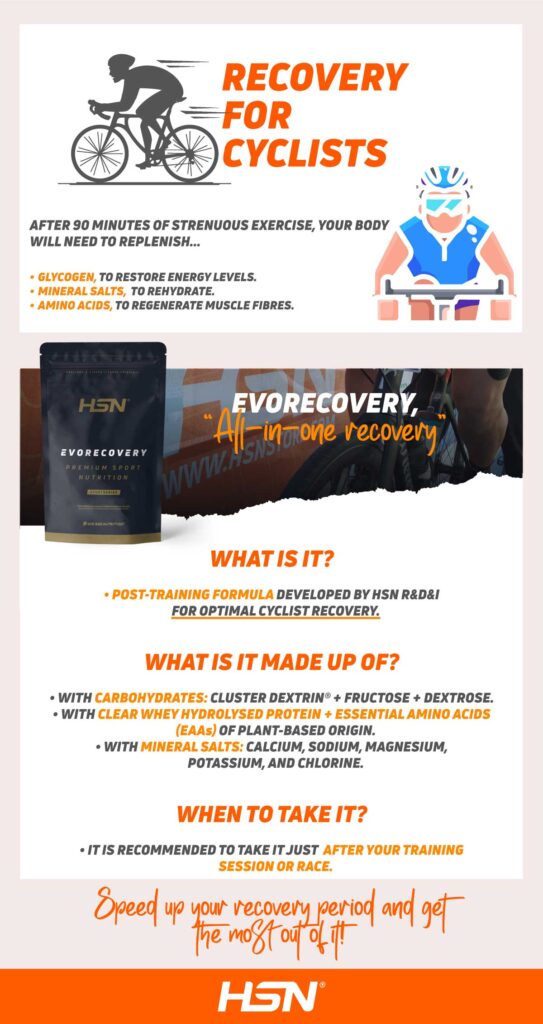
All at the levels your body needs for optimal recovery so you can hit another tough training session the next day!

What do Recovery products contain?
We’ve already seen most of the nutrients they contain, although it depends on the formula used in their manufacture.
They usually contain a lower amount of protein than carbohydrates (about one third), while also including other nutrients like essential amino acids, glutamine, minerals, and vitamins. The goal is to offer you the best and fastest muscle recovery.
This is the best product for recovery in Cycling!
What nutrients make up Evorecovery?
As with all our products, our priority is the use of the best raw materials for developing and manufacturing our sports supplements and natural dietetic products.
In Evorecovery’s case, the raw materials used include Cluster Dextrin™, a next-gen fast-absorbing carbohydrate to refill glycogen stores in the most optimal way.
Carbohydrate supply is completed with fructose and dextrose for efficient energy recharge.
To promote muscle tissue recovery, Hydrolyzed Clear Protein is included, giving it a very watery texture (similar to juice) that’s pleasant to drink right after physical effort. Also, you’ll find all Essential Amino Acids (EAAs) in every serving of this amazing recovery product.
Added to all this are minerals like calcium, potassium, chloride, and magnesium, which help you restore optimal levels of these nutrients. They also support replenishing fluid losses from training or rehydration.
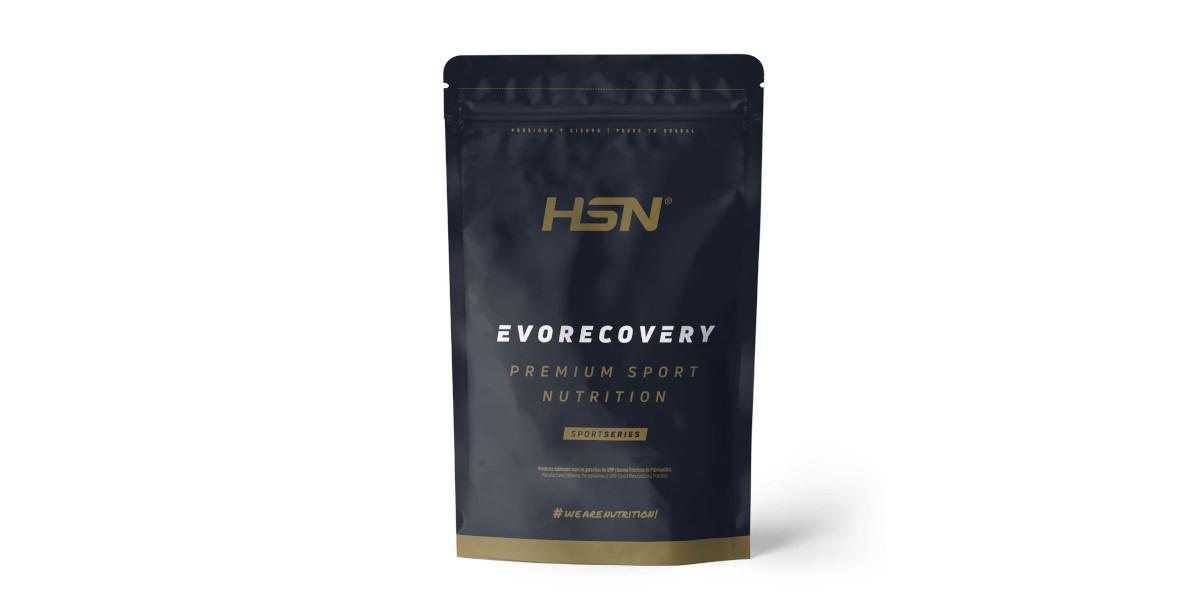
Developed and manufactured by HSN, Evorecovery contains an ideal post-training formula
It’s aimed at high-intensity sports lasting over 90 minutes: cycling, running, triathlon… but also strength sports, which require fuel and optimal recovery, and often exceed that time.
How to consume recovery in cycling?
It’s the best post-training supplement for a long-duration, intense sport like cycling.
Within the recognized metabolic window, Evorecovery will provide you with the nutrients needed for optimal muscle recovery.
Drink it and rest up until the next stage of maximum athletic demand!
References and Studies:
- Gervasi M, Sisti D, Amatori S, Donati Zeppa S, Annibalini G, Piccoli G, Vallorani L, Benelli P, Rocchi MBL, Barbieri E, Calavalle AR, Agostini D, Fimognari C, Stocchi V, Sestili P. Effects of a commercially available branched-chain amino acid-alanine-carbohydrate-based sports supplement on perceived exertion and performance in high intensity endurance cycling tests. J Int Soc Sports Nutr. 2020 Jan 20;17(1):6. doi: 10.1186/s12970-020-0337-0.
- Mjøs I, Thorsen E, Hausken T, Lied E, Nilsen RM, Brønstad I, Edvardsen E, Frisk B. The effect of low dose marine protein hydrolysates on short-term recovery after high intensity performance cycling: a double-blinded crossover study. J Int Soc Sports Nutr. 2019 Oct 29;16(1):48. doi: 10.1186/s12970-019-0318-3.
- Richard NA, Koehle MS. Optimizing recovery to support multi-evening cycling competition performance. Eur J Sport Sci. 2019 Jul;19(6):811-823. doi: 10.1080/17461391.2018.1560506. Epub 2018 Dec 27.
You might also like…
- Discover Evogummy… a supplement ally in your training.
- Supplements you shouldn’t miss if you’re a cyclist, read here.
- If you want to improve your performance on the bike, you need to train intervals. We tell you how in this Post.