Fitness, Nutrition, Health and Sports Blog In the HSNstore Blog you will find tips about Fitness, sport in general, nutrition, and health – HSNstore.com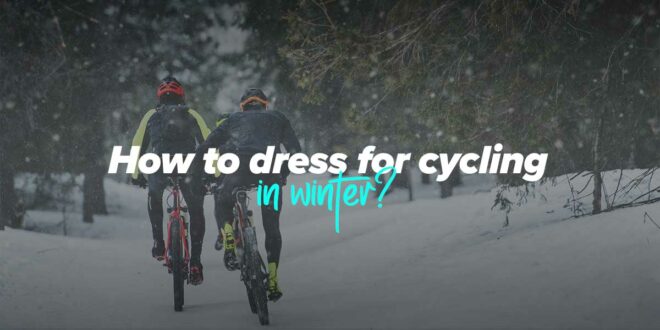

Many people are undoubtedly not used to cold temperatures or adverse weather conditions in winter and for that reason, they prefer indoor cycling. However, it is also possible to train cycling in winter, taking into account certain fundamental considerations so as not to let the cold weather prevent you from training.
On the bike, unlike on the run, the thermal sensation of the cold as well as the wind affects negatively more than when these conditions occur on the run. Some of the biggest challenges we cyclists face in winter are the following:
- Very low temperatures and/or wind chill well below ambient temperature.
- Wind.
- Rain.
- Very cold air.
- Poor visibility on rainy/foggy/cloudy days.
Prepare appropriate clothing
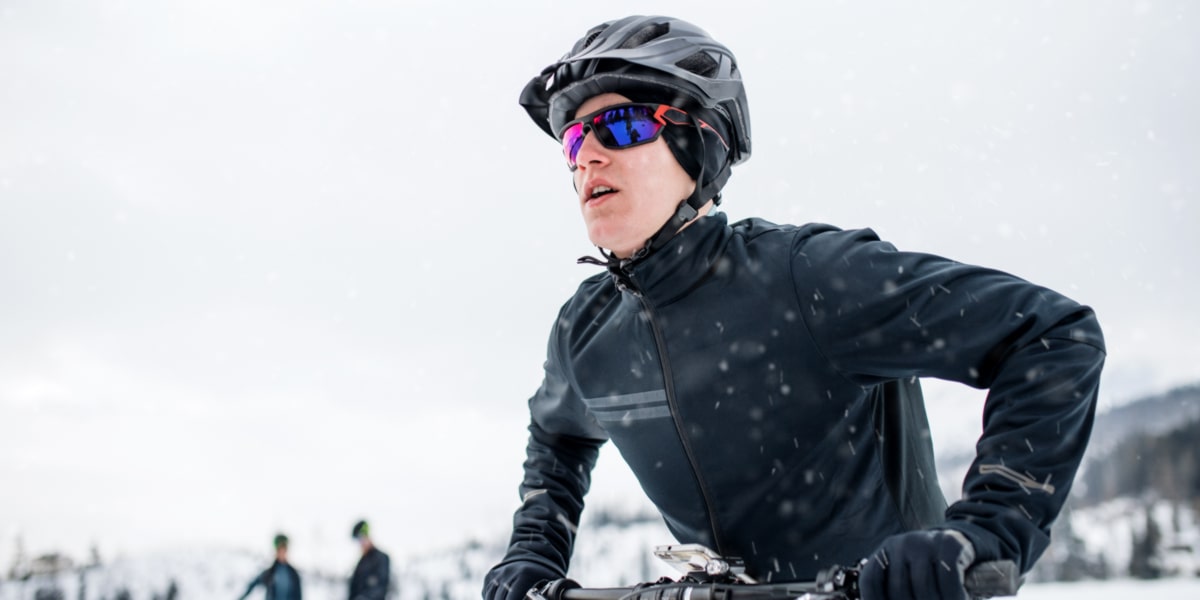
Given the weather conditions that can make it hard to get out on your bike, investing in the right equipment is a must for winter cycling training.
Once you get cold, you’re wet, your shoes are wet, your hands are wet… it’s hard to get your body temperature back to optimum.
This directly affects performance and can also lead to health damage.
What is the three-layer theory?
To be able to train in winter and maintain a good body temperature, we follow the 3-layer theory.
This theory and common practice in outdoor sports consists of always wearing at least 3 layers of clothing made of different fabrics and with different functions that allow us to create a different climate in our body to protect it and our organism in unfavourable weather conditions.
- First layer: Technical underwear will help us not to be cold and to maintain a good body temperature, blood circulation throughout the body. It is what is often referred to as a “second skin”, keeping us dry and with a great capacity to absorb moisture. It must be breathable, very comfortable, and allow you to move well, as well as keep you warmth.
- Second layer: Thermal insulation, in this case, will be the long-sleeved cycling jersey. The main function is to insulate us from the cold, to maintain internal heat to prevent temperature loss and to keep out the cold. As it is insulating clothing, try to choose one that also allows you to move around without difficulty and is made of a water-repellent material. Read the description and details which usually give the temperature range for which the garment is suitable.
- Third layer: Protection against wind and rain; although on many occasions we do not wear it from the beginning, we do carry it in the pocket of the jacket in case of possible rain for descents, strong winds. They must have an outer membrane that breaks the wind and is waterproof. It must be breathable because, in cold temperatures, the body gives off a large amount of heat that must be dissipated so as not to sweat excessively and stay cold.
Other additional and practical materials
- Neoprene and waterproof boot covers: The feet and hands are one of the areas of the body where cyclists suffer most from the cold. Neoprene boot covers keep your feet warm and keep out the cold. There are also boot covers made of a specific water-repellent fabric for rainy days to prevent feet from getting wet.
- Heated gloves: there are gloves that have an adjustable battery that provides heat. For those who suffer from an allergy to cold or lose the sensitivity of their hands caused by cold, they are a very good option.
- Instant hand warmers: these are small bags that you can carry in your jersey and use them when your hands are very cold.
- Clear lens glasses for low visibility days: to protect our eyes from wind, UV rays and also to keep a clear view of the road, clear lens glasses are perfect for cloudy or low visibility days.
Additional tips for winter cycling
- Leave the house warm to avoid catching a cold before you start cycling.
- Do some dynamic stretching at home before you go out to get your muscles ready and increase blood flow. (in cold weather, muscles are under more tension and there is a greater chance of injury from sudden movement).
- Warm up on the bike very gradually to raise your body temperature.
- Stay hydrated even if you don’t feel thirsty: it is common that, as you don’t feel thirsty, you don’t drink water or isotonic drinks; however, your body gives off heat through sweat anyway. You need to hydrate throughout your training session.
- Make yourself visible: although the use of rear and front lights is compulsory, in winter your clothes should have some kind of reflective detail or bright colours so that you can be seen by any type of vehicle.
- If you suffer from rain/snow during an outing, check the condition of your bike after the ride: condition of the batteries (if you have an electronic derailleur/electric bike) and the condition of the chain. It is important to have it ready and well-maintained before the next ride.
Conclusion
Bicycles are not only for summer, but also in winter, you can enjoy mountain biking, gravel, or road cycling, taking into account certain considerations regarding equipment, technical clothing, and other safety accessories.
Enjoy cycling in any season of the year!
Related Entries
- https://www.hsnstore.eu/blog/sports/cycling/proteins/
- Evogummy, your Intra and Post competition ally in Cycling
- How to improve muscle recovery in cycling?
- Cycling training in the gym, is it really effective?