Fitness, Nutrition, Health and Sports Blog In the HSNstore Blog you will find tips about Fitness, sport in general, nutrition, and health – HSNstore.com

Let’s analyze the importance of these two concepts: CrossFit and Protein
How much do you need depending on your level? Above all, we need to know the consequences of a bad protein intake for Crossfitters.
If carbohydrates are the king of sport nutrition, protein is the queen. Without any doubt, protein is the macronutrient that has been in everyone lips for the last 40 years.
Minimum requirements, maximum dose, type of protein, timing, source, supplementation, etc.
Everything is questionable and subject to debate when it comes to protein.
CrossFit, a sport difficult to pin down
That is right, CrossFit is quite peculiar
First of all, let’s talk about its classification:
- It is not a resistance sport.
- Moreover, it is not all about strength.
- It does not only require submaximal effort.
- Its tests do not follow a predictable pattern.
- CrossFit is variability.

So, when it comes to giving advice, this makes things pretty difficult.
Most guides, books and papers about sport nutrition refer to “resistance athletes” or “strength athletes”. Therefore, we are left without specific advice. Moreover, it is a novel “sport” that it is still secondary for most of the people at the academic world.
However, let’s try to look for some common sense. Even though classifying this sport in a category may be complex, it is not that hard when it comes to talking about CrossFit and Protein.
CrossFit and Protein: how much
0.8g per kg of body weight
That is where it all began. Up until quite recently, all the advice about protein intake for sedentary and active population were those two numbers separated by a comma (1).
Isn’t it contradictory? How can something be floor and ceiling at the same time?
Fortunately, serious and precise methods like the IAAO (indicator amino acid oxidation) proved how the RDA of protein for trained subjects could be twice as much. That is, around 1.4-1.8g/kg/day to keep a neutral nitrogen balance (2).

Well, it seems that the previous advice was quite inaccurate
CrossFit and Protein = Recovery
CrossFit is known for being a highly demanding sport that involves the glycolytic system, submaximal effort and a wide strength work.
This means that it produces an important neuromuscular impact beyond the muscle structural damage due to the generated mechanical tension and metabolic stress
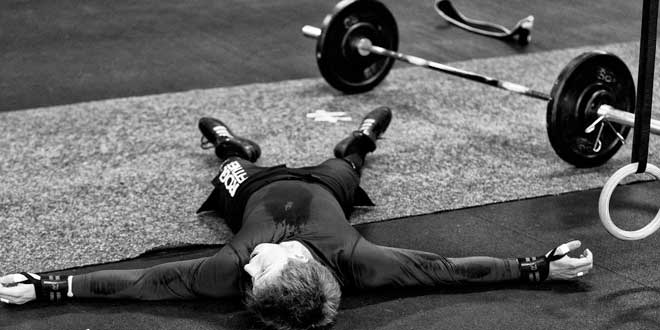
CrossFit can fry your nervous system if you do not carry out an adequate recovery
This is another one of the big mistakes of sport nutrition. Protein is not only necessary for muscle anabolism. In fact, this is a very reductionist perspective. Our immune system is made up by a wide range of proteins.
Our internal organs also have a protein turnover that speeds up during the workout.
What are the consequences of a negative nitrogen balance?
A deficient energy intake can be harmful for our health athletic performance, the same happens with a poor protein intake.
Even though this may be difficult to achieve in the hyperprotein world we live in, it actually isn’t, specially for advanced athletes and hypocaloric phases.
Therefore, we could sum up the consequences of said negative nitrogen balance like this:
- More protein catabolism and loss of lean mass. This does not only affect the muscles, but also the bones.
- Slow intra-workout recovery, resulting in a lower workout volume. Consequently, this would indirectly affect the sport performance.
- Higher risk of injury during the workout (4).
- Higher risk of disease. Physical exercise is an important stressor that can increase the risk of disease if the athlete does not recover properly.
- Intolerance to intense workouts.
Then, how much protein do I need if I do CrossFit?
Well, if we do high intensity exercise, we will use the workout volume as the main variable to calculate the protein intake.
So, what we will do is to divide it between Beginner, Rx and Elite (5):
Beginner
If you have just started and you work out between 3-5 hours a week, the recommended dose is similar to that of the general population. Therefore, we would remain at 1-1.4/kg/day. This means that we will not need to use supplementation because we can easily get it from what we eat.
Rx
For those who want to go a step further, the recommended dose will also increase. Therefore, we will find 1.4-1.7g/kg of body weight.
Elite
We are talking about beasts that work out 15-25 hours a week at least, 4-6 hours a day. Their needs can increase up to 1.8-2.3g/kg of body weight easily.
Conclusions
In the following post, we will talk about timing, protein sources, dose distribution and unanswered questions about the protein intake at a high intensity.
See you in the next article, cheers!
Bibliography
- Tarnopolsky MA, MacDougall JD, Atkinson SA. Influence of protein intake and training status on nitrogen balance and lean body mass. J Appl Physiol. 1988;
- Phillips SM, Chevalier S, Leidy HJ. Protein “requirements” beyond the RDA: implications for optimizing health. Appl Physiol Nutr Metab [Internet]. 2016 Feb 9 [cited 2016 Mar 15];1–8. Available from: http://www.ncbi.nlm.nih.gov/pubmed/26960445
- Bandegan A, Courtney-Martin G, Rafii M, Pencharz PB, Lemon PW. Indicator Amino Acid–Derived Estimate of Dietary Protein Requirement for Male Bodybuilders on a Nontraining Day Is Several-Fold Greater than the Current Recommended Dietary Allowance. J Nutr. 2017;
- Tipton KD. Nutritional Support for Exercise-Induced Injuries. Sports Medicine. 2015.
- Jäger R, Kerksick CM, Campbell BI, Cribb PJ, Wells SD, Skwiat TM, et al. International Society of Sports Nutrition Position Stand: Protein and exercise. Journal of the International Society of Sports Nutrition. 2017.
Related Entries
- The Best Supplements for CrossFit
- How to improve your performance with the diet
- Whey Protein Isolate in Depth