 Fitness, Nutrition, Health and Sports Blog In the HSNstore Blog you will find tips about Fitness, sport in general, nutrition, and health – HSNstore.com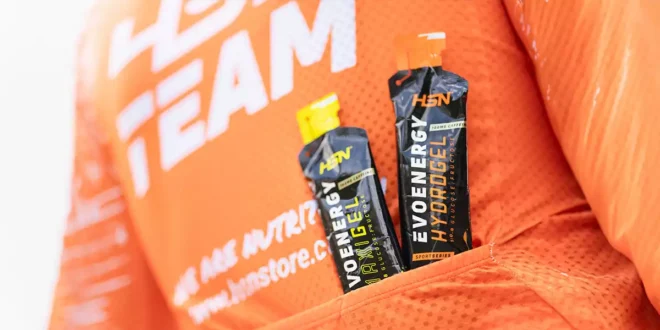

Surely you’ve spent months training your legs, your lung capacity, and your mental toughness. But what about your stomach? In the world of endurance sports, the digestive system is not just a storage tank; it is the limiting factor in performance. You may have the engine of a Ferrari, but if the fuel flow gets blocked, the car stops.
The gut is a “trainable” organ. “Gut Training” is the strategy that ensures the carbohydrates you consume move from the stomach to the muscles without painful detours.
Why does the stomach fail during exercise?
During intense training or long competitions, the body needs to prioritize resources. To sustain performance, blood flow increases toward the muscles and the skin to regulate body temperature.
The problem is that this redistribution causes a reduction in blood flow to the digestive system, a phenomenon known as splanchnic ischemia.
When this happens:
- Delayed gastric emptying: the gel remains “bouncing around” in the stomach.
- Increased intestinal permeability: the tight junctions of the intestine loosen, allowing toxins to enter the bloodstream (a cause of nausea and diarrhea).
- Transporter saturation: if not trained, sugars ferment in the colon, causing gas and pain.
If we also add factors such as dehydration, environmental heat, excessive intensity, or overly concentrated drinks, the result is familiar to many athletes: heaviness, nausea, gas, reflux, bloating, or even diarrhea.
- Technical key: Osmolarity. A highly concentrated drink (hypertonic) “pulls” water from your body into the intestine in order to dilute itself, accelerating dehydration and gastrointestinal discomfort.

The science-backed benefits of gut training
Training your stomach not only prevents problems; it makes you faster. These are the benefits supported by science:
- Reduced gastrointestinal symptoms: goodbye to gas, bloating, and exercise-induced diarrhea.
- Improved gastric emptying: the stomach learns to transfer food into the intestine more efficiently under stress.
- Increased exogenous carbohydrate oxidation rate: this means your body can use more of the energy you consume externally, preserving valuable muscle and liver glycogen stores for the final stages of the event.
Step-by-step Gut Training protocol for beginners
You cannot go from 0 to 90 grams of carbohydrates per hour overnight. Adaptation must be progressive and carried out during your longest or highest-intensity training sessions (specific “gut sessions”).
HSN recommendations for each phase:
- ? To get started (Phase 2): Evocarbs 2.0, 2:1 carbohydrate formula with mineral salts (electrolytes).
- ? To optimize (Phases 3 and 4): Evoendurance, 1:0.8 ratio and 500mg sodium.
If you are prone to digestive discomfort, Highly Branched Cyclic Dextrin (Cluster Dextrin®) is your best ally.
Why? Despite its high molecular weight, it has low osmotic pressure. This means it passes through the stomach almost like water, while fueling your glycogen stores like the best starches.
The 120g/h frontier: the next level in performance
Until recently, 90g of carbohydrates per hour was considered the absolute limit of human absorption. However, recent research with elite cyclists and trail runners has shown that it is possible to reach and tolerate intakes of up to 120g/h.
Reaching these figures is not for everyone and requires a perfectly “trained” digestive system. The key lies in the use of specific glucose:fructose ratios (such as 1:0.8), which allow both transporters to be saturated simultaneously without causing discomfort.
For a highly trained athlete, this extra energy can mean the difference between maintaining pace during the final hour of a race or suffering the dreaded “bonk.” Achieving this capability is definitive proof that the intestine, just like the heart or quadriceps, has no fixed ceiling when trained correctly.
3 Critical mistakes you must avoid
- Training only with gels: The stomach must also learn to process solid and semi-solid foods at lower intensities to improve overall tolerance.
- Forgetting sodium: Glucose absorption through the SGLT1 transporter is “sodium-dependent.” Without salt, glucose cannot enter efficiently. Aim for at least 500–700mg of sodium per liter.
- Not simulating race conditions: If you are going to race at 30°C, train your stomach in the heat. Dehydration drastically reduces your absorption capacity.
Conclusion
Gut Training is what separates an athlete who merely “survives” a race from one who truly “competes” in it. Start today with Phase 1 and turn your digestive system into an energy absorption machine.
Related Posts
- Guide to carbohydrates in sports
- How to solve digestive problems during exercise?
- Stomach pain while running? Here’s how to avoid it
- What is Cyclodextrin and its benefits?