 Fitness, Nutrition, Health and Sports Blog In the HSNstore Blog you will find tips about Fitness, sport in general, nutrition, and health – HSNstore.com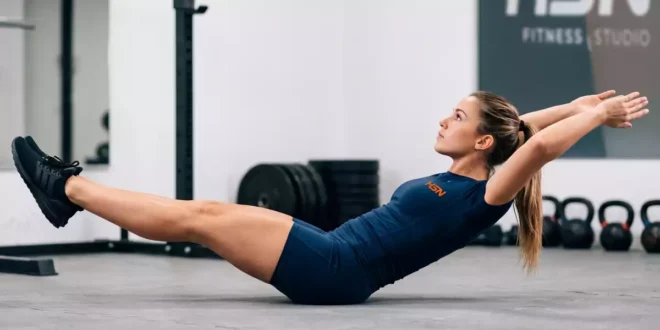

The Hollow Hold is a widely used isometric exercise for strengthening the core and improving body control. Maintaining the position correctly requires coordination between the abdominal muscles, pelvis, and limbs, so mastering the technique is essential before increasing the duration or progressing to more demanding variations.
How do you perform the Hollow Hold?
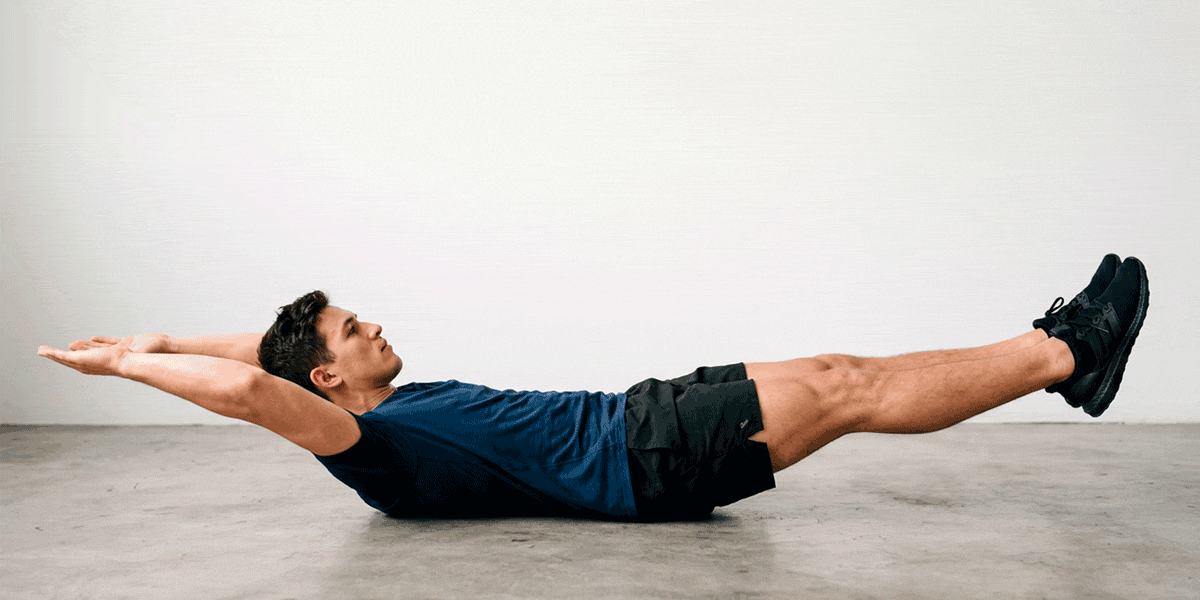
To perform the Hollow Hold, lie on your back, engage your core, and keep your lower back in contact with the floor. Slightly raise your shoulders and legs while extending your arms overhead. Hold this position without arching your back and maintain abdominal tension throughout the exercise.
- Lie on your back with your legs extended.
- Engage your core and position your pelvis so that your lower back remains in contact with the floor.
- Slightly raise your head and shoulders without losing your trunk position.
- Raise your straight legs to a height you can control.
- Extend your arms overhead, keeping them close to your ears.
- Hold the position while preventing your lower back from lifting off the floor.
- Maintain tension for the prescribed time and return to the starting position in a controlled manner.
Sets and reps
| Level | Sets | Duration | Rest | Javier’s advice |
| Beginners | 3 | 10-20 seconds | 30-45 seconds | Focus on maintaining correct posture and control your breathing to avoid fatigue. |
| Intermediate/Advanced | 3-6 | 40-60 seconds | 60 seconds | Increase the intensity gradually and listen to your body to avoid injury. |
How to breathe to perform the exercise correctly
To perform the exercise correctly, learning to breathe in a controlled manner is essential. Follow these tips:
- Use diaphragmatic breathing (from the abdomen, not just the chest).
- Exhale during exertion (when engaging the core or lifting during the movement).
- Avoid holding your breath; maintain a steady airflow.
- Exhale during the effort phase and inhale during the relaxation phase.
- Keep your abdominal muscles slightly contracted even when inhaling.
- Spend time practising diaphragmatic breathing every day.
Hollow Body Hold progressions for all levels
Finally, below is a basic exercise progression that will help anyone develop the necessary prerequisites to eventually perform the Hollow Hold correctly.
Tuck Hollow
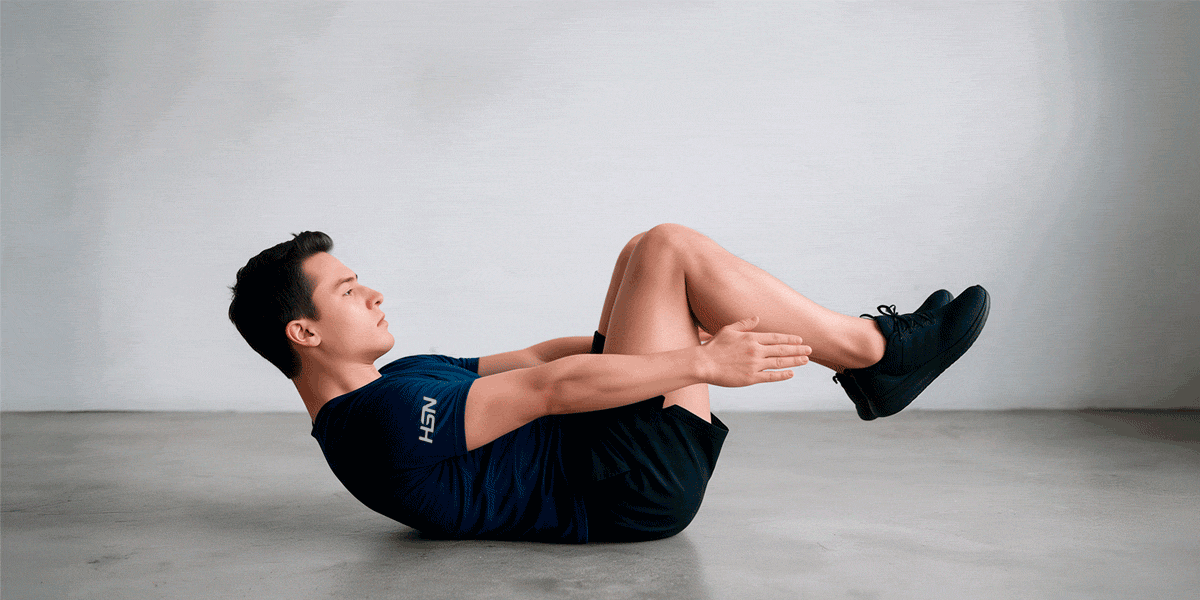
| Training Load | |||
| Work time | 5-20″ | Sets | 2-4 |
| Intensity | 3/10 | Rest | 20-40″ |
Tuck Hollow (pushing the knees)
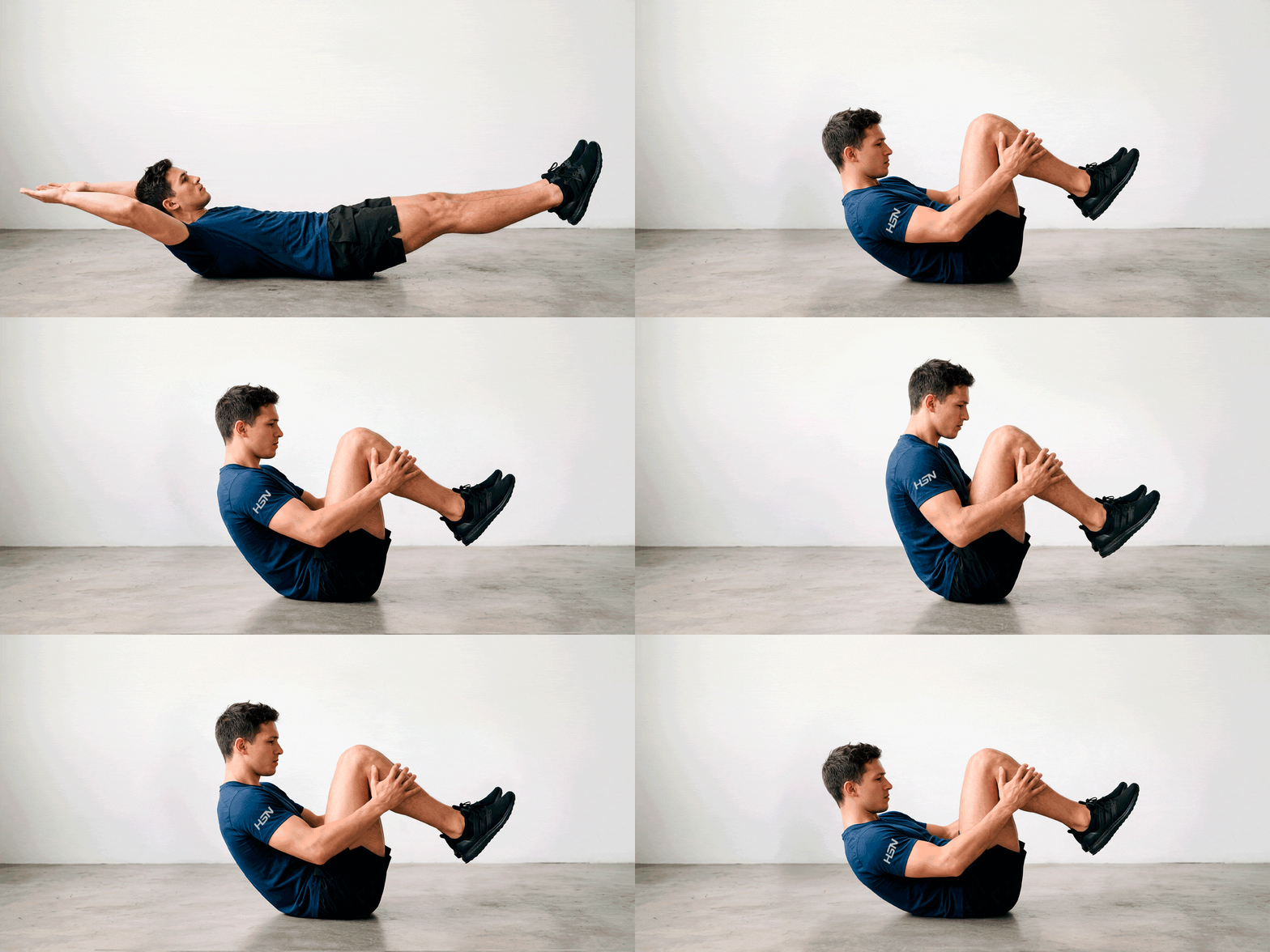
| Training Load | |||
| Work time | 5-20″ | Sets | 2-4 |
| Intensity | 4/10 | Rest | 20-40″ |
Tuck Hollow (arms extended)
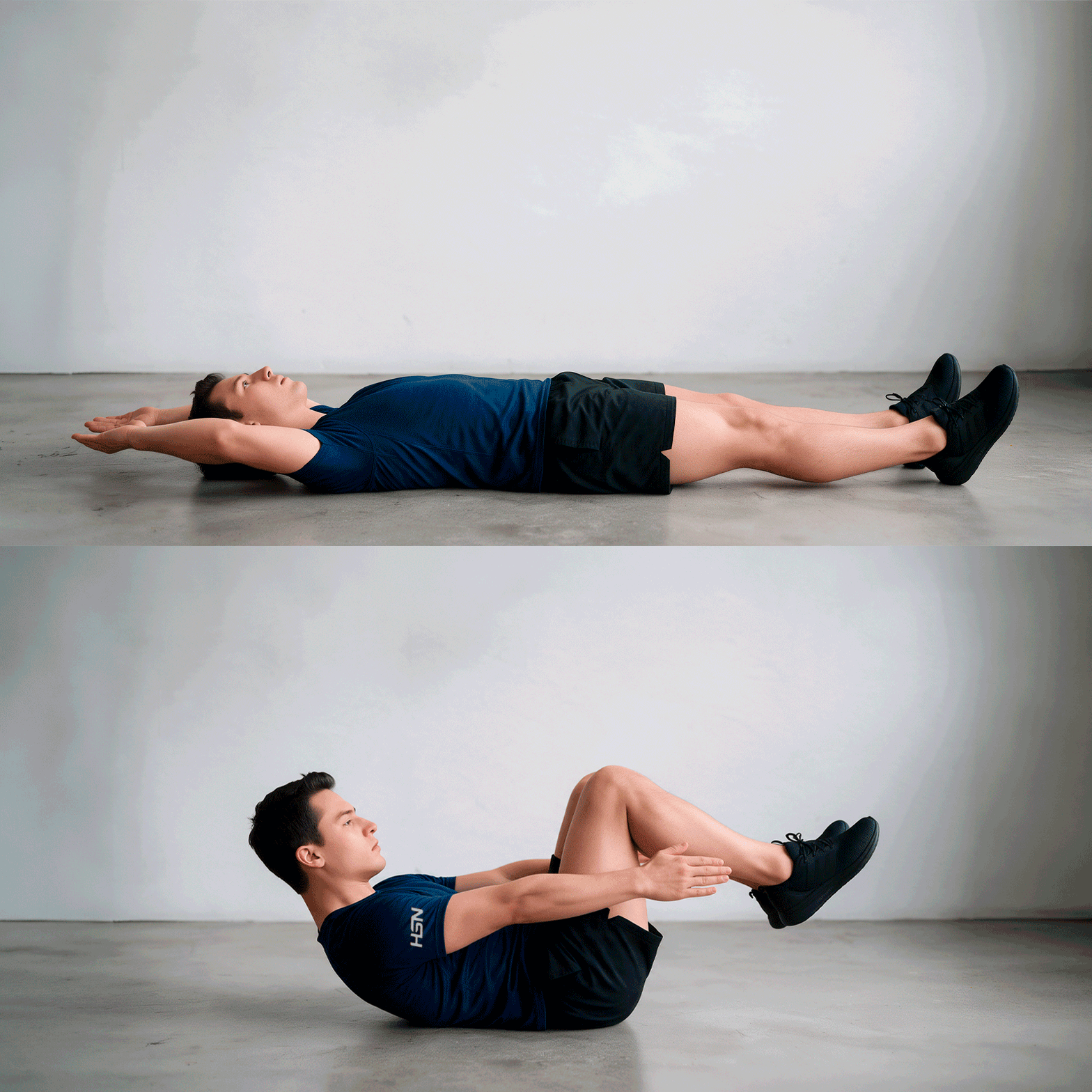
| Training Load | |||
| Work time | 5-20″ | Sets | 2-4 |
| Intensity | 5/10 | Rest | 20-40″ |
Middle Tuck Hollow (arms extended and knee bent)
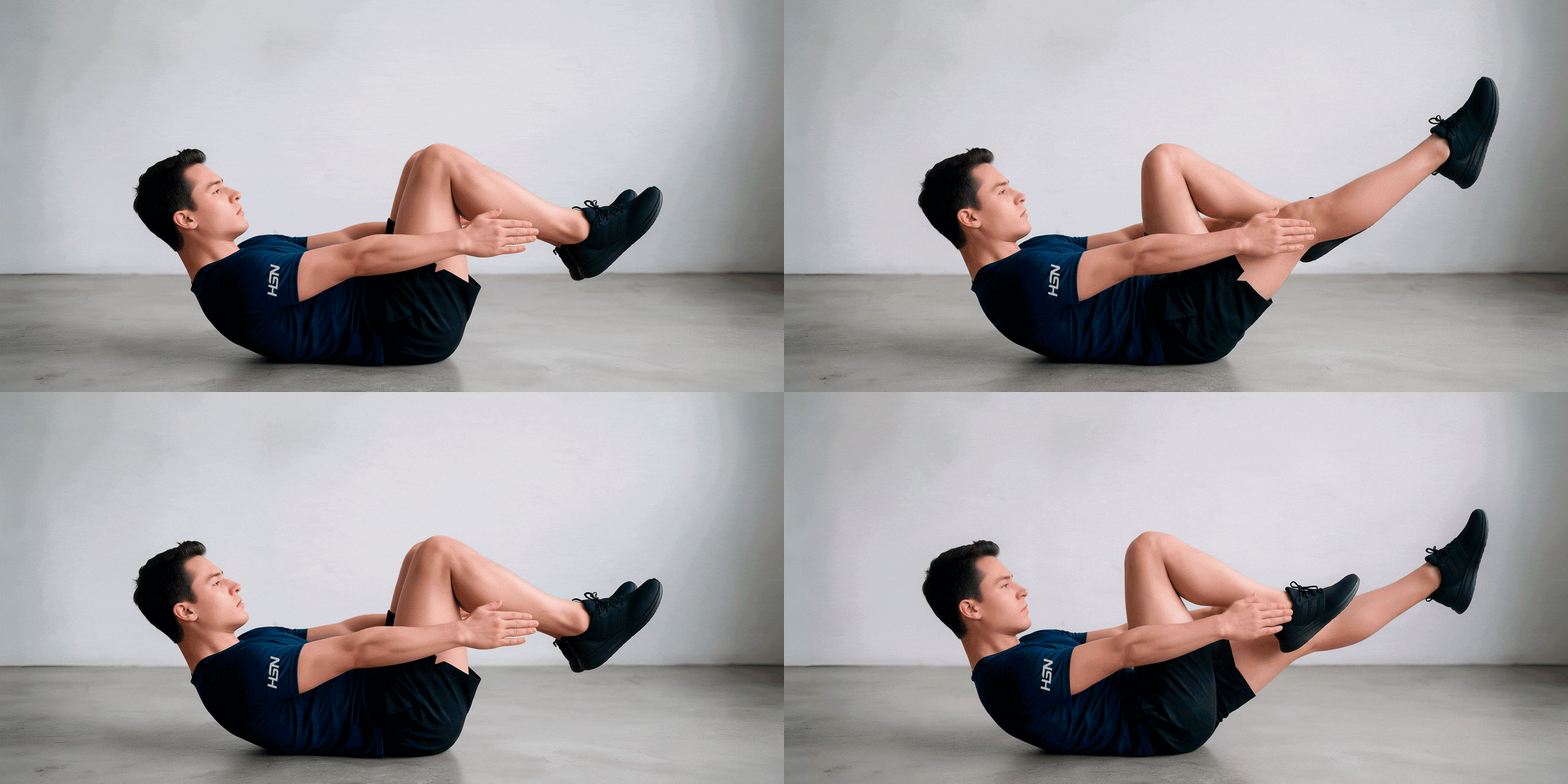
| Training Load | |||
| Work time | 5-20″ | Sets | 2-4 |
| Intensity | 3/10 | Rest | 20-40″ |
Hollow (knees extended and arms bent)
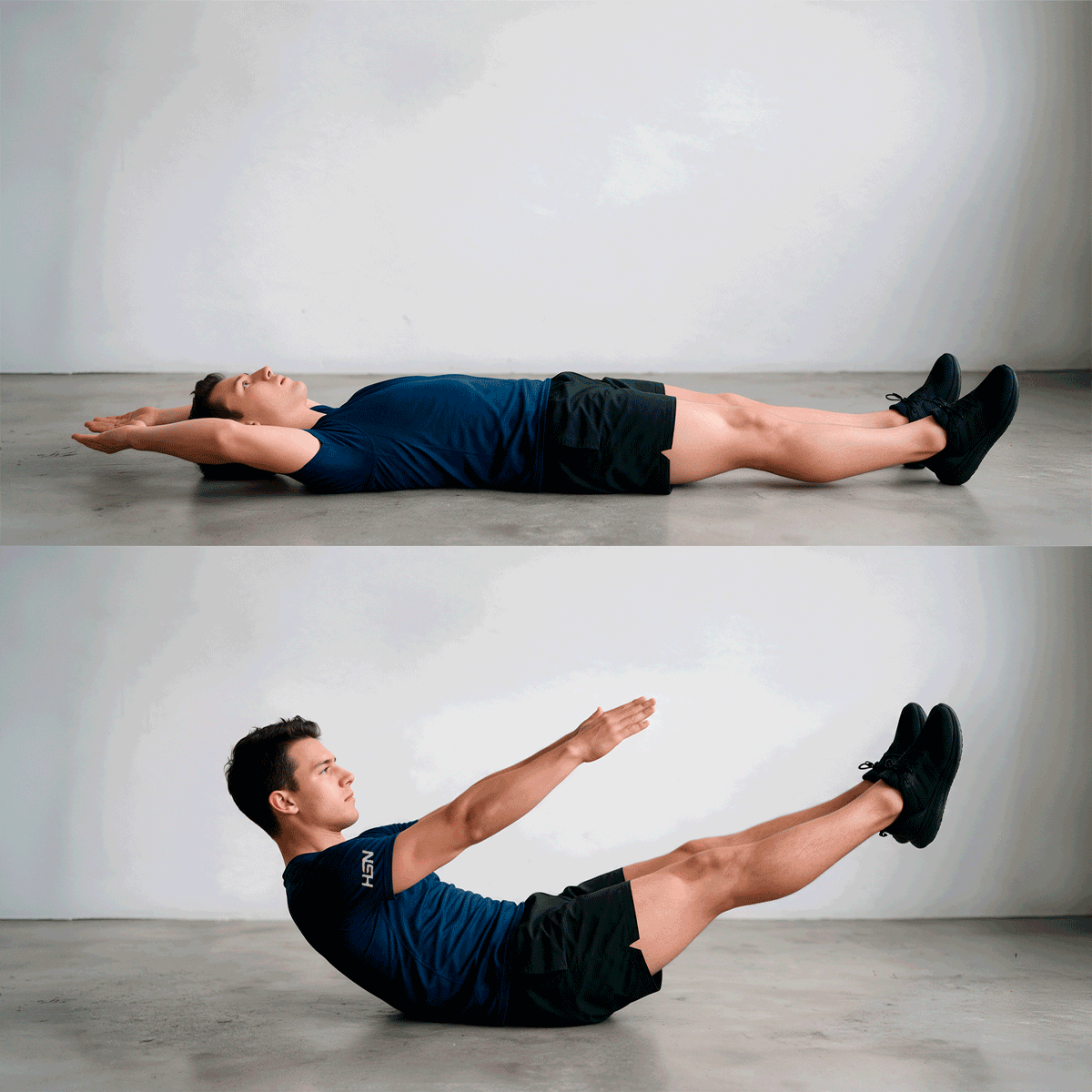
| Training Load | |||
| Work time | 5-20″ | Sets | 2-4 |
| Intensity | 4/10 | Rest | 20-40″ |
Benefits of the Hollow Body Hold
This fantastic exercise is characterised by the following benefits:
- Improves your performance in other sports, as it strengthens key muscles used in both everyday movements and high-performance activities.
- Develops control and stability, as it requires a high degree of body control.
- Activates multiple muscles at the same time, particularly the core (abdomen, lower back, and hips).
- Strengthens specific muscles, such as the serratus anterior (which helps move the shoulders forwards), the serratus posterior (involved in breathing), and the glutes (which stabilise the pelvis and improve posture).
Tips to improve your Hollow Hold
| Description | Details |
|---|---|
| Adapt the exercise to your level and needs | – If you are a beginner, start with short sets and gradually increase the duration. – If you are advanced, increase the intensity or the amount of time you hold the position. |
| Extend your body fully to improve movement efficiency | – Keep your shoulders flexed to 180º (arms extended overhead). – Fully extend your knees, feet, and toes. – Keep your legs together. – Position your arms in line with your shoulders. |
| Protect your lower back and engage the correct muscles | – Keep your lower back and pelvis in contact with the floor. – Engage your glutes to stabilise the pelvis (posterior pelvic tilt). |
| Generate tension from your arms towards your core | – Perform scapular protraction (push your shoulders forwards). – Draw your ribs inwards. – Use costal breathing (breathe into your rib cage rather than your abdomen). |
References
- Paoli, C. & Sherbondy, A. (2014). Freestyle: maximize sport and life performance with four basic movements. Victory Belt Publishing Inc.
- Zlongdpt (2019). Keys to the Hollow Body Hold. The Barbell Physio.
- Contreras, B. (2016). Try Hollow Body Holds. T-Nation.
- Varela, N. (2020). Hollow Body Hold. Body by Gimnastics.
Related Posts
- Complete Guide to Planks
- How to Perform the Overhead Carry
- How to Perform the Side Plank
- The Best Core Exercises by Level
- Complete Guide to Abdominal Exercises