Fitness, Nutrition, Health and Sports Blog In the HSNstore Blog you will find tips about Fitness, sport in general, nutrition, and health – HSNstore.com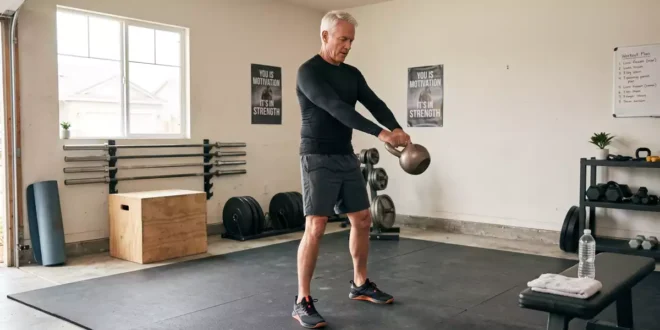

When we think about living longer and enjoying good health, we usually pay attention to the heart, diet or cholesterol. However, there is a protagonist that often goes unnoticed: muscle and, especially, its ability to generate force quickly.
This ability is known as muscle power, and it plays a fundamental role in our independence as we age.
Getting up from a chair without using your hands, climbing stairs with your shopping or reacting quickly to a trip… are everyday actions in which muscle power plays a part.
Maintaining strength is important, but keeping the ability to apply it quickly can make a big difference to our quality of life as the years go by.
In this article you will find out why we lose muscle power with age, what science says about its relationship with healthy ageing, and how you can train it to maintain your functional independence.
What is muscle power and how does it differ from strength?
Although they are closely related, muscle strength and muscle power are not exactly the same thing.
- Muscle strength: the ability of the neuromuscular system to generate tension and to overcome or resist a load. An example is lifting the maximum possible weight in a squat.
- Muscle power: the ability to perform mechanical work quickly. It is expressed as the product of force and velocity and is essential in movements such as jumping, accelerating or getting up quickly from a chair.
Imagine two people who can lift the same weight. If one of them moves it at a higher speed, they will develop more power during that movement.
This difference becomes particularly important with ageing, because muscle power tends to decline faster than maximal strength.
At what age do we start losing muscle strength and power?
The loss of muscle capacity associated with ageing is a gradual process, although its speed varies considerably depending on physical activity, health status and individual characteristics.
Some longitudinal studies in older adults have observed declines in muscle power of around 3-4% per year, compared with maximal strength losses of around 1-2% per year in certain populations.
Why is it especially important to preserve power?
Because many everyday activities require not only producing force, but doing so quickly enough:
- Getting up from a chair or the sofa.
- Climbing steps safely.
- Walking at a good pace.
- Regaining balance after a trip.
- Making quick movements to avoid obstacles.
For this reason, the goal of training should not be limited to preserving muscle mass, but should also include maintaining the ability to use it effectively.Muscle power is one of the neuromuscular components most closely linked to the functional capacity of older adults.
What does science say about muscle strength and longevity?
First, a note of rigour: most of these data come from observational studies, which show associations, not direct causation. That said, the pattern is consistent:
- In the international PURE study (more than 140,000 adults from 17 countries), lower grip strength was associated with higher all-cause mortality: for every 5 kg less grip strength, the risk was approximately 16% higher.
- A meta-analysis published in the British Journal of Sports Medicine (2022) found that spending between 30 and 60 minutes a week on muscle-strengthening activities was associated with a 10 to 17% lower risk of all-cause mortality, cardiovascular disease and cancer. And combining it with aerobic exercise showed the best results.
What does the World Health Organization recommend?
The WHO’s physical activity recommendations include:
- Doing muscle-strengthening activities at moderate or greater intensity that involve the major muscle groups on at least 2 days a week.
- Complementing training with regular aerobic physical activity.
- For older adults, incorporating multicomponent activities that combine strength, functional balance and other physical abilities, on at least 3 days a week, to improve functional capacity and prevent falls.
Why do we lose muscle and power over the years?
From the age of 30-40, a gradual loss of muscle mass of between 3 and 8% per decade is estimated, which accelerates after 60. When this loss of mass and function is marked, we speak of sarcopenia. What lies beneath?
- Loss of fast-twitch (type II) fibres: these are precisely the ones responsible for power, and the first to decline.
- Anabolic resistance: with age, muscle responds less well to the stimulus of protein and exercise, so it needs “more signal” to maintain itself.
- Sedentary lifestyle: the most modifiable factor of all. A muscle that is not used is lost at any age.
How can you train muscle power to age better?
One of the most interesting strategies is to combine traditional strength training with exercises performed with the intention of maximum speed.
This does not mean performing movements in an uncontrolled way or using excessive loads.
The idea is to perform the upward or concentric phase with the intention of moving the load quickly, maintaining proper technique and controlling the descent.
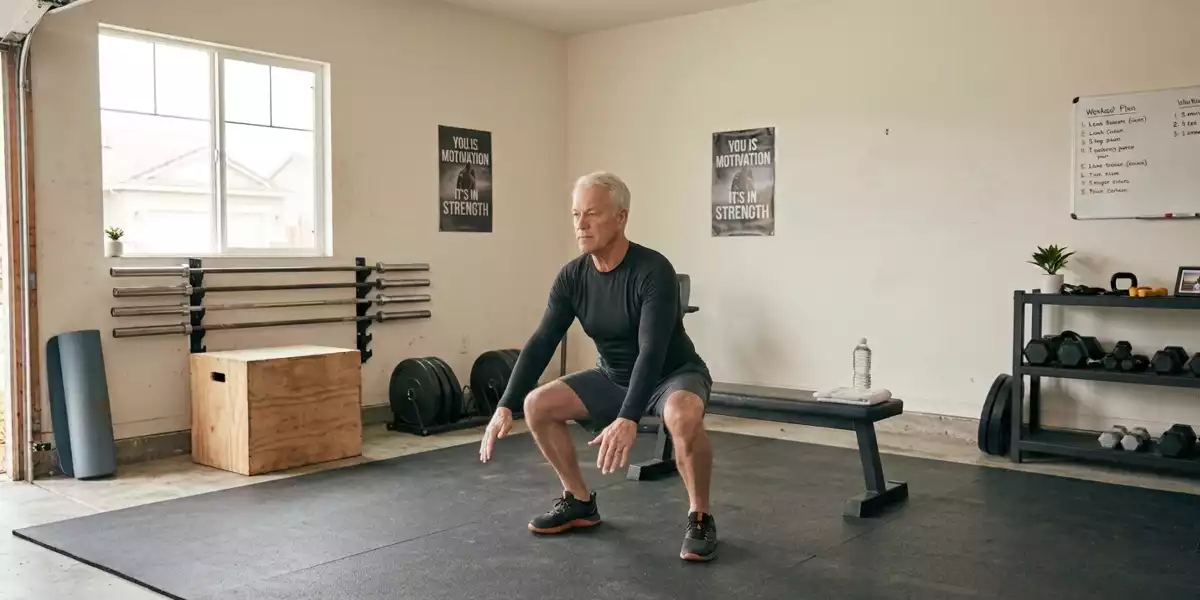
For example, when doing a squat, you can lower yourself in a controlled way and try to stand up quickly, as long as your physical capacity allows it.Guidelines for training power
The following table sets out general recommendations that must be adapted to each person’s experience, physical condition and individual characteristics.
| Variable | Guideline |
|---|---|
| Frequency | 2-3 sessions per week, ensuring adequate recovery between demanding sessions for the same muscle groups. |
| Volume | 1-3 sets of 3-8 repetitions per exercise, prioritising quality and avoiding excessive fatigue. |
| Load | Light or moderate loads, depending on the exercise and experience. In certain movements, approximately 30-60% of 1RM can be used, although this should not be considered a universal range. |
| Speed | Concentric phase performed with the intention of maximum speed compatible with safe execution and control of the eccentric phase. |
| Exercises | Getting up quickly from a chair, squats, leg press, step-ups and, for experienced people, medicine ball throws or kettlebell swings. |
| Progression | Start with simple exercises, master the technique and gradually increase the difficulty according to individual tolerance and capacity. |
These guidelines refer mainly to the power component and do not replace a complete strength training plan.
Which power exercises are recommended after the age of 60?
Power training does not have to include complex jumps, Olympic lifts or heavy loads.
There are alternatives that allow the difficulty to be adapted to each person’s level.
Exercises for beginners
- Getting up from a chair: start with controlled movements and progress towards a faster rise when there is sufficient stability.
- Stepping up onto a step: perform step-ups on a stable surface, gradually increasing the speed of the ascent.
- Assisted squats: use support when necessary and prioritise correct execution.
Exercises for experienced people
- Squat with a fast concentric phase: use a suitable load and control the descent.
- Leg press: perform the pushing phase with the intention of speed, without losing control.
- Medicine ball throws: work on upper-body power through adapted explosive movements.
Exercises for advanced levels
- Kettlebell swings.
- Low-intensity jumps when indicated.
- Ballistic movements adapted to experience and physical condition.
For people with mobility limitations, balance problems or significant medical conditions, it is advisable to have the supervision of a qualified professional.
Important: power training should be complemented with general strength work, balance and mobility. There is no need to replace one ability with another.Nutrition to maintain muscle mass and support performance
Training provides the stimulus, but nutrition provides the building blocks. These are the three areas with the strongest scientific backing:
1. Protein: amount and distribution
Protein contributes to the growth and maintenance of muscle mass (authorised claim for foods that are at least a source of protein). As a general guide, recommendations for active adults and older people who do strength training usually place intake between 1.2 and 1.6 g per kilo of body weight per day, spread over 3-4 meals of around 0.3-0.4 g/kg (approximately 25-40 g per meal).
Distributing it well is especially important with age, because of the anabolic resistance we mentioned earlier.
2. Creatine
It is one of the most studied supplements in the field of sport. According to the claim authorised by EFSA, creatine increases physical performance in successive bursts of short-term, high-intensity exercise; the beneficial effect is obtained with a daily intake of 3 g and is aimed at adults over 18 years of age performing high-intensity exercise.
In addition, research in older people who do strength training has explored its role alongside training, although this last point belongs to the realm of scientific evidence and not to that of authorised claims.
3. Vitamin D
Vitamin D contributes to the maintenance of normal muscle function, to the maintenance of normal bones and to the normal function of the immune system.
Many people have low levels even when living in sunny countries, so it is worth checking your situation with a healthcare professional before supplementing.
The overlooked factor: sleep and recovery
Adaptation to training does not happen in the gym, but when you rest. Getting enough sleep, managing stress and respecting recovery days are just as important for maintaining power as the weights session. If you sleep badly, training more is usually not the solution.
Conclusions: training strength and power to live with greater independence
Muscle ageing does not depend only on the amount of muscle we keep, but also on our ability to produce force and apply it quickly.
For this reason, combining strength training, power and balance can be an important strategy for preserving functional capacity over the years.
- Muscle power is the product of force and velocity and is essential for many everyday activities.
- Power tends to decline faster than maximal strength during ageing.
- Greater muscle strength and regular muscle-strengthening exercise are associated with better long-term health indicators.
- Power training can be adapted to different ages and fitness levels.
- Combining strength, power, balance and aerobic activity helps develop more complete physical fitness.
- Adequate protein intake, a balanced diet and good recovery contribute to maintaining muscle function.
- Creatine may be of interest in certain strength training contexts, respecting the conditions of use and individual recommendations.
- It’s never too late to start: even at an advanced age it is possible to improve strength and functional capacity through adapted programmes.
Ultimately, it is not just about living longer, but about keeping the ability to move, carry out everyday activities and maintain independence for as long as possible.
This article is informative and educational in nature and is not a substitute for the advice of a healthcare professional. If you have a medical condition, take medication or have not exercised for a long time, consult a healthcare professional before significantly changing your physical activity or diet. Food supplements should not be used as a substitute for a varied and balanced diet or a healthy lifestyle.
References
- Leong DP, et al. Prognostic value of grip strength: findings from the Prospective Urban Rural Epidemiology (PURE) study. The Lancet. 2015;386:266-273.
- Momma H, et al. Muscle-strengthening activities are associated with lower risk and mortality in major non-communicable diseases: a systematic review and meta-analysis of cohort studies. British Journal of Sports Medicine. 2022;56:755-763.
- Reid KF, Fielding RA. Skeletal muscle power: a critical determinant of physical functioning in older adults. Exercise and Sport Sciences Reviews. 2012;40(1):4-12.
- Cruz-Jentoft AJ, et al. Sarcopenia: revised European consensus on definition and diagnosis. Age and Ageing. 2019;48(1):16-31.
- Bauer J, et al. Evidence-based recommendations for optimal dietary protein intake in older people: a position paper from the PROT-AGE Study Group. Journal of the American Medical Directors Association. 2013;14(8):542-559.
- Fragala MS, et al. Resistance training for older adults: position statement from the National Strength and Conditioning Association. Journal of Strength and Conditioning Research. 2019;33(8):2019-2052.
- Bull FC, et al. World Health Organization 2020 guidelines on physical activity and sedentary behaviour. British Journal of Sports Medicine. 2020;54:1451-1462.
- Commission Regulation (EU) No 432/2012 establishing a list of permitted health claims made on foods, other than those referring to the reduction of disease risk and to children’s development and health.
- Commission Regulation (EU) 2017/672 on the authorisation of a health claim made on creatine related to resistance training and muscle strength in adults over 55 years of age.
Related Posts
- How should older adults eat?
- What is sarcopenia and how to combat it
- How to improve mental health and prevent cognitive decline in older adults