Fitness, Nutrition, Health and Sports Blog In the HSNstore Blog you will find tips about Fitness, sport in general, nutrition, and health – HSNstore.com

Memorise these quick steps to grow and improve your training drastically, with a new lease of life. They’ll help you get the best results out of your training.
If you’re not noticing any differences after following a particular training routine for some time, if you feel ‘stagnated’, all you need is to take note of the following recommendations. Put them to use and see how they revolutionise your training!
Time Your repetitions
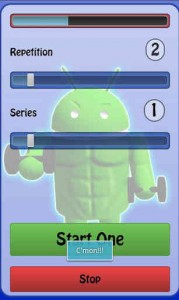
Choose a range of repetitions when practising the exercises, focusing on a hypertrophy or strength-oriented target, can be done at the time of initial planning. This will mark your progress. And if you weren’t counting repetitions, what would you write down in your training diary anyway? (if you keep it up to date ?)?
There are other parameters that you can use as a guide in place of counting repetitions too. During the next 2-3 weeks, choose a time frame, taking as an example:
- 40″ for moderate weights
- 20″ for heavy weights
And do the maximum number of repetitions possible during this period of time, until the timer rings!
If you need to stop, do so, obviously… but recover as quickly as possible so you can start again
You’ll be able to accustom your body to training until fatigue through this strategy, and it’ll help improve muscle resistance.
Extend the Time Under Tension (TUT)
Time Under Tension work is a technique that helps improve muscle development and drive the activation of more motor units, increasing the amount of them being contracted.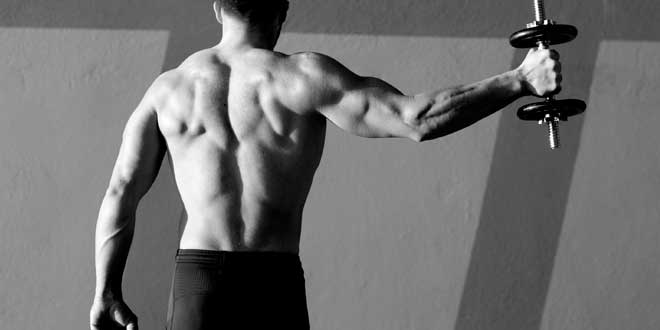
For some people, half the range of motion is their worst nightmare, the point of greatest muscle tension
To increase the TUT:
- Make the sets with the range of repetitions you’ve set.
- In the last repetition, hold the final position (up or down, depending on the exercise) with the weight stationary.
- Hold on until the failure, and then finish the repetition.
- If you want to increase the tension even more, do the same procedure, but this time it’s halfway through the movement
Eccentric Work
A movement consists of two phases:
- The concentric (the part where the muscle is contracted and the maximum force is exerted), and
- The eccentric (the part where the muscle extends and must bear the load).
Putting more emphasis on working the eccentric phase in certain exercises can lead to results that you might not have imagined until now. But they are also related to a greater degree of DOMS (Delayed Onset Muscle Soreness).

The Nordic Curl uses this strategy
Find Your Ideal Training Partner
That’s to say, someone who shares more or less the same qualities.
Do so and you’ll both advance from the same point.
In other cases, if the partner is a little more advanced, this isn’t so bad an option either, as this will “force” us to adjust to their level, which can be motivating and a great challenge.
You’ll see the results!

Any athlete, of whatever level, will always need the help of a partner to give them one last “push” and allow them to lift that bar with confidence
Training with your body weight
Both training with free weights and using your own weight as a ballast is ideal when planning a training programme.
They are basic tools, and require an ability to overcome and above all master the weights.
If, on the one hand, with free weights, we need to activate our stabilisation system, with the body weight training, we need to have total control and mastery of our own load.

Adding body weight exercises to weightlifting will help you generate more power and strength
Once the free weight lifting sets are completed, perform the corresponding movement using your body weight:
- After chest work, at any angle, on a flat, inclined or declined bench, performing a superset batch of press-ups can be great. When doing so, it’s also recommended to alternate the type of flexion (chest, biceps, shoulder, triceps, …)
- After leg training with free weights, whatever the exercise, a set of air squats with your body weight are a great idea
- Following any back exercise, do some pull-ups, in any variant of the movement
When we’re exercising with our body weight, the aim will be explosivity, i.e. performing the exercise at the highest speed possible, thus emphasising the mobilisation of a greater number of fibres.
If you choose this method, keep in mind that you’ll generate a high volume of training, so it’s advisable to reduce the total number of sets.
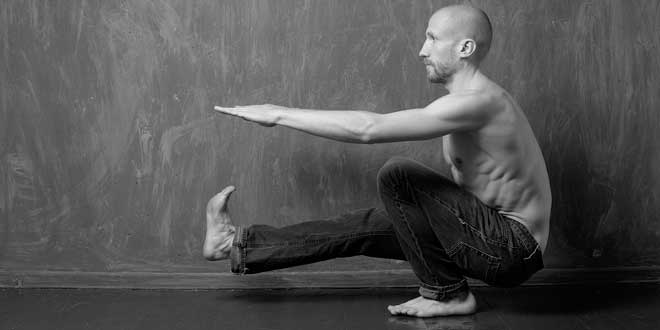
Learning to do Pistols
Kettlebells
Russian weights is the common name by which the kettlebell is usually recognized.Kettlebells may seem a bit “odd” at first, but just a couple of weeks training with it and you won’t want to give it up.
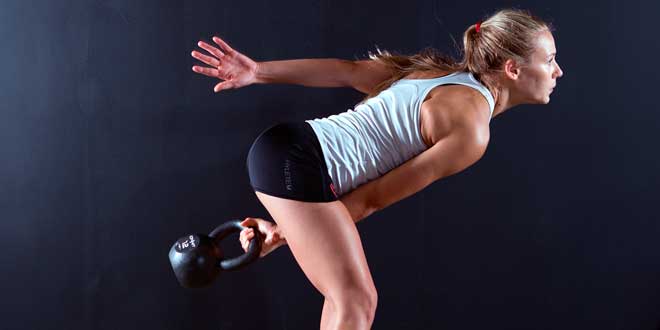
Unlike conventional weights, other types of movements can be performed using the kettlebell, which are a little more specialised in shape, among which include:
- swings
- clean & jerk
- presses
- rows
- snatch
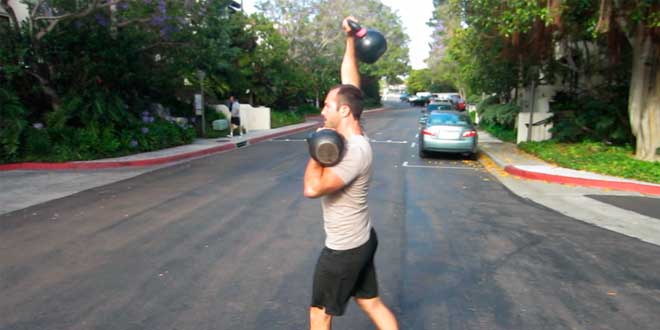
Along with them, there are also other types of exercises that strengthen the work of the abdomen and grip, such as: the “farmer’s walk” and the “waiter’s walk”
If you’ve never practiced them before, you’re missing out on a whole new way of stimulating your muscles and creating new adaptations.
The functional character of this tool will also impact on form, as well as being beneficial for cardiovascular work.
It’s not a contradiction, as in the previous point, the combination of training free weights and kettlebells.

Try one of the best exercises for working the core: the Turkish Get Up
Alters the Order of Execution of the Composite Exercises
By compound exercises we mean those that involve the largest amount of muscle, generating the best muscle development and maximum strength.
As well as the all variations of them.
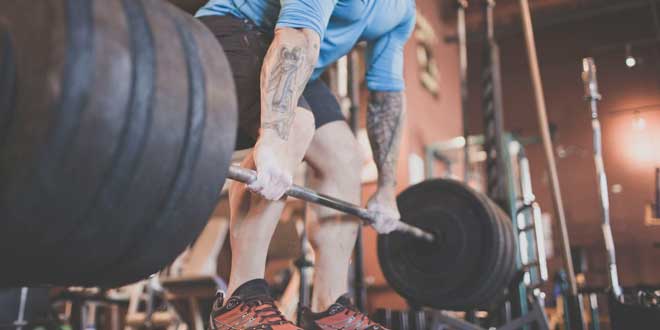
However, when planning our routine, after a certain time, our body will seem to get to know the exercises, and above all the order of performance, with the consequent adaptation
A very simple way to avoid this “stagnation” is to change the order we’ve set them at, or even to vary the date of execution. A slight change will make a big difference from an adaptive point of view.
- Monday -> Squat
- Wednesday -> Push press
- Friday -> Deadlift
We simply alter this order, moving forward one day, giving us:
- Monday -> Deadlift
- Wednesday -> Squat
- Friday -> Push press
Now you have some new tips to include in your training, to improve every day :)!>
Related Entries
- The Importance of Training Your Glutes
- Tabata: Method for Burning Fat
- 5 Day Full Body Routine
- Are you familiar with the Push Jerk or Push Press technique?