Fitness, Nutrition, Health and Sports Blog In the HSNstore Blog you will find tips about Fitness, sport in general, nutrition, and health – HSNstore.com

Including the single-leg deadlift in your routine has countless benefits and is one of the variations you should learn to perform to get the most out of your glutes, stabilisers, and balance.
Deadlift with dumbbells for gluteus and femoral step-by-step
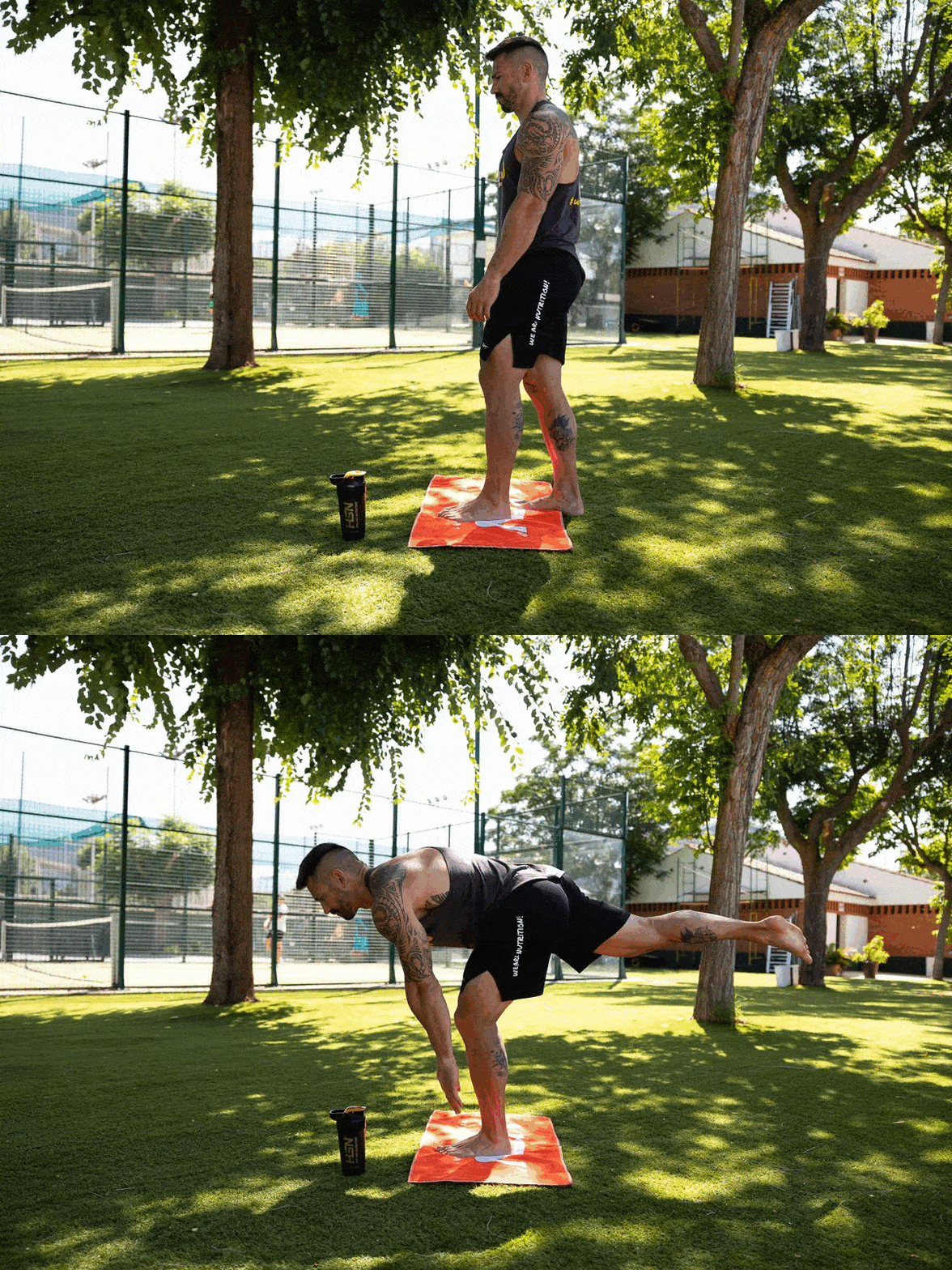
To do the exercise correctly you must master the hip hinge pattern.
Since the movement starts from this hip flexion, alignment must be maintained from the heel of the leg being lifted behind to the crown of your head. To do this, you have to think about the stabilising musculature of your spine, i.e. your dorsal area must be engaged at all times.
- Strong and stable supporting foot: all the force will be exerted with the gluteus medius and femoral of the supporting leg.
- The supporting leg must not be locked.
- The other leg extended slightly behind, with the foot slightly flexed, active: the tip of the foot always faces the ground.
- The active dorsal area: holding the dumbbells in each hand and avoiding rounding the shoulders forward. (the shoulder blades always want to touch each other).
- From this starting position, we bring the hips backward: the body and leg move in a pendulum movement keeping a straight line.
Movement execution
- Lowering phase: the arms must remain parallel to the body, without bringing them forward. The biceps femoris is stretched, and the trunk does not flex forward.
- Rising phase: the supporting foot pushes the ground to rise, thus contracting the femoral and gluteal muscles; the gluteus medius is activated to maintain the stability of the knee of the supporting leg.
Muscles involved in the single-leg Romanian deadlift
Unipodal work helps to develop an improvement in central stability and balance so that the action of the middle zone and stabilising muscles of the trunk take on special importance.
On the other hand, the intrinsic musculature of the foot, because when the base of support is reduced, it is activated to maintain the stability of the ankle.
As in the conventional Romanian deadlift, this one-legged deadlift with dumbbells works the muscles of the posterior chain:
- Biceps Femoris.
- Hamstrings (semitendinosus and semimebranosus).
- All the posterior leg musculature of the foot of extensive hip support.
- Gluteus medius.
- latissimus dorsi and extensors of the spine.
Common mistakes in unilateral deadlifts
- Poor posture of the spine: bending only the trunk forward without movement of the hips, compromising the lumbar region.
- Facing forward: flexing the cervical girdle without maintaining its alignment with the rest of the spine.
- Excessive bending of the knee of the supporting leg: limiting the concentric action of the biceps femoris.
- Poor positioning of the foot of the supporting leg: rotated outwards / inwards, preventing correct alignment.
What are the benefits of one-legged deadlifts?
This exercise makes it possible to work on possible decompensations and/or to avoid them. On the other hand, it puts less strain on the lumbar spine (the exercise technique must be mastered).
In most daily gestures, as well as in the practice of the vast majority of sports, the movements are unilateral, so the transfer of force to these gestures will be greater and will therefore allow for more efficient movements.
This one-legged deadlift has been shown to significantly improve lower limb strength without the use of heavy weights as in conventional deadlifts.
Variations you can perform on the single-leg deadlift
It can be done with different implements: 2 dumbbells on each side, a kettlebell gripped with both hands, a dumbbell/kettlebell on the contra-lateral side…
Since single-leg exercises require good stability and balance, it is recommended that you work the basic pattern of this exercise without weights at first in order to progress.
Related Entries
- We tell you all about how to do the barbell deadlift: Read Post.