 Fitness, Nutrition, Health and Sports Blog In the HSNstore Blog you will find tips about Fitness, sport in general, nutrition, and health – HSNstore.com
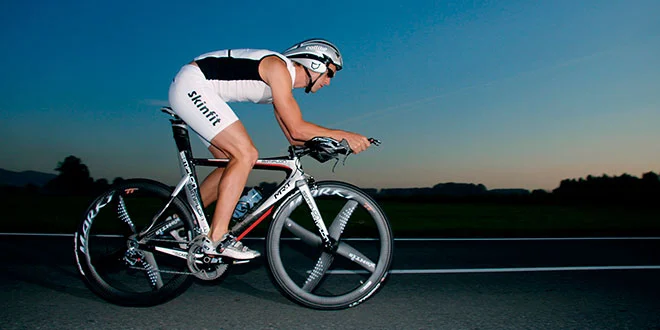

We’ll focus on the nutritional side of competition day for endurance sports, breaking down how much and how to consume the nutrients
Many times, nailing the perfect plan during pre-season doesn’t guarantee an optimal result during the race or competition.
We could talk about factors outside nutrition like training or the psychological aspect, the latter being a major reason for missing a lift or not hitting the time you wanted. But today’s article is all about the purely nutritional side, since that’s where most debates happen.

Usually, the debate on competition day revolves around the amount of macronutrients to consume and how to split that intake
Short Races VS Long Races
We need to be realistic when planning the pre-competition diet and, above all, honest with ourselves
If your goal is to perform during a padel match, you’re NOT going to plan a nutrient intake like an ultra-endurance athlete, where the event lasts more than 8-10h.

People tend to extrapolate results from short events (under 90min), and that’s the fundamental mistake
Understanding Competition Needs
To set the scene, imagine an athlete doing a 160km trail lasting about 26h.
This person will consume around 7100 Kcal, almost 20 L of fluids, and 16 g of sodium(1) during the race. Even with this intake, the athlete will face dehydration and hyponatremia (low sodium levels) issues during the race.
That’s why the first thing before thinking about what’s ideal to consume is to observe and visualize the event.

We need to ask ourselves questions like how many kilometers? How long will it last? Are there elevation changes? What will the temperature be like? How humid will it be?
Nutritional Planning
Once we know the answers to those questions, it’s time to look at:
- How many calories to consume,
- What macronutrient distribution to follow, and
- How to split them during the event.
This is really tough due to the huge variability between athletes.
Macronutrient Intake
The first thing to adapt, and ironically the hardest, is macronutrient intake.
The complexity here isn’t about avoiding too many calories; quite the opposite, we usually consume fewer calories than we actually need (Fig.1). The main challenge is getting a large amount of calories (mainly carbs) without causing gastrointestinal issues.

Fig1. Calorie intake (white bars) and expenditure (black bars). As you can see, athletes consume very few calories during the event, creating a total deficit of 7000 kcal (2)
Don’t Experiment on Competition Day
The second, and probably most important, rule is never introduce anything on competition day that you haven’t tested in the weeks before
Pre-Competition Intake (Long Duration Event)
Personally, I consider the pre-competition intake as the period from the day before until the moment the event starts. This differs from the pre- concept in training, which usually means the 2h before training.
If we try to load a big amount of nutrients in those hours before the event, our body tends to get saturated, oxidizing some of those carbs or proteins. What’s ideal?
How to carb load in the days before?
If your competition is on Sunday, start carb loading on Saturday (as long as you’ve had a normal carb intake that week), doing a workout and then adding carbs throughout the day.

Though it sounds crazy, the workout I’d choose the day before competition would be short, explosive, high-intensity sessions, like sprint intervals
Competition Day Breakfast
On race morning, keep a steady carb supply. At this point, muscle glycogen will be intact, while liver glycogen will have dropped slightly as it supplied glucose during sleep.
In most cases, this first carb intake of the day coincides with the pre-event intake, so you have two options:
- Wake up early to avoid digestion issues from solid carbs
- Sleep a bit longer and take liquid carbs (recommended)

Generally, people tolerate liquid pre-workout foods better than solids, though obviously it’s not that simple
Supplements for Endurance
When it comes to supplements, I’m pretty minimalist, sticking to just three: Citrulline Malate, Creatine, and Caffeine
For Citrulline Malate, I’m interested in its role in ATP (energy) production (4), improving aerobic capacity, plus filtering waste substances produced during exercise (5).
Regarding Creatine and Caffeine, there’s not much to add beyond the articles already written (How to Take Creatine and Caffeine Before Training to Boost Performance).
Intra-Competition Intake
Once the event starts, we need to manage carbs, electrolytes, water, and amino acids (often overlooked)
Carbohydrates
When talking carbs, think about the wide range available: the type (simple or complex sugars), form (liquid or solid), whether you use carb supplements, how much you consume, if you need combinations, etc.
This has caused a lot of disagreement despite extensive scientific literature
If your event is under 60-90min, there’s no need to take carbs, except for high-intensity efforts (e.g., sprints), where carb mouth rinses can improve performance. For events longer than 4h, carb intake CAN be beneficial, but always within the right range.
Personally, I think the ideal is about 75g/h with a 25:50:25 maltodextrin:glucose:fructose ratio, or in other cases, glucose:fructose blends. Just never take only fructose, since the fructose->glucose conversion is quite slow.

Energy contribution based on carb intake per hour. More than 60g glucose/h offers no benefit (6), hence the search for blends
Mouth Rinses
We have to understand that practice differs a lot from theory, as some athletes can’t tolerate that much carbs/h.
That’s when we turn to another technique: carb mouth rinses

As many might guess, the benefit of carb rinses is that since they’re not swallowed, we avoid gut issues, heaviness, or fatigue
The mechanism is simple: Our tongue sensors detect the glucose-rich fluid, sending info through the thalamus. This activates certain brain areas (7), reducing fatigue and discomfort during the event (8,9).
Mineral Salts
Once we know the carb intake, we move on to electrolytes or mineral salts.
The most important and well-known are sodium (Na+) and potassium (K+). Sodium drops sharply during exercise since a lot is lost through sweat.
Post-Competition Intake
This moment, once the activity ends, could be considered “less relevant.” Obviously, the hard work is done, and now it’s time to rest and recover. This last stage is where a macronutrient often overlooked or underestimated comes in: protein.
There’s a common belief that endurance athletes should eat little protein and lots of carbs. That’s not entirely true. Protein plays a key role in starting protein synthesis and kickstarting muscle structure repair after heavy wear.
Sources
- Food intake and electrolyte status of ultra-marathoners competing in extreme heat. Glace BW1, Murphy CA, McHugh MP.
- Energy Balance of Triathletes during an Ultra-Endurance Event. Anna Barrero 1,* , Pau Erola 2 and Raúl Bescós
- Carbohydrates for training and competition. Louise M. Burke a , John A. Hawley b , Stephen H. S. Wong c & Asker E. Jeukendrup
- Citrulline/malate promotes aerobic energy production in human exercising muscle
- Activity of citrulline malate on acid-base balance and blood ammonia and amino acid levels. Study in the animal and in man. Callis A, Magnan de Bornier B, Serrano JJ, Bellet H, Saumade R. Bendahan, J Mattei, B Ghattas, S Confort-Gouny, M E Le Guern, and P Cozzone
- Fuel selection and cycling endurance performance with ingestion of [13C]glucose: evidence for a carbohydrate dose response. Smith JW, Zachwieja JJ, Peronnet F, et al.
- Carbohydrate sensing in the human mouth: effects on exercise performance and brain activity. Chambers ES, Bridge MW, Jones DA.
- Carbohydrate ingestion during prolonged high-intensity intermittent exercise: impact on affect and perceived exertion. Backhouse SH, Ali A, Biddle SJ, Williams C.
- Effect of carbohydrate and prolonged exercise on affect and perceived exertion. Backhouse SH1, Bishop NC, Biddle SJ, Williams C.
Related Posts
- Hydration for Long-Distance Runners: What to Drink Before, During and After Running
- Hydration, Birth Control, and Dietary Strategy in Racing
- Best Supplements for Endurance Sports