 Fitness, Nutrition, Health and Sports Blog In the HSNstore Blog you will find tips about Fitness, sport in general, nutrition, and health – HSNstore.com
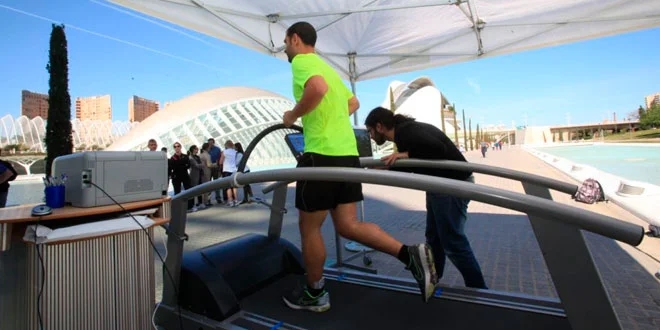

The main requirements that all footwear must meet are basically two:
- Protect the foot
- Support its functions
It is in the realm of sports footwear where these functions become especially important.
The foot is essential for human locomotion and constantly adapts to facilitate a compatible fit between the body and the environment, contributing to effective movement. Advances in biomechanical methods for dynamic analysis have enabled a more precise description of the foot’s function during movement and, especially, during walking, but of course, also during running.

Small imbalances in the skeletal structure will cause joint and muscle compensations that in turn will lead to abnormal movement patterns during running, which over many kilometers will result in injury. To give a numerical reference, in a 10 km run, around 10000 impacts with the ground occur… you can imagine what this would mean structurally without a customized insole (of course, this applies to other sports too: football, basketball, volleyball, tennis, Crossfit…)
Static gait analysis seems insufficient for an athlete and, in the case of performing a dynamic analysis, it wouldn’t make much sense to use a static pressure platform when it comes time to create the insole.

When customizing, there are factors beyond the distribution of body weight in static, since the load and type of training should also be considered. Someone who runs occasionally is not the same as someone who runs daily, with running speed, as we’ll see, being super important.
Dynamic analysis and running speed
Pedometers and instrumented insoles belong, along with force platforms, to the most versatile quantitative techniques in kinetic analysis. They are based on the use of electronic transducers that convert force or pressure at the foot-ground (pedometer) and foot-shoe (insoles) interfaces into an electrical signal through a signal conditioning and recording chain.
It’s true that performing a thorough gait and running analysis using video capture, pressure platforms, and plantar footprint scanning will also allow knowing how to make customized insoles with the following goals:
- Reduce loads on the most sensitive anatomical points that are less prepared to bear them.
- Increase performance through better grip on the ground during movements like running, sprinting, starts, and changes of direction.
- Quantitatively distribute plantar pressures avoiding hyperpressure points in areas especially vulnerable to overload fracture injuries.
- Promote shoe flexion in zones that match the natural flexion zones and axes of the foot.
But the test might be invalid if done at a different speed than usual running speed. There are gait analysis places that analyze gait during walking or jogging, but what about those who run at an average of 14-18 km/h? In sprinting, muscles like the gastrocnemius, soleus, vastus lateralis, and gluteus maximus among others, become hyperactive in an effort to better absorb the increased ground reaction forces.
In distance runners, for example, the leg doesn’t flex as much and a rearfoot running pattern is used because it saves energy and produces a more passive movement, but in sprinters or people who usually run this way, where energy cost shouldn’t be a limiting factor, that flexion is greater.
In the following image, you can see differences at different speeds (m/s) and terrain (treadmill VS tartan). You can notice how joint angles vary and, consequently, the dynamic running gait will vary (this idea is again applicable to other sports).
Where to get it done?*
The Spanish Sports Council has been using the instrumented insole equipment Biofoot/IBV® for years, which is a valuable method for analyzing plantar pressures in certain sports movements, allowing to improve sports technique for better performance and injury prevention.
At the Biomechanical Institute of Valencia itself, they use Runalytics® software that measures relative movement in space (3D) of leg and foot body segments to create insoles. Similarly, Podoactiva® is supported by clubs and athletes from different disciplines.
Another option is Asics’ Foot ID®, one of the most sophisticated gait tests on the market done by a commercial brand, but they don’t offer the possibility to create insoles in situ. According to their website, the analysis lasts about 30 minutes and consists of a static test and a dynamic or running test (at usual running speed).
* No benefit is obtained from the name of these registered trademarks. They are mentioned for informational purposes for those interested in this type of testing
Sources
- Ferro Sánchez, A. (2001). La carrera de velocidad. Metodología de análisis biomecánico. Madrid: Esteban Sanz, SL.
- Marhuenda, A. M., Fuentes, J. V. H., Costa, G. B., Ferrús, E., & González, J. C. (2011). Biofoot-IBV. Una técnica de registro y análisis de la distribución de presiones plantares aplicable a la mejora del rendimiento deportivo. COLECCIÓN ICD: INVESTIGACIÓN EN CIENCIAS DEL DEPORTE, (19).
- Pearl, B. (2008). Tratado general de la musculación. Barcelona. Editorial Paidotribo.
Related Posts