 Fitness, Nutrition, Health and Sports Blog In the HSNstore Blog you will find tips about Fitness, sport in general, nutrition, and health – HSNstore.com
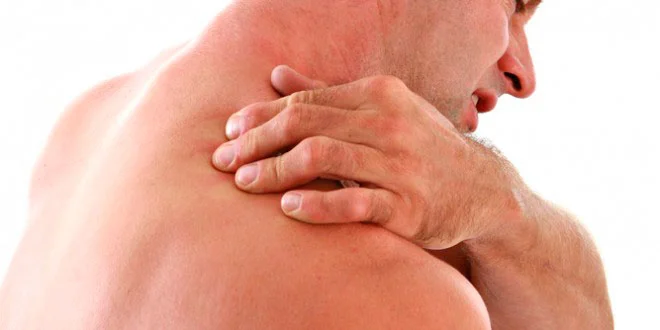

Muscle injuries are the most common in sports, but they are often confused, either due to lack of knowledge or because what we hear in the media isn’t entirely accurate, as they don’t clearly differentiate one from another.
One way to classify them is based on whether they occur without anatomical injury or with it. Traditionally, and understanding that the term was the same for doctors, athletes, and the media, they were called:
- WITHOUT ANATOMICAL INJURY = Contractures and muscle strain.
- WITH ANATOMICAL INJURY = Pull (elongation), tear, and rupture.
Intrinsic muscle injuries without anatomical injury
1. CONTRACTURES: In a contracture, there’s never an anatomical injury, the fiber remains intact, and there’s always a lack of precision in timing and selective pain on palpation, presenting moderate pain on palpation over almost the entire muscle. It happens as a result of overwork. Treatment involves rest, heat, and massage.

2. MUSCLE STRAIN: This consists of a stretching of muscle fibers beyond the normal limits of elasticity. There’s no anatomical injury either, but there may be histochemical or mitochondrial lesions (bruises) due to exceeding the muscle’s elastic limit.
They occur as a result of jumps or accelerations, caused by an excessive stretching force that leads to high tension in the myofibrils and rupture near the muscle-tendon junction. These injuries affect more the superficial muscles that work over two joints like the rectus femoris, semitendinosus, and gastrocnemius.
Functional tests will tell us if the injury has healed. Exercise can start when there’s no pain on palpation, resisted contraction, or stretching.

Intrinsic muscle injuries with anatomical injury
The accident is characterized by the following:
- Precision in timing (the injured person knows exactly when it happened).
- Geographic precision with pinpoint pain (the injured person knows exactly where the injury is).
- Functional impairment.
- Intense pain in the first days.
These injuries are divided into three stages depending on severity:
1. ELONGATION: The most intimate structures, the myofibrils, break, but there’s no macroscopically visible anatomical injury, only microscopic. The treatment to follow is:
- Initial treatment is immobilization, compression, cold, NSAIDs.
- After a few days, any fluid collection can be drained.
- From day 10 to 21, weight-bearing starts with gentle stretching and massage away from the injury site.
- After this period, recovery and functional strengthening of the muscle should begin.
2. TEAR: More significant structures are injured, like fibers or fascicles. Treatment is the same as elongation but requires more time for full recovery.
3. RUPTURE: It affects several fascicles and involves a macroscopically visible discontinuity. Muscle ruptures happen due to excessive muscle demands, often caused by a motor pattern beyond the actual capacity. They can be of two types:
- PARTIAL: Only part of the muscle belly is affected. Hematoma, sharp pain, and functional incapacity appear.
- TOTAL: The entire muscle belly is affected, producing the “chop” sign and retraction of the torn muscle belly. There’s pain and major functional incapacity.
Ruptures are common in people aged 40-50 who, after years of inactivity, return to sports. The most common are biceps brachii rupture in retired gymnasts or triceps surae rupture in tennis players.
Muscle rupture requires surgical treatment, as the resulting diastasis (separation of injured ends) makes conservative repair impossible.

Sources
- Bahr R, Maehlum S and Bolic T. Sports Injuries. Clinical Guide. Panamericana. Madrid 2007
- Kulund D. Sports Injuries, Salvat. Barcelona 1986.
- Peterson L and Renstrom P. Sports Injuries: Their Prevention and Treatment. 3rd Ed. Martin Dunitz Ltd. London 2001.
- Romero D and Tous J. Injury Prevention in Sports. Keys for Optimal Sports Performance. Panamericana. Madrid 2010.