 Fitness, Nutrition, Health and Sports Blog In the HSNstore Blog you will find tips about Fitness, sport in general, nutrition, and health – HSNstore.com


Every cell in the human body responds in an autocrine or paracrine way to stimuli, consequently affecting organs and structures it communicates with one way or another, even if they seem far apart. The same goes for the skin. In fact, when the skin’s integrity is altered, or its healing process is disrupted, it becomes a source of symptoms that aren’t just skin-deep.
What is the skin?
The skin is an organ with different functions besides its connections to the central and peripheral nervous systems. Scars and wounds can cause postural and other types of disorders (motor, sensory…) that don’t just stay in the area where they are, but due to their link with the subcutaneous fascia, they could affect others farther away.
The skin, with around 1.8 m2 of surface, is one of the largest organs in the human body and the most exposed to the environment. It’s subject to a continuous exchange of information that keeps it electrically active, sending and receiving info from the whole body. So, it’s a mistake to think of the skin surface as something unchanging; on the contrary, it’s always changing and directly involved in the homeostasis of the human body.
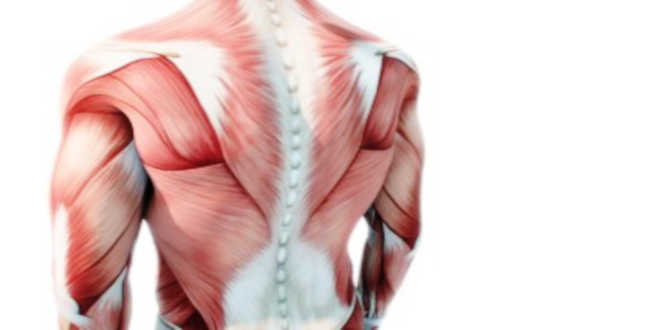
The fascia surrounds and connects every muscle, even the tiniest myofibril, bones, nerves, and every single organ. This forms a fascial system that defines the concept of “body continuity.” Every body region is connected to another.
Scars
Scars appear after trauma, surgery, or burns. The skin surface healing process starts with the injury, when bleeding delivers blood elements to the injury area (blood platelets, fibrin, fibronectin, glycoprotein), trying to produce vasoconstriction.
As time goes on and optimal care is followed, the healing reaches a final stage called remodeling. This phase can last years and depends on the wound’s size and nature.
When the dermis and fascia are affected by scars, these structures change, and their function and ability to interact with the external and internal environment can decrease. The fascia is rich in corpuscles (Golgi apparatus, Pacini, and Ruffini corpuscles), with proprioceptive and nociceptive functions (pain sensation). Also, fascial tissue is made of contractile fibers, which can possibly cause spasms and consequently dysfunction and pain.
Major problems
If the fascia’s contractile fibers lose elasticity during healing, tension (tightness) becomes a factor that predisposes to problems.
The fascia has a high density of nerve endings belonging to the sympathetic system, and according to some rat studies, it might also have metameric innervation corresponding to the underlying muscles.
A practical example: wound or scar on the ankle
A wound or surgical operation can reduce ankle movement or cause other problems in the underlying layers. From the skin to the bone, starting at the fascia in the nervous tissue.

Within that motor system, the spinal musculature is involved. Specifically, hypertonicity has been observed in the area matching the metameric innervation at the sciatic nerve level. This is the main nerve that at the knee level sends its peroneal branch to the ankle. This can cause, among other issues:
- A malfunction of the respiratory diaphragm due to stiffness in the lumbodorsal spine. This happens because the main breathing muscle is closely connected.
- Back irritation and pain from nerve entrapment.
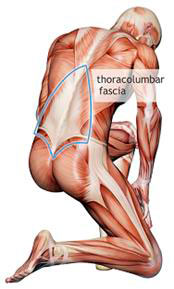
- Structural and movement alterations in the shoulders. Considering the fascial system as the living tissue that allows communication throughout the body. A scar on the ankle creates adhesion at the tibial, gluteal, and thoracolumbar fasciae. This provides stability and control to the entire spine. It can lead to back pain or shoulder dysfunctions.
- Visceral dysfunction. The splanchnic nerves pass through the diaphragm. Its function could be altered so that the scar problem might send pathological information to the spinal cord and affect the visceral system. This can cause, for example, chronic colitis.
Training the skin
As we’ve seen, a symptom doesn’t necessarily appear where the problem starts. It can happen in distant places because the body is a single entity. It’s hard to imagine that an ankle dorsiflexion limitation due to a scar could affect shoulder mobility.

Bibliographic Sources
- Bordoni, B., & Zanier, E. (2014). Skin, fascias, and scars: symptoms and systemic connections. Journal of multidisciplinary healthcare, 7, 11.
Related Links on the Topic:
- Supplements for injuries
- Injuries related to new technologies