Fitness, Nutrition, Health and Sports Blog In the HSNstore Blog you will find tips about Fitness, sport in general, nutrition, and health – HSNstore.com

We look over some advice for choosing your running shoes!
As you know, the behaviour of the foot in an exercise as biological as running is hugely important: it’s the only support and force transfer base to the ground we have to move.
So the footwear we use needs to be appropriate, fitting well to our needs
Shoes are not corrective… but they help
Possibly the most important thing to consider is that our choice is oriented towards comfort and the terrain we usually run on, rather than our own footstep.
And I say the latter because if the positions of our joints and main structures – the feet, knees, hips, ribcage and scapular system – are interrelated, the moment any one of them becomes dysfunction, due to any functional compensation, it will interfere with the positioning and function of the others.
Type of footstep
This doesn’t mean we shouldn’t take into account whether we are pronators or supinators when choosing them, but if we know the cause of the foot tilt is probably due to some muscular and/or structural compensation, this tilt can be modified.
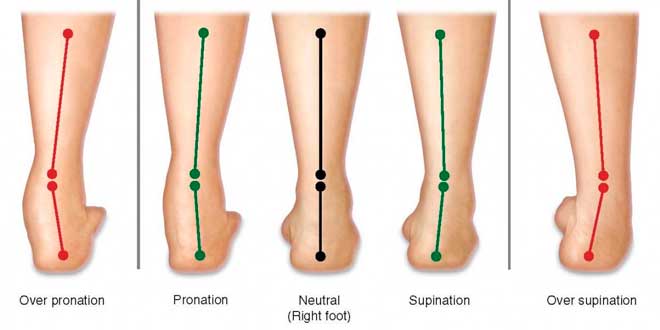
That’s why we shouldn’t think that a shoe perfectly adapted to our footstep will free us from future possible injuries, although the risk of suffering them, at least, is minimised
What should we take into account when choosing our shoes?
One thing is clear, and it’s that if we come in to this world with nothing on our feet, it means they are prepared to function as they are, though this doesn’t mean they’ll adapt to our lifestyle, we protect them inside a shoe, obviously.
The problem comes when we start to take the morphological nature of their structure out of context by using trainers that don’t offer us the ergonomics we need at all:
By ergonomics we mean the design of items to match the physiological, anatomical, psychological characteristics and the capabilities of the user
But be careful, there will be some people who need this inclination – because it’s more comfortable for them when running and/or it avoids certain discomfort in the joints – but at the end of the day, it’s to accommodate their dysfunctions so as not to suffer pain
Neutral footstep
Although we all, to a greater or lesser extent, suffer from different functional variations, and this translates into different ways of running, this doesn’t necessarily have to be so, as we’re all the same species, made up of the same parts.

em>That’s why I think it’s key that, even if we adapt the shoes to our particular anatomical needs, the trend over time is for neutrality
Choose the shoes according to your needs
Returning to the subject in question, we nearly always look for an attractive design, from a famous brand, and often that it’s fashionable too, and it doesn’t matter if we have to spend a fortune on them. And this isn’t so bad, but at the end of the day, we’re buying the trainers for a specific purpose, and we need them to fulfil their function correctly and help us enjoy what we like:
running.
Tips for buying running shoes
Go to a specialised store
The staff are well informed and will be able to advise you according to your anatomical characteristics and your particular needs
A good expert will look at the shape of your feet and take into account characteristics such as your weight, where you run running, and how many kilometres you run per week.
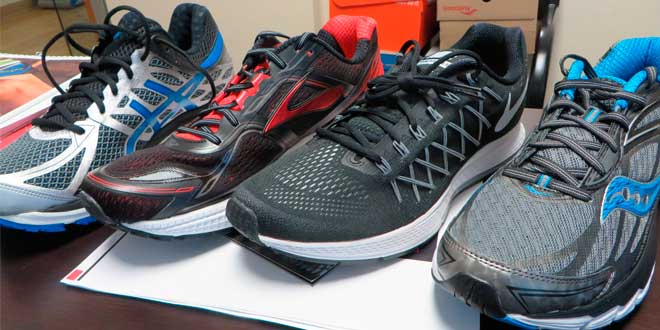
Make sure to try different models, and different brands too, until you find the most comfortable pair.
They shouldn’t be too loose or too tight
Half a centimetre should be left between your longest toe and the end of the shoe
If the tip of the shoe is too narrow, your toes will be squeezed in, resulting in nail problems, lack of stability, overheating, etc. If, on the other hand, there’s too much space at the end, blisters may appear.
Don’t forget that all shoes are manufactured in series, and some peoples’ feet don’t fit the standardised measurements.
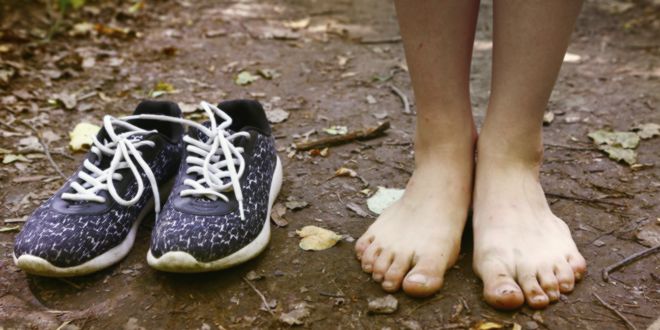
So be patient, and even if your feet are very wide or the bridge is very steep, there will always be a pair of shoes to fit you
Shoes always need to be tried on on both feet
Because there is always one bigger than the other
If your feet are uneven, you should always be guided by the size of the larger foot, and if the other foot’s shoe doesn’t fit, you can always use insoles (although I’m not in favour of it) or a thicker sock.
Choose the most suitable type of laces
Depending on the height of your instep, you might be better off with one type of lacing or another: skip lacing, crossed on the outside, crossed on the inside, skipping some eyelets, so that the running shoes hold our feet properly without causing undue pressure.
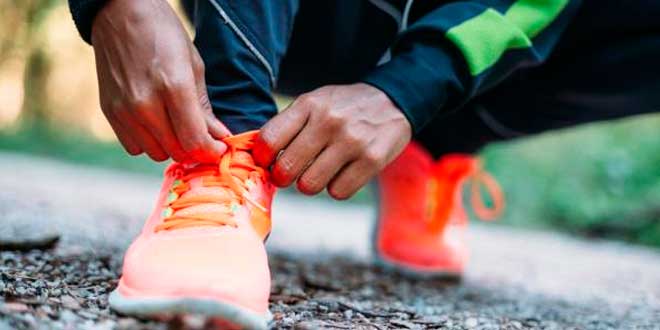
If you use trainers with some incline, try, over time and progressively, to adapt to some with a flatter sole, without a difference between the heel and the toe
Related Entries
- Footstep study
- What footwear to buy for which sport?
- Starting to Run from Scratch