Fitness, Nutrition, Health and Sports Blog In the HSNstore Blog you will find tips about Fitness, sport in general, nutrition, and health – HSNstore.com

We share our tips for how to stay hydrated during a race, something that’s incredibly important both for our performance and health…
Hydrating yourself correctly is important
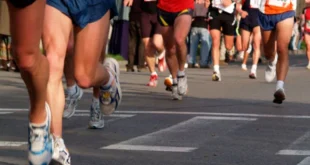
Maintaining optimal and correct hydration is essential if we practice any sporting activity of a certain intensity. But it’s even more important if this activity is going to be long lasting, such as a run, or even a half or full marathon!
Just like if you’ve been preparing for a race for months, you shouldn’t skip the requirements you need due to such an exercise. And we’re not referring to drinking water only, but to provide the elements your body releases as you sweat, replacing mineral salts or electrolytes.
To make it easier for us to drink during the race, there are some interesting and effective resources.

If you’re training for a marathon, you can train and plan for how you’re going to replenish liquids and fluids during the race too
Why should we replenish electrolytes?
Avoiding a mineral imbalance due to sweating and exercise is one of the issues a runner needs to keep in mind
The consequences of not maintaining an optimal state of hydration are:
- Muscle fatigue
- Muscle cramps

The considerable loss of electrolytes such as potassium or sodium will lead to such a situation
How to stay hydrated during a race
We’ll now explain which tools we can use to keep our hydration in check, and at some point save us from a few scares.
Handheld sports bottle

Pros
The most economical and simple solution. A bottle of this type can allow us to carry 500 to 750ml of liquid with us. Some of these bottles have an ergonomic grip that makes them easy to carry and prevents them from slipping. You can also carry a small pocket on your handgrip that’s big enough to hold a gel.
Cons
The main disadvantage is the discomfort of transporting an object that we’ll be swinging thousands of times during a long journey, which will increase both fatigue and mental distraction. Ideally, once we’ve used it and it’s empty, we would be able to either throw it on the ground (likely to be the choice of many…) or place it on a refreshment post and have an acquaintance pick it up.
Multiple-bottle belt

Pros
Unlike the previous one, we can now run untethered, with our hands free. This is a great advantage, and we can carry not just one bottle but several, in addition to having more pockets for gels or energy bars. The material must be comfortable enough to avoid hurting us (remember we’ll be running for a long time) and not obstruct our breathing either.
Cons
Some runners still find it a bit uncomfortable, as it brushes against you at each step, or if the belt loosens, it moves about. Although a lot of liquid can be carried, it’s still not enough, as they’re smaller bottles, and in the end around the same total volume as the handheld bottles.
Backpack

Pros
One of the best options if we’re going to be running for several hours and want to forget about filling up or “refuelling”. Some models even allow us to transport several litres. Their advantages are: they won’t “dance” or move, as with the belt, they’re hands-free, and they’re more ergonomic than carrying a belt or bottle in your hand.
Cons
Weight may be an issue. In the beginning it’ll be more detrimental as it’s fuller, resulting in extra energy expenditure. You have to consider the fact that we’ll be running for a long time, and even if it’s a little more than a kilo, it will be noticeable. As we can carry more items, this will also contribute to increasing the weight. By not seeing how much liquid we have left, it will be more complicated to fill up.
Cooler

Pros
Not to go on your back… If we plan the route, we may be able to leave all our supplies refrigerated in a cooler inside the car. This is a good choice for training, and if the conditions are also very hot. If we plan the route, both ways, we can park right in the middle. And we can always do the same route again, depending on how many kilometres we want to run.
Cons
We may end up having to run in a loop, and in some cases, this can be somewhat mentally fatiguing.
Sources
- http://www.runnersworld.com
Related Entries