 Fitness, Nutrition, Health and Sports Blog In the HSNstore Blog you will find tips about Fitness, sport in general, nutrition, and health – HSNstore.com

Training density is a load factor that refers to the relationship between work time and rest time. So, a workout with high density will have work time equal to or longer than rest time; while one with low density will have longer rests than work time.
Training when you have little time
The idea of manipulating training density has given rise to stepped density training, aiming to improve workout efficiency in the gym, especially for those with limited time to train.

What is Stepped Density Training all about?
Volume over load intensity
The fixed load factor here will be the time to complete the workout (like in many Crossfit WODs), and you’ll have to do as much mechanical work as possible within an intensity range (e.g., 70-80% 1RM), starting at the top end (e.g., 80% 1RM) and trying to keep it until the end, but you’ll likely need to lower it as sets go on to keep proper technique (e.g., 77%, 75%, 73%, 70% 1RM).

It’s often said, and I can vouch from experience that it’s usually true, that any task expands to fill the time allotted for its completion.
In other words, if you have 30 minutes for a task, it’ll take 30 minutes; but if you only have 20 minutes, you’ll probably get it done in 20 minutes.
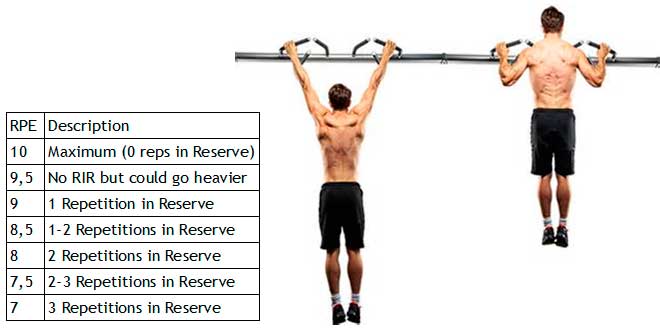
Obviously, going to failure every set isn’t recommended because rest between sets will be short and will limit intensity later on, so a level of effort allowing 2 to 5 reps in reserve is ideal per set, though it can drop to 1 or failure as the time limit approaches.
How to do Stepped Density Training?
- Pick two exercises targeting different muscle groups

Squats + pull-ups; deadlifts + bench press; high knees jumps + dumbbell military press; etc…
- Find or estimate a 10 RM weight for each exercise
You can estimate this during warm-up by approximating loads.
- Set the work time

For example, 15 minutes (watch the clock).
- Start doing sets of 5 to 7 reps per exercise, with no rest between them
Rest will be by feel: the minimum time needed to repeat the previous set with the same weight. It’s important to track sets and reps as you go.
As fatigue sets in, reps per exercise will drop (7, 6, 5, …), maybe even down to singles (1 rep per exercise) as you near 15 minutes. What counts is total reps during those 15 minutes, again, with proper technique.
Naturally (and ideally), rest intervals will gradually increase as fatigue builds. Remember why rest is important (repeating what was said above): the minimum time needed to repeat the previous set with the same weight; rest enough to perform the next set as well as possible.
- Stop lifting when the time is up.

If only a few seconds remain on the clock, don’t start a last set of the first exercise unless you have enough time to do the same number of reps for the second exercise as well.
- Add up the total number of reps.
This is your personal best to beat next time you do the workout.
- Pick two other exercises and repeat the protocol for 15 minutes to complete 30 minutes of training (if time allows).
When to use it during the season?
EDT can be used during 4-6 week hypertrophy phases when, due to work or other external reasons, training time is limited.

However, I personally recommend it mainly during transition phases when the nervous system is a bit tired of the same old training or vacation periods where 30 minutes of this kind of work, 3 days a week, can be a pragmatic and fun way to stay in shape.
Related Posts