Fitness, Nutrition, Health and Sports Blog In the HSNstore Blog you will find tips about Fitness, sport in general, nutrition, and health – HSNstore.com

Is it the carbs… the fats… or junk food… If there’s one thing we’re known for, it’s blaming a single culprit for diet failures and why we gain weight instead of losing it… So, here’s my personal take on the matter
Are You Dieting and Not Losing Weight?
Interestingly, this is a problem that affects most of us, since the majority of the world’s population goes through a hypocaloric diet at some point in their lives. In fact, it’s estimated that 1.5 billion people are overweight, with 400 million of them being obese1.
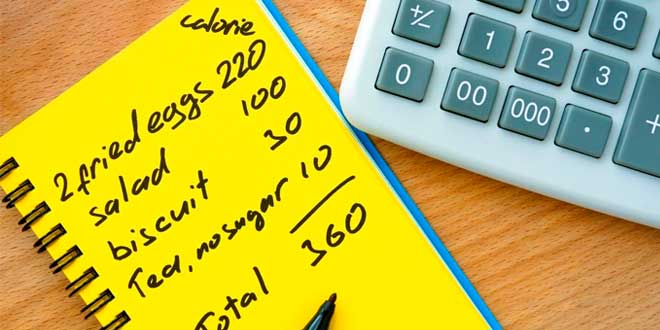
Don’t Diet, Keep Healthy Habits
I think this largely reflects the low focus on changing habits in people with overweight. The word “diet” makes people see it like the old military service:
…you join, follow it for a while, then quit and go back to your old ways…
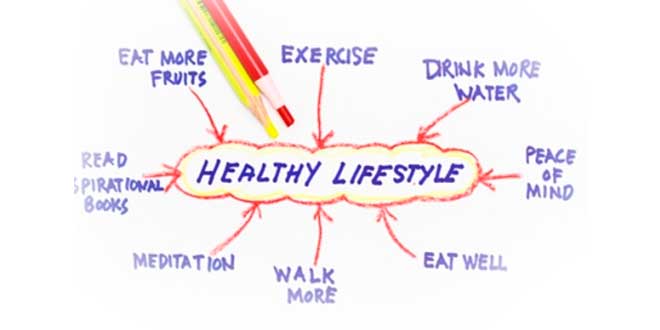
If you want your plan to succeed, bet on keeping healthy habits
How Does the Body React to a Hypocaloric Diet?
Our body weight is regulated by multiple mechanisms involving hormones secreted by:
- The gastrointestinal tract (like ghrelin),
- Pancreas (insulin),
- Adipose tissue (leptin), the last being very important as it acts on the hypothalamus, regulating metabolism and hunger sensation3.
When we follow a hypocaloric diet to lose body fat, our body triggers a series of compensatory mechanisms both hormonally and at the hypothalamus level, leading to a reduction in levels of:
- CCK4,
- Leptin5,
- Thyroid hormones13,
- Testosterone14, and
- Caloric expenditure6.
And an increase in levels of:
- Ghrelin7, and
- Appetite8.
It’s important to keep in mind all the variables involved in a weight loss process
What’s the Role of Leptin?
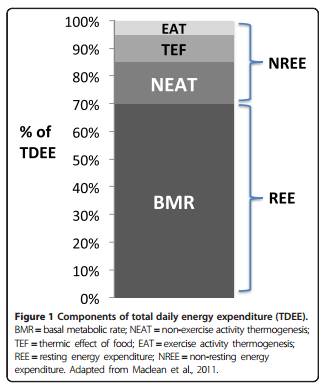
In short, leptin controls how much energy our body allows us to spend, which indirectly leads to greater fat loss.
By lowering leptin levels, the calories we burn in daily life (NEAT) and to maintain vital functions (BMR or basal metabolism) drop significantly.
What’s the Role of Ghrelin?
On the other hand, ghrelin, a hormone secreted in the gastrointestinal tract, increases hunger and even cravings for high-calorie foods.
Some studies have shown that subcutaneous administration of this hormone increases calorie intake by 30%.
Generally, ghrelin rises during fasting or naturally before mealtime due to meal frequency9, but it also rises during a hypocaloric diet10, making hunger feelings much stronger when cutting calories.
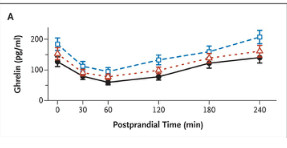
The light blue line shows levels at 10 weeks of hypocaloric dieting, the black line at day zero.
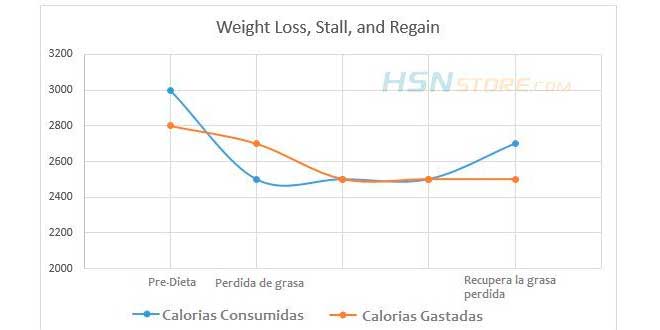
This slower metabolism combined with increased calorie intake leads to the following:
Maintenance Phase
Next comes a “maintenance” phase, where calories consumed and burned balance out, and we maintain our weight. Then, we slightly increase calories without reaching the initial intake, but calories burned remain steady.
What happens? Our body fat percentage goes up. In some cases, this effect worsens because seeing weight regain causes anxiety, releasing more cortisol and increasing the chance of “binges”.
We’ve already covered how cortisol and weight gain affects us
How Does Physical Exercise Affect Energy Expenditure?
Many might think that exercising can prevent metabolic adaptation since it burns more calories. That’s true, exercise increases expenditure obviously, but not all exercise types have the same effect.
Low-Intensity Exercise
Most people do low to moderate intensity exercise like walking, jogging, elliptical, zumba, etc. While it initially helps burn fat, the body adapts perfectly to this type of exercise, reducing oxygen consumption, calories burned, body temperature…
So, light to moderate exercise that once burned 400 kcal now burns only 200 kcal…
Your body becomes more efficient, needing less energy to do the same work
High-Intensity Exercise
That’s why I’ve never been a fan of the famous “train at 50-60% of your max heart rate because it burns the most fat”. That’s true, but what matters is burning calories, not just fat.
It’s proven that high-intensity exercise burns more calories than low-moderate intensity. The fact that the latter burns more fat during the workout doesn’t tell the whole story, since what counts is how much fat is burned the rest of the day (the famous EPOC).
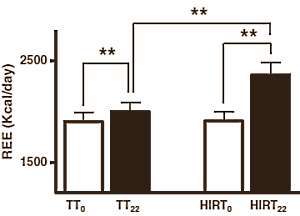
Higher metabolic burn with HIIT
Benefits of High-Intensity Exercise
- Although it mainly uses carbs as energy, it burns more calories throughout the day by speeding up metabolism and helps maintain more muscle mass.
- As a result, high-intensity training leads to greater fat loss and less muscle loss. Also, adapting to high-intensity training is much harder than low or moderate, as oxygen consumption increases16.
- A lesser-known effect of high-intensity training is that it reduces ad libitum hunger17, so it debunks the myth that higher intensity makes people hungrier or eat more as a “reward”.

Conclusion
We can see that diet isn’t 70% of fat loss success, since our body shows us daily on a diet that a hypocaloric diet alone isn’t enough to lose fat.
Maybe that’s why people with constant calorie intake and training increase their body fat percentage, simply because their metabolism slows down18
Therefore, high-intensity training must be an essential factor for fat loss. We should avoid associating high intensity only with sprints; even a light bench press can be high intensity for an elderly or obese person. So, no excuses like “not everyone can do high intensity because it damages joints running” or “they might have a heart attack” and other phrases I’ve heard about HIIT, since even cancer patients have better survival with moderate-high intensity than low.
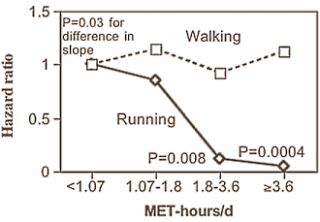
No, in fact, it’s been shown that combining both is the best strategy to improve health and performance parameters. So, I encourage you to see fat loss as more than just cutting calories and running on a treadmill—your mind and body will thank you.
Sources
- Obesity and overweight. Geneva: World Health Organization, 2010.
- Medicare’s search for effective obesity treatments: diets are not the answer.Mann T, Tomiyama AJ, Westling E, Lew AM
- Central nervous system control of food intake.RJ, Baskin DG.
- Effect of weight loss and ketosis on postprandial cholecystokinin and free fatty acid concentrations. Kriketos A.
- Geldszus R, Mayr B, Horn R, Geisthovel F, von zur Muhlen A, Brabant G. Serum leptin and weight reduction in female
- Diminished energy requirements in reduced-obese patients.Leibel RL, Hirsch J.
- Plasma ghrelin levels after diet-induced weight loss or gastric bypass surgery.Cummings DE, Weigle DS, Frayo
- Relation between circulating leptin concentrations and appetite during a prolonged, moderate energy deficit in women.
- Possible entrainment of ghrelin to habitual meal patterns in human.Julie M. Frecka , Richard D. Mattes
- Subcutaneous administration of ghrelin stimulates energy intake in healthy lean human volunteers.M R Druce
- MANAGING A WEIGHT-LOSS PLATEAU. Paleo Lap
- Quantification of the effect of energy imbalance on bodyweight.Dr Kevin D Hall Dhruva Chandramohan BSc a
- Effect of caloric restriction and dietary composition of serum T3 and reverse T3 in man.Spaulding SW, Chopra IJ, Sherwin RS, Lyall SS.
- Long-term effects of calorie restriction on serum sex-hormone concentrations in men.Cangemi R1, Friedmann AJ, Holloszy JO, Fontana L.
- The effects of high-intensity intermittent exercise training on fat loss and fasting insulin levels of young women.E G Trapp1, D J Chisholm2, J Freund1 and S H Boutcher1
- Prior heavy exercise increases oxygen cost during moderate exercise without associated change in surface EMG.Gonzales JU1, Scheuermann BW.
- High-intensity intermittent exercise attenuates ad-libitum energy intake.Sim AY1, Wallman KE1, Fairchild TJ2, Guelfi KJ1.
- The effects of changing exercise levels on weight and age-related weight gain.Williams PT1, Wood PD.
- Muscular adaptations to combinations of high- and low-intensity resistance exercises. Goto K1, Nagasawa M, Yanagisawa O, Kizuka T, Ishii N, Takamatsu K.
Related Posts