Fitness, Nutrition, Health and Sports Blog In the HSNstore Blog you will find tips about Fitness, sport in general, nutrition, and health – HSNstore.com

In this article, we’re going to talk about the 10 most common mistakes made when training strength
1. Not organizing warm-ups properly
Weineck (2005) defined “warm-up” as all the measures taken before a sports load, whether during training or competition, that serve to create an optimal state of preparation in psychophysical and coordinative-kinesthetic terms.
This means that the preparatory phases before the main training should be shaped through a multi-integrative approach of contents, means, methods, and training goals.
Specifically, the increase in performance capacity through warm-up is determined by changes in the CNS and muscles (Siff & Verkhoshansky, 2011). For this, the specificity of the warm-up, just like training, is important (Siff & Verkhoshansky, 2011).
The goals of the General Warm-Up (GW) are (Weineck, 2005; Siff & Verkhoshansky, 2011):
- Increase the body’s functional potential.
- Refresh motor automatisms of reflex origin.
- Achieve optimal ranges of motion (ROM).
- Reach neuro-muscular activation/inhibition.

Figure 1. Contents of the General Warm-Up before the Strength session (Kalichman & Ben, 2017; Su, Chang, Wu, Guo & Chu, 2017; Sainz de Baranda & Cejudo, 2016). SMFR: Self Myofascial Release, JbJ: Joint by Joint.
Warm-up goal
The purposes of the Specific Warm-Up (SW) are (Weineck, 2005; Siff & Verkhoshansky, 2011):
- Achieve optimal habituation of reflexes to the technical motor sequence of a sport discipline.
- Establish an optimal relationship between the upcoming exercise and the CNS activities related to that movement.
- Seek a dynamic and kinematic structure of the warm-up exercise similar to the final exercise.
- Redistribute the blood that the GW previously mobilized from accumulation zones.
- Prepare the body from a coordinative and metabolic point of view.
- Progressively and successively approach load and performance: “Activation, End of Load, and Full Load.”
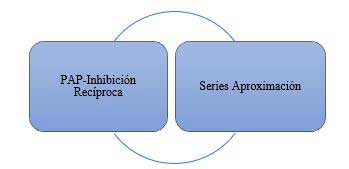
Figure 2. Contents of the Specific Warm-Up before the Strength session (McCrary, Ackermann & Halaki, 2015; McGowan, Pyne, Thompson & Rattray, 2015; Seitz & Haff, 2016). PAP: Post-Activation Potentiation.
2. Less “Routines” and more Training Programs
The problem with “Routines” arises around several factors (Heredia, Isidro, Peña, Mata & Da Silva-Grigoletto, 2012):
- Massification,
- Time limitations to operate on medium-long term planning structures, limited evaluation capacity,
- Training control,
- Feedback and readjustment,
- Limited availability of means for evaluation and training control, and
- The existence of some “controversy” or difficulty in unifying basic criteria regarding processes related to designing training programs in this area.
Training process design
Because of this, Heredia et al., (2012) propose differentiating 4 progressive phases in the training process design (Figure 3):
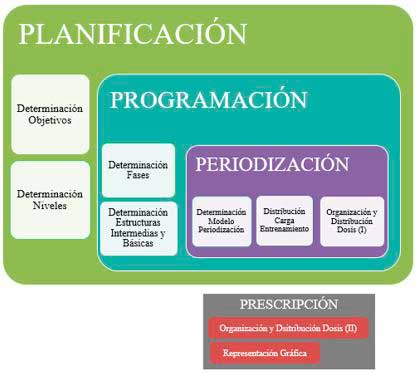
Figure 3. Progressive phases in the training process design (Heredia et al., 2012).
3. Not controlling exercise intensity
It’s vital to know exactly the training loads we prescribe to understand the work intensity and thus assess the effectiveness of training programs.
For this, we have a series of valid, reliable, and affordable tools that let us control and monitor the intensity of exercises during the strength session.
On one hand, My Jump© (figure 4) is a valid and reliable app to calculate vertical jump (CMJ, DJ, and SJ) through flight time (Balsalobre-Fernández, Glaister & Lockey, 2015; Gallardo-Fuentes et al., 2016; Carlos-Vivas, Martín-Martínez, Hernández-Mocholi & Pérez-Gómez, 2018; Haynes, Bishop, Antrobus & Brazier, 2018; Yingling, Castro, Duong, Malpartida & Usher, 2018; Edward, R. et al., 2018).
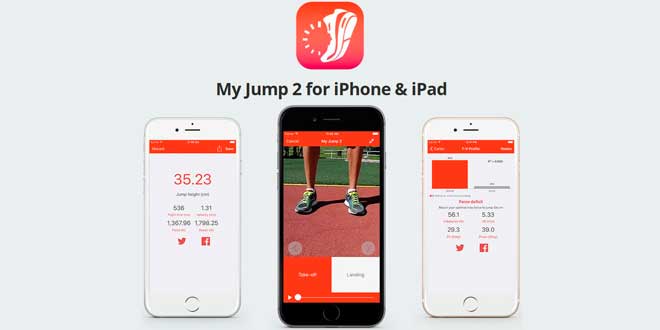
Figure 4. My Jump© app
On the other hand, Powerlift app© (figure 5) is a highly valid, reliable, and precise tool to measure average velocity and estimate 1RM in the Bench Press (Balsalobre-Fernández, Marchante, Muñoz-López & Jiménez, 2018).

Figure 5. Powerlift app©
RPE Scale
Finally, the RPE Scale based on RIR (Reps in Reserve) showed a significant inverse relationship between average velocity and all percentages of 1RM (Zourdos et al., 2016).
| RPE | Effort perception in RIR |
| 10 | Max effort |
| 9.5 | No reps in reserve, but not max |
| 9 | RIR 1 |
| 8.5 | RIR 1-2 |
| 8 | RIR 2 |
| 7 | RIR 3 |
| 5-6 | RIR 4-6 |
| 3-4 | Light effort |
| 1-2 | Almost no effort |
RPE Scale based on RIR (Zourdos et al., 2016)
4. Not training glutes based on their SRA Curve
The muscle SRA (Stimulus, Recovery and Adaptation) is the primary principle that dictates how often glutes should be trained to grow as fast as humanly possible (Contreras, 2016).
Muscle Protein Synthesis (MPS) increases during recovery and adaptation, and as shown in figure 6, during the SRA curve the MPS stays constantly elevated (Contreras, 2016).

Figure 6. Relationship between SRA curve and MPS process (Contreras, 2016)
Specifically, the type of glute exercise influences the time it takes to complete the SRA process and dictates how often (Figure 7) they should be trained and how (Figure 7) training programs should be designed (Contreras, 2016).

Figure 7. Relationship between SRA curve and exercise type (Contreras, 2016)
5. Using the Lumbar Belt incorrectly
The Lumbar Belt is a sensorimotor tool that increases intra-abdominal pressure (IAP) (Cholewicki, Juluru, Radebold, Panjabi & McGill, 1999).
This element alone doesn’t improve performance; it’s a proprioceptive tool that helps us be aware of the abdominal brace, so we can contract it more effectively and improve force transmission along the entire kinetic chain (DePalo, Parker, Al-Bilbeisi & McCool, 2004; Cholewicki et al., 1999).
6. Incorrect structuring of CORE training
The lumbo-abdominal muscles (CORE) aim to participate in spinal stabilization (Heredia et al., 2010).
Lumbar and abdominal muscles can be classified based on their stabilizing function as (Heredia, Isidro, Peña, Chulvi & Mata, 2010): Local Stabilizer System (Intertransversarius, Interspinalis, Multifidus, Longissimus Thoracis, Lumbar Iliocostalis, Quadratus Lumborum, Transverse Abdominis, and Internal Oblique) and Global Stabilizer System (Longissimus Thoracis, Intercostal, Quadratus Lumborum, Rectus Abdominis, External Oblique, and Internal Oblique).
Abdominal function
Specifically, the functions of the abdominal muscles are (Heredia et al., 2010; Akuthota, Ferreiro, Moore & Fredericson, 2008):
Shape the waist and keep the viscera in place, form the abdominal press (defecation, urination, childbirth, vomiting, and emunction), participate in expiration, move the trunk (flexion, rotation, and lateral flexion), and stabilize the trunk

Figure 8. CORE training contents (Heredia et al., 2010; Akuthota, et al., 2008)
7. Not periodizing strength training loads
Load can’t be maintained all year in the limit zone of individual capacity.
Therefore, it’s necessary to alternate between Load-Unload, Volume-Intensity, and Stimulus-Recovery, aiming for supercompensation and avoiding overtraining (Weineck, 2005).
As a result, a series of strength training load periodization strategies arise (Heredia et al., 2012; Naclerio, 2015; Siff & Verkhoshansky, 2011; Jiménez-Gutiérrez & De Paz-Fernández, 2004):
Linear or Classic Periodization
Characterized by starting with low intensities and high training volumes. Then, volume progressively decreases as intensity increases.
Non-Periodized or Traditional Model
This involves doing the same work without structured variations in training variables (volume and intensity don’t change). It can be effective during the first 4 months, but there’s a risk of hitting a “plateau.”
Undulating Periodization
Based on fluctuating volume and intensity throughout the training cycle. Highly recommended for trained people aiming to stimulate maximal strength by alternating high neural demands with lighter loads aimed at stimulating a different strength direction.
8. Vague and unreachable goals
An important part of sports training planning is setting clear and achievable goals.
That is, the contents of Strength, Endurance, Flexibility, and Speed should respect the principles of optimal intra- and inter-session sequencing.
Specifically, for the concurrent or isolated development of Strength and Endurance, the Theoretical Interference Model (Figure 9) will be a reference element (Docherty & Sporer, 2000).
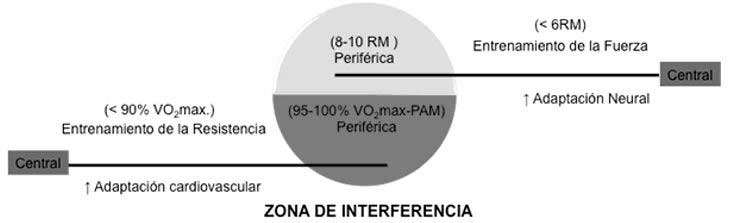
Figure 9. Theoretical Interference Model (Docherty & Sporer, 2000)
In short, if our goal is to develop Strength and Endurance concurrently or separately, the following points should be considered (Peña, Heredia, Aguilera, Da Silva & Del Rosso, 2016):
- Strength is the most negatively affected when training strength and endurance simultaneously.
- Strength training and development is more necessary and positive for improving endurance than vice versa.
- Endurance and strength training done on separate days cause different acute neuromuscular and endocrine responses and recovery patterns, which could partly explain the limitations in strength gains when both trainings are combined in the same session.
- The order of exercise sequence in concurrent training sessions doesn’t seem to affect adaptations in strength, hypertrophy, and endurance gains in moderately active young subjects, older adults, or untrained subjects, at least when training frequency and volume are moderate.
- The possible interference between adaptations from both training types seems to happen with prolonged training or high training frequencies per microcycle (>3 sessions per week).
- The endurance exercise modality practiced concurrently can have different effects, with running possibly interfering most significantly with strength and hypertrophy gains in the lower limbs.
9. Disorganization of Hierarchical Movements
Athletes performing functional movements at high speed aiming to increase force production should always use a version of the exercise they can perform competently, and when fatigue starts to degrade their form, they should switch to a simpler movement that preserves the desired training stimulus (Manseau, 2015).
Proper organization of Hierarchical Movements (Figure 10) starts with understanding them as a progression through (Manseau, 2015):
- Vertical Hierarchy: vertically, these patterns start with simple movements that preserve the desired training stimulus. In the original document, each exercise is represented with increasing complexity in terms of flexibility, balance, coordination demands, etc.
- Horizontal Hierarchy: horizontally, movements are stepped to show how more complex exercises depend on less complex ones.

Figure 10. Hierarchical Movements (Manseau, 2015)
10. Mind-muscle connection
One common feeling athletes report during or after strength sessions is the famous statement “I can’t activate this muscle.”
This topic is related to concentration and attentional focus (mind-muscle connection) (Wulf, 2013; Calatayud et al., 2016).
Attentional focus is an important tool to boost strength performance or maximize muscle mass gains (Schoenfeld & Contreras, 2016). However, there are several disturbances that can blur our focus.

For example, a muscle inhibited by injury, nerve problems, global exercises, among others
References
- Weineck, J. (2005). Total Training. Barcelona, Spain: Paidotribo.
- Siff, M. C. & Verkhoshansky, Y. (2011). SUPERtraining. Badalona, Spain, Paidotribo.
- Kalichman, L. & Ben, D. C. (2017). Effect of self-myofascial release on myofascial pain, muscle flexibility, and strength: A narrative review. Journal Bodywork Movement Therapies, 21(2), 446-451.
- Su, H., Chang, N. J., Wu, W. L., Guo, L. Y. & Chu, I. H. (2017). Acute Effects of Foam Rolling, Static Stretching, and Dynamic Stretching During Warm-ups on Muscular Flexibility and Strength in Young Adults. Journal of Sport Rehabilitation, 26(6), 469-477.
- Sainz de Baranda, P. & Cejudo, A. (2016). Exercise Prescription for Physical-Sports Readaptation: Flexibility. Master’s in Prevention and Readaptation of Physical-Sports Injuries in Football. Madrid: RFEF.
- McCrary, J. M., Ackermann, B. J. & Halaki, M. (2015). A systematic review of the effects of upper body warm-up on performance and injury. British Journal of Sports Medicine, 49(14), 935-942.
- McGowan, C. J., Pyne, D. B., Thompson, K. G. & Rattray, B. (2015). Warm-Up Strategies for Sport and Exercise: Mechanisms and Applications. Sports Medicine, 45(11), 1523-1546.
- Seitz, L. B. & Haff, G. G. (2016). Factors Modulating Post-Activation Potentiation of Jump, Sprint, Throw, and Upper-Body Ballistic Performances: A Systematic Review with Meta-Analysis. Sports Medicine, 46(2), 231-240.
- Rothenberg, B. & Rothenberg, O. (1995). Touch Training for Strength. Human Kinetics Publishers.
Related Posts
- Reps in Reserve: Self-Control of Your Strength
- Eliminating Antagonist Coactivation
- Neural Load Training
- Effects of Linear VS Non-Linear Periodization