 Fitness, Nutrition, Health and Sports Blog In the HSNstore Blog you will find tips about Fitness, sport in general, nutrition, and health – HSNstore.com

If you want to learn some useful strategies to boost and improve your memory and concentration, don’t miss out on the tips in this great post.
What is memory?
We could define memory as the cognitive capacity that allows us to learn, that is, the basic tool of learning.
Without memory, learning becomes an impossible task.
We have several types of memory, which we can distinguish in a very simplified way between:
- Long-term memory.
- Working memory.
While the former could be equated to the hard disk of your computer where gigabytes and gigabytes of information are stored, the working memory would correspond to the 4 or 5 tabs you have open on your pc at any given time, and on which you’re working right now.
- As far as we know, long-term memory is virtually infinite and inexhaustible.
- But working memory is very limited, because the amount of information that we can “hold” in our mental space is scarce.

In this post, we explain the best tips for your memory.
Why do we lose our memory?
There is no single answer to this question.
We could summarise the causes in two categories (in a very simplified way, once again):
- The first we have little influence over until we find a way to modify our genetic material for the better (there’s not so much left).
- The second is much more modifiable, which we can do by attending to the factors we study and comment on in this blog on a weekly basis.
Physiological causes
The fact that we’re an increasingly ageing population means that we have more and more people with memory problems.

What are the causes of memory loss?
Environmental causes
What increases the risk of different chronic non-communicable pathologies also increases the risk of neurodegenerative pathologies and cognitive impairment.
How to recover memory
At present, we do not have any great tools to reverse neurodegenerative processes that have caused cognitive decline.
This isn’t to say that there are no tools exciting the scientific community anf being extensively studied.
All these studies evaluate the role of ketone bodies as an alternative fuel in neuronal metabolism when glucose, the main fuel, is no longer used efficiently.
The results to date, far from being miraculous, are encouraging, as they attest to significant cognitive improvement, especially in areas related to language and memory, when these tools are used properly.
10 tips to improve your memory
Let’s now delve into 10 practical tips to improve your memory and thus your ability for lifelong learning.
This, as we’ll see later, is inversely related to the risk of developing neurodegenerative pathologies.
1. Evocation
The feeling of having something “on the tip of your tongue” is one of the most frustrating we can feel.
And it happens all too often.
For us to be able to say that we have learned something, we must not only encode it in our memory, but be able to recall it when we want to. It turns out that the effort spent in recalling a memory acts as “cement” for this memory to consolidate.
Thus, the more times you recall a particular memory, the longer it will remain in long-term memory.

A very common failing of students around the world is to focus too much on the “encoding” of information, i.e. reading and reviewing what they have read, and spending too little time recalling what they have learnt.
2. “Elaborate” while learning
While learning a new fact, try to connect it with others you already know, try to interpret what you are learning in the context of what you already know, try to explain it in other words, and in short, to find useful connections between the new and the old.
3. Spaced practice
This is a phenomenon of “consolidation” of what has been learned, a process that takes time and has its physiological substrate in that the malleability of synaptic connections is not something that happens completely immediately.
Knowledge needs to “rest” and settle so that you can later recall it with little effort.
4. Review with cards (ANKI)
Constantly testing yourself is one of the most effective ways to learn and consolidate your memory.
In this aspect, the methodology of flashcards or “ANKI” type cards is one of the most effective, precisely because it forces you to evoke, elaborate and space out the practice, three acts that require a significant cognitive effort but are tremendously efficient in making you learn something.
5. Explain what you’ve learned and relate it to what you already know
As we mentioned, we learn by connecting what we already know with what we want to learn.
These connections (whether of meaning, semantic or purely physical) will determine our subsequent ability to retrieve a memory when we need or want it.
6. Intermittent exposure to ketone bodies
The study of the metabolism and physiology of ketosis offers a very attractive hypothesis:
In short, intermittent exposure to a low amount of ketone bodies is neuroprotective.
To achieve this exposure, we wouldn’t have to juggle a great deal, but simply act in accordance with our biology:
- Add some fasting from time to time;
- Exercise regularly (and oaat a certain intensity); or
- Avoid foods with a high glycaemic load.
7. Diet rich in antoxidants
One of the great advances in neurology in recent decades is the discovery that neuroinflammation, or inflammation of the nervous system, is one of the central features in the onset of neurodegenerative pathologies.
It’s up to you to include foods in your diet with a high antioxidant load.

Examples include blueberries and other berries, coffee and tea.
8. Dark chocolate
The polyphenols in dark chocolate have been shown to be linked to better brain health and cognitive ability.
In this interesting study, the effect on the brain and cognitive capacity of consuming 35 grams of dark chocolate versus 35 grams of white chocolate (basically sugar) was studied.
9. Green tea
Something similar happens with a drink that is widely consumed in the East and less so here in the West.
This study in post-menopausal rats found that catechins in green tea extract decreased the formation of so-called “silent synapses” by increasing the BDNF neurotrophic factor.
Green Tea Extract Powder from EssentialSeries.
10. Boost your cognitive reserve
Just as we have a cardiopulmonary reserve that is conditioned by the physical condition we’ve developed over the years, we also have a cognitive reserve.
It is, in the same way, conditioned by what we’ve been able to learn throughout our lives and the constant and dynamic effort we’ve invested in this learning.
It’s not surprising that polyglots (people who know several languages) are protected against the majority of dementias.
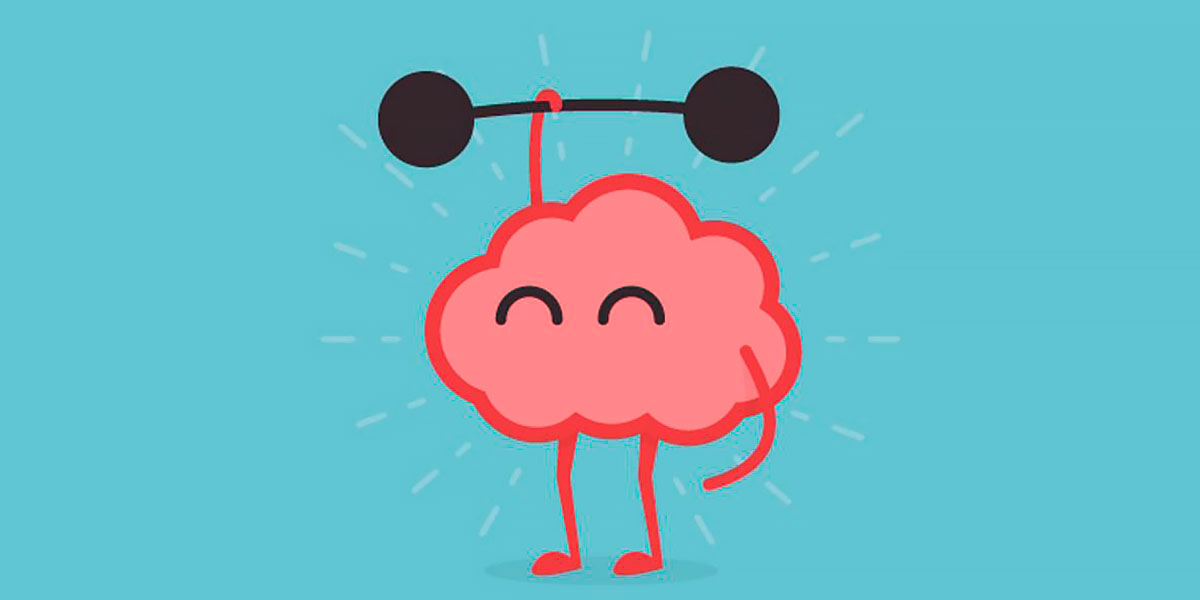
Think of your brain as you would think of a muscle.
- If you want to avoid muscle atrophy in your pecs at 80 years old, you’ll have to do a lot of push-ups at 40, 50, 60 and 70 years old.
- If you want to avoid (or decrease the chances of) cognitive impairment when you reach a certain age, you’ll have to do a lot of mental push-ups by constantly learning new things.
The tools I gave you earlier are great facilitators for this kind of learning. And no, let’s not fool ourselves, just as training the muscle is uncomfortable, learning is also uncomfortable:.
The problem is that we continually fool ourselves into believing that we’re learning, for example by skim reading a book or an article, when this would simply be encoding this information, and not evoking or elaborating it, which are the techniques whose validity has been demonstrated by scientific evidence.
In recent decades, parallel to the increase in cardiovascular disease or metabolic problems, we have witnessed an alarming and non-linear increase in neurodegenerative problems.
Although Alzheimer’s disease is the spearhead of this compendium of pathologies, there are a multitude of dementias with different peculiarities but with a great common denominator: progressive and (so far) non-reversible cognitive deterioration.
This is, of course, contributed to by the fact that we’re an ever-ageing population. However, the large increase in the incidence and prevalence of these disastrous pathologies is not only due to the fact that we’re getting older.
There are lifestyle factors that we’re still only beginning to understand and that determine whether two people with identical genetics can end up suffering from one and avoiding the other, a neurodegenerative disease.
If you found it useful, don’t forget to share it with your loved ones, a big hug, and keep on empowering!
Bibliographic Sources
- Jensen NJ, Wodschow HZ, Nilsson M, Rungby J. (2020). Effects of Ketone Bodies on Brain Metabolism and Function in Neurodegenerative Diseases.
- Daniel J. Lamport, Eleni Christodoulou, Christina Achilleos (2020). Beneficial Effects of Dark Chocolate for Episodic Memory in Healthy Young Adults: A Parallel-Groups Acute Intervention with a White Chocolate Control.
- Sukjin Ko, Won Seuk Jang, Ji-Hyun Jeong, Ji Woong Ahn, Young-Hwan Kim, Sohyun Kim, Hyeon Kyeong Chae, Seungsoo Chung (2021). (-)-Gallocatechin gallate from green tea rescues cognitive impairment through restoring hippocampal silent synapses in post-menopausal depression.
Related Entries
- Check out the Top Supplements for Brain Health.
- Exercise is a cognitive activator, do you know how? We explain it in the following link.
- Discover all the Benefits of Cocoa at this Post.