Fitness, Nutrition, Health and Sports Blog In the HSNstore Blog you will find tips about Fitness, sport in general, nutrition, and health – HSNstore.com

Stretching is part of the exercise routine. However, most of the time we don’t give it the importance it deserves, nor do we dedicate the necessary time to it. Maintaining a stretching routine is key to preventing injuries and improving performance.
Why Stretch?
By now, it is clear to everyone how important stretching is for maintaining sporting health
Through stretching we are going to keep active a quality that can go unnoticed, in pursuit of others such as strength or endurance, but which provides a series of benefits for the athlete: flexibility.
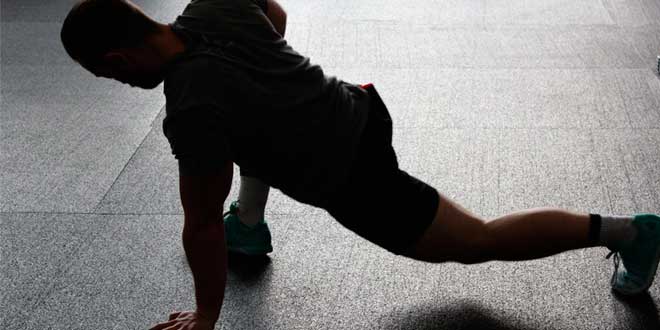
Good flexibility promotes muscle elasticity and provides a wider range of movement in the joints. It also facilitates body movements and activities of daily living.
Stretching is not Warming up
These concepts, while seemingly aiming at the same goal, are different in both form and procedure.
Warming up is a mechanism by which we prepare the body for the activity that follows, to increase performance and reduce the risk of injury. The movements to be included in this initial period should be similar to the actions we will perform later.
Stretching before barbell lifts
As an example, a very typical warm-up in CrossFit, which is performed before starting the barbell lifting routine:
Stretching before running
Another very insightful example in relation to warm-up work before starting a running routine:
Types of Stretching
Before going on and knowing when it is best to stretch, we need to clarify the concepts related to the main types of stretching, so that we know which ones are indicated and when:
Static Stretching
It is an elongation of the muscle to a certain point, avoiding pain and maintaining a comfortable position, for a certain time, usually about 30-45 seconds, and in several series. According to studies, they can produce a decrease in strength.

Static stretching should be done as far away from the training session as possible, as the information it gives the body if it is done beforehand has nothing to do with the muscular use we will make when training.
Dynamic Stretching
It is performed within a comfortable, controlled and smooth range of motion, usually in sets of 10 to 12 repetitions and unilaterally. No rebounding is required. At the same time, they have an “extra” added, since they produce the elevation of the body temperature, and reduce muscular viscosity. These are the recommended stretches.

This type of stretching improves dynamic flexibility and is very useful as part of the warm-up for an active or aerobic workout.
Ballistic Stretching
It uses the momentum of a moving body or limb in an attempt to reach beyond its normal range of motion. It can lead to risk of injury, if not performed with caution. They are recommended for high impact activities.

An example of this would be the typical bouncing we do when we are unable to reach a point, such as the tips of our toes.
Stretching Before or After Training
There are many theories about when to stretch
Some people, or trainers, think that the best time to stretch is before training, others think it is better to stretch during the exercise routine, and still others think that the best time to stretch is after training. Let’s analyse the consequences of stretching before, during or after exercise.

Stretching Before Exercise
Many people take it for granted that they should start their exercise routine with some stretching.
However, many experts agree that this type of static stretching before exercise is not only counterproductive, but potentially harmful. They claim that by stretching before exercise, your body may think it is at risk of being overwhelmed. It compensates by contracting and will become tighter and tighter.

This means that your muscles are not able to move as quickly or freely, which increases the likelihood of injury. My recommendation would be to “mobilise” before you start training, prior to dynamic stretching and a warm-up.
Performing Mobility before Training
There is a term that may sound familiar, but it fits perfectly with what we must do before a workout, especially where we must maintain the correct posture to be able to perform the movement, such as a deep squat.
Myofascial Self-Release and Mobility Before Exercise
Muscles, ligaments, tendons and joints are not immediately ready to start training and perform the movements required during training with ease.
In this sense, the use of myofascial release techniques is of particular importance. Fascia is a connective tissue made up mainly of collagen fibres that surrounds the organs and connects muscles and bones.
It stabilises the body and gives it shape and structural support.
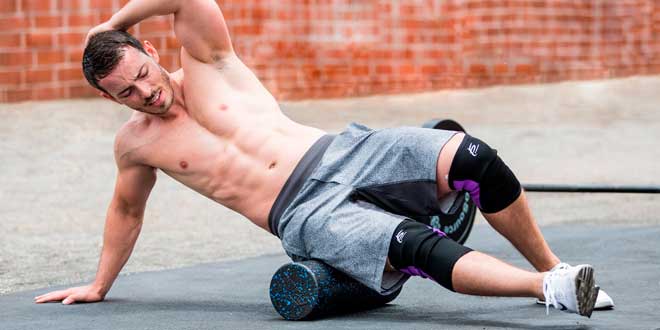
It is this network of tissue that determines the quality of movement or the restriction of movement. Releasing the muscle fascia before starting an intense workout, especially weight training, improves circulation and blood flow and gives the muscles the flexibility to move freely.
Stretching During Exercise
This refers to stretching during breaks in exercise sets.
This technique is normally used by those seeking to maximise hypertrophy during weight training, in the belief that it produces hormonal signalling (beyond the set itself), but for practical purposes it is not proven to be worthwhile.

Moreover, the stress caused by exercise on the muscle can be increased and, in the most severe cases, the muscle can be damaged.
Stretching After Training
By ending the routine with a stretching programme, in addition to loosening up the muscle fibres, restoring their flexibility and improving recovery time, we will help to relax our muscles and our mind.
We ourselves will notice a feeling of well-being and relaxation in the body as we eliminate the tension generated by the training.

Stretching after the exercise routine will be much slower and more intense, as the aim is to relieve all tensions and return the muscles and joints to their normal state, as well as a reduction of muscular aches and pains. This is another perfect time to use the Foam Roller.
Stretch Every Day
A workout, whether it is a running session or a weight training session, will be much more effective and, above all, safer if we are able to move correctly. This is why it is recommended that you spend time stretching every day.
In this sense, the stretching (mobility) routine should be carried out separately from the training itself, and depending on our limitations or weaknesses, we should act accordingly.

Gaining flexibility and mobility will contribute to reducing muscular restrictions that we may have accumulated during our lives, and that we are still doing (too much time sitting, kyphotic positions using digital devices, etc.).
Bibliographic sources
- Michael Samson, Duane C. Button, Anis Chaouachi, and David G. Behm. Effects of Dynamic and Static Stretching Within General and Activity Specific Warm-Up Protocols
- Samuel MN, Holcomb WR, Guadagnoli MA, Rubley MD, Wallmann H. Acute effects of static and ballistic stretching on measures of strength and power.
- Curry BS, Chengkalath D, Crouch GJ, Romance M, Manns PJ. Acute effects of dynamic stretching, static stretching, and light aerobic activity on muscular performance in women.
- Scott W. Cheatham, PT, DPT, OCS, ATC, CSCS, corresponding author Morey J. Kolber, PT, PhD, OCS, CSCS*D, Matt Cain, MS, CSCS, and Matt Lee, PT, MPT, CSCS. The effects of self-myofascial release usin a foam roll or roller massager on joint range of motion, muscle recovery, and performance: a systematic review
- Gregory E. P. Pearcey, MSc, David J. Bradbury-Squires, MSc, Jon-Erik Kawamoto, MSc, Eric J. Drinkwater, PhD, David G. Behm, PhD, and Duane C. Button, PhD. Foam Rolling for Delayed-Onset Muscle Soreness and Recovery of Dynamic Performance Measures
Related Entries
- Benefits of Stretching
- Active Recovery Stretching
- 6 exercises to stretch the psoas correctly
- 5 Stretches to practise Pole Dance