 Fitness, Nutrition, Health and Sports Blog In the HSNstore Blog you will find tips about Fitness, sport in general, nutrition, and health – HSNstore.com

This article is aimed at those of you who are unfortunately injured, and this situation has halted your progress. Don’t be discouraged, here are some tips to try to maintain everything we have managed to gain so far, and above all, never lose motivation, because the moment you are fit, you will come back much stronger!
Being injured is something that, for those of us who take sport as a way of life, can become an ordeal and we will probably go to our sports session until we can’t even move.
This can lead to an aggravation of the injury, which in principle could have ended with a period of rest, and by being “stubborn”, we have created “something worse”.
What encourages us not to stop training, despite noticing aches and pains, is the idea that we may lose the progress of our training plan.
Basically, you think that by stopping training, the muscle mass and strength that you have worked and sacrificed so hard for will be lost.
In this context, what will happen is that the injury will force us to stop training for longer than we thought because we did not stop in time.
What is a muscle injury?
It is a painful anomaly caused at a muscular level, with very diverse causes, although it is generally generated by an excess of effort or an external blow.
What to do when you are injured?
The million-dollar question, and one that anyone who is injured will want to know immediately.
One of the factors will be the type of injury and the duration of the injury. The more serious the injury, the more time you will need to recover, and this is detrimental to the maintenance of muscle mass.
This is unavoidable.

However, there is also room for optimism.
Regardless of the extent of the injury and the length of time you will not be able to train, there are some “tasks” that you could (should) perform in order to keep muscle mass and strength within limits.
Establish maintenance calories or a slight caloric surplus
Of course, not being able to exercise limits us enough to be able to introduce that calorie deficit that keeps us away from gaining fat, but since what we want is to maintain our musculature, we also need calories for that.
When to use a caloric surplus
If you were eating in this state when the injury occurred, and the injury will cause only a short time of “forced rest”, you can continue with this option. However, “cut back” on certain calories, to be a little above maintenance level.
As we want to maintain muscle mass, and also enable the best recovery from injury, this system will be the most feasible.
When to use caloric maintenance
But if you were not making this calorie surplus when the injury occurred, that is, you could be in a deficit with the goal of losing fat, or unlike the previous case, the injury is going to keep you out of the game for a period longer than 1 or 2 weeks, as it was supposed to, the best option will be to go for calorie maintenance.
Keep protein high
The simplest rule to follow if our goal is to maintain muscle mass during the recovery period from injury is to eat a significant amount of protein each day.
Buy whey protein isolate at HSN
Protein is arguably the determining factor between losing muscle mass and maintaining it.
Perform any type of training within the possibilities
As an example, you could take the one in which our injured area is in the torso.
So, could you do some kind of training, safely, involving the lower body?
The same applies if the lesion is located in the lower area.
- We may have an elbow injury, but we can still perform movements that do not involve elbow flexion, such as shoulder raises.
- Then if the problem is your shoulders, can you do rowing without pain?
- You injured your ankles, how about femoral curl or quadriceps extension?
If we are able to do training as described above, without using the damaged area, it would be the most advisable thing to do, as at least we continue to give the body the stimulus, as well as avoiding the numbness of the muscles due to not using them.
Not stopping in time
This is what I mentioned at the beginning of the article. Knowing the injury, suffering the pain of it, allowing us, in a limited way, to continue training, but ignoring it.
The result is a worsening, and above all, longer downtime.
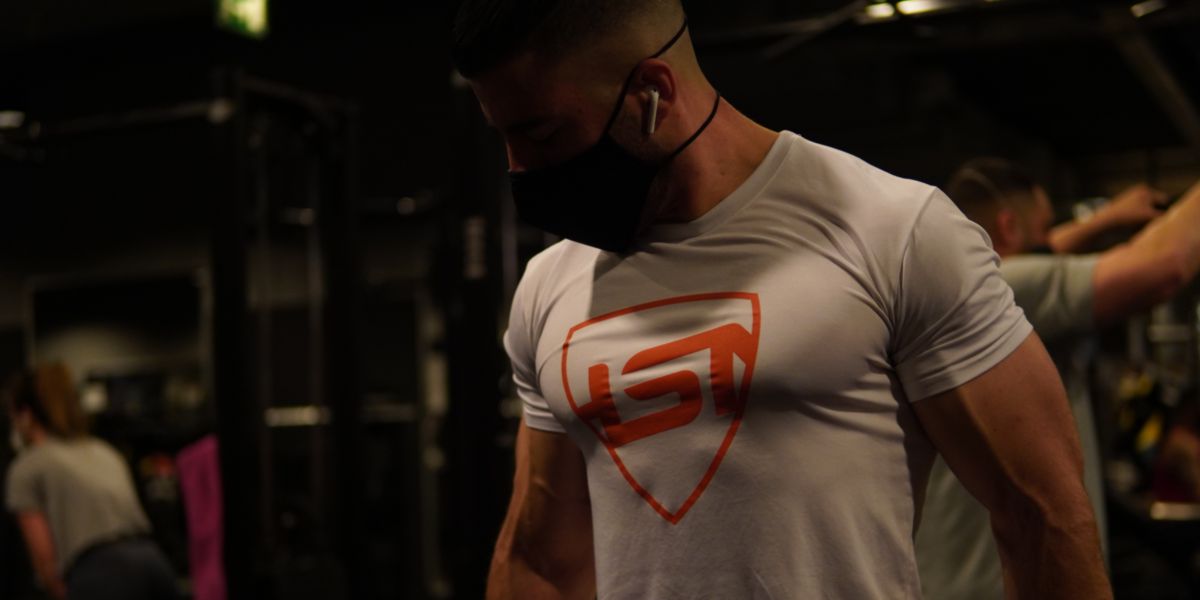
All because we think we are going to lose everything we have gained before.
Returning to training early
Closely related to the previous point. If you are smart enough to stop in time before you aggravate the condition, you should also be smart enough to save the necessary time without resuming activity until you have recovered 100%.
Keep up the same habits
This means that just because you stop training, especially in terms of diet, you are not going to give up the habits and guidelines that you followed and thanks to which you have been able to obtain your gains:
- Rest as long as necessary.
- Drink plenty of water.
- Maintain a balanced diet, with an optimal intake of micro and macronutrients.
- Get essential fatty acids.
That is, everything you have been doing just before the injury, and especially if you haven’t been doing it. If not, it is always time to change course towards better healthy habits.
Muscle memory
Muscle memory refers to the fact that the muscle, when it has been subjected to work, such as training, and especially if this has been effective, stores or knows the processes it has “undergone”, such as stimulus, work under tension, fibre breakage, recovery, etc.
Thus, after a long period in which all this activity ceases, when it is resumed, the muscle will be activated again and remember the whole situation, making it much more likely to return to, and consequently recover almost the level at which it left off.

This way, despite suffering the dreaded injury, and thinking all is lost, just by using your muscles again, they will no longer be “newbies” and will soon get back into the rhythm of yesteryear.
Conclusions
Injuries are the worst thing that an athlete can experience, they are really demotivating, especially if you are at a very high point of performance, and you have to give it all up.
On some occasions, injuries are caused by a bad training strategy or planning, which has even led to the appearance of the injury, due to not following the correct guidelines.
If you are in the middle of the recovery process, there is only one thing I can say to you: Cheer up!
Related Entries
- Can injuries in football be avoided? We tell you about it in this post.
- The best supplements for injuries: click here.