Fitness, Nutrition, Health and Sports Blog In the HSNstore Blog you will find tips about Fitness, sport in general, nutrition, and health – HSNstore.com

A while back, many of us as well as nutrition and training enthusiasts did not even know that gluten existed.
However, due to the rise of the gluten-free market around the world, we need to explain in depth why it has become so popular.
What is Gluten?
It refers to a group of proteins which come exclusively from the flour of cereals. For instance, wheat (80%), barley, rye, oats, spelt, kamut, etc…

Gluten is a blend of different proteins which are present in many cereals, like wheat, spelt, rye, oats and barley
Other sources
Due to the growth of the food industry and the fact that they have to adapt to our current lifestyle, packaged products have become indispensable for many. Thus, it is also present in many other foods, including beer, sweets, drinks, sauces, seasonings… even supplements.
Types
Depending on the cereal, we can talk about two types: Prolamins and Glutelins
Glutelins usually come from wheat. On the other hand, oats have the so called avenins while rye has secalinin. We can also classify these substances into additional subgroups: alpha, beta, gamma and omega gliadin.
Since 2000, it has become clear that, apart from the celiac disease, there are other diseases caused by gluten
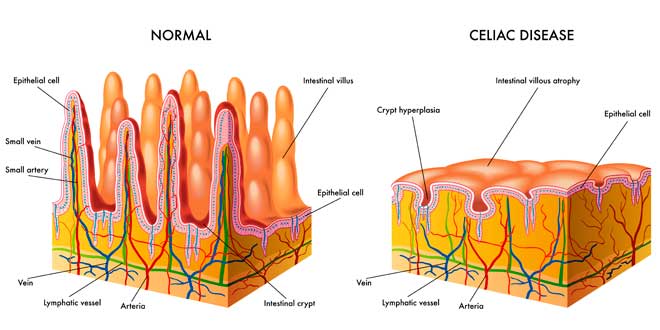
Gluten-related disorders (we suggest not using the term “gluten intolerance” due to its lack of precision)
Gluten-free diets
Creating a gluten-free diet is based in three main related disorders:
- Celiac Disease
- Wheat Allergy
- Non-Celiac Gluten Sensitivity
Celiac Disease
Basically, it is an autoimmune disease that reacts to these proteins. It includes genetically predisposed individuals and/or with a damaged small bowel. This equals that between a 0.5-1.25% of the population from developed countries.
Celiac people react to dietary proteins called prolamins which are present in some grains. Although some products like rice also have prolamins, the ones from wheat (gliadin), rye and barley trigger an immune reaction in celiac people.
| Grains with | Grains without |
| Wheat | Corn and sweet corn* |
| Rye | Rice |
| Oats | Quinoa |
| Spelt | Buckwheat |
| Barlet | Millet |
| Kamut | Amaranth |
* Certain manufacturing process can change their content in corn and sweet corn products, for example, in packaged popcorn.
An interesting feature of the celiac disease is that it can happen at any moment of our lives. This is mainly due to environmental and sociocultural factors that can stimulate the genetic predisposition.
- Family history (genetic predisposition)
- Specific positive immune markers
- Child feeding method (breastfeeding duration, among others)
- Birth method
- Moment when we start eating gluten
- Etc…
Wheat Allergy
Although it is similar to the celiac disease, wheat allergy is an immune reaction to proteins from wheat, called gliadins. Therefore, those who suffer wheat allergy do not have to stop eating other cereals like rye, barley or oats.
Symptoms
There are a series of symptoms that we can experience if we suffer wheat allergy. For instance:
- Mouth, nose, eyes and throat (swelling and irritation);
- Skin (skin rash, urticaria, swelling);
- Respiratory tract (wheezing, difficulty to breathe, anaphylaxis); y
- Gastrointestinal tract (cramps, nausea, vomits, flatulence, abdominal pain, diarrhea).

If we compare wheat allergy with the celiac disease, the former often develops throughout early childhood or the first years of our lives. Moreover, it less common in adolescents and adults.
Non-Celiac Gluten Sensitivity
This is the disorder that can cause more controversy and, interestingly enough, the one that has been more diagnosed in the last ten years. It consists of clinical symptoms triggered by its intake when the diagnose is neither celiac disease, intestinal problems nor wheat allergy. In other words, it is commonly used to describe those who react to gluten without meeting the criteria for celiac disease or wheat allergy.
The symptoms occur shortly after its intake and they disappear if we stop taking it. Obviously, they will occur if we eat it once again. Some of these symptoms tend to be abdominal pain, abdominal distension, diarrhea or constipation.
The controversy (lie) of NCGS
The most recent studies conducted after the gluten-free madness are more controlled than the previous ones. Moreover, their results confirm that gluten sensitivity does not exist when we do not suffer celiac disease. This has been proven in blind diet studies for five weeks.
The protocol established three types of diet: gluten-free, low (2g/day) and high (16g/day). After giving all the meals to individuals with auto-diagnosed NCGS and/or irritable bowel, all of them felt worse. This was regardless of the diet they followed, including the gluten-free diet.
Nocebo Effect
Like the placebo effect, the nocebo effect happens even when there is no active substance. In other words, people believe that they are gluten sensitive and they are convinced that they will feel worse. Therefore, they start to experience real symptoms, even if it is purely psychological.
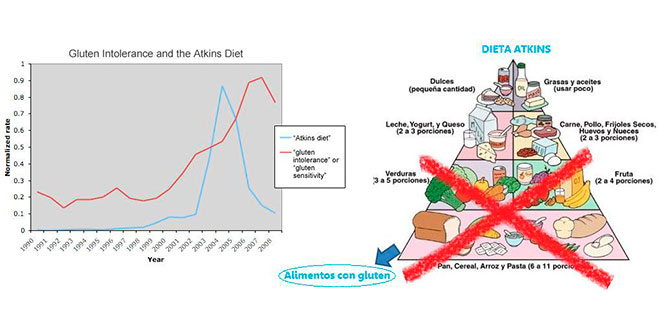
The results of the study were shown to the participants who supposedly had NCGS even if their diet was gluten-free. One of the many allegations was that they wanted to lose weight and gluten-free diets were the “healthiest choice”.
The Industry took the chance
The gluten-free label gave additional benefits to many companies. Due to the advertising, surreal testimonies and the support of celebrities, people mix an anecdote and the nocebo effect with the reality. After that, nothing will change their minds.

The numbers of Gluten-Free
This type of products have become a multimillionaire industry. Even if the growth rates will be more moderate in the following years, the sales of american products labelled with “gluten-free” increased a 100% in the last four years.

The proliferation of products in supermarkets and restaurants (even fast-food) could be only factor involved in celiac disease and related diseases including wheat allergy and gluten sensitivity.
Compared with the myths about fats
Without any doubt, this reminds me of the similar focus that has been used for saturated fats and cholesterol. Now we know the truth thanks to science.
It is wrong to think that gluten has as many side effects for our health as we have been made to believe.
Sources
- Comino, I., Real, A., Moreno, M.L., Cebolla, A., & Sousa, C. (2013). Detección de la fracción inmunotóxica del gluten: Aplicaciones en seguridad alimentaria. En Rodrigo, L. y Peña, A.S., editores. Enfermedad celíaca y sensibilidad al gluten no celíaca. Barcelona, España: OmniaScience. p. 433-445.
- Jewett, D. L., Fein, G., & Greenberg, M. H. (1990). A double-blind study of symptom provocation to determine food sensitivity. New England Journal of Medicine, 323(7), 429-433.
- Ludvigsson, J. F., Leffler, D. A., Bai, J. C., Biagi, F., Fasano, A., Green, P. H., … & Ciacci, C. (2013). The Oslo definitions for coeliac disease and related terms. Gut, 62(1), 43-52.
- Mike, J. (2014). Gluten for Punishment. http://articles.elitefts.com. Recuperado el 13 de octubre de 2014 de http://articles.elitefts.com/nutrition/gluten-for-punishment/.
Related Entries
- Learn how to follow a gluten-free diet
- Gluten-free Diet and Sport Performance
- Are there gluten-free sport supplements?
- Symptoms to identify a gluten intolerance
- Proteins for celiac people
- The relation between gluten and the brain, find out more here