Fitness, Nutrition, Health and Sports Blog In the HSNstore Blog you will find tips about Fitness, sport in general, nutrition, and health – HSNstore.com

Cognitive development is essential for keeping your mind active and healthy throughout life. Engaging in activities that challenge and stimulate the brain not only improves memory and concentration but can also prevent cognitive decline and neurodegenerative diseases.
This guide explores various activities you can incorporate into your daily routine to boost your cognitive skills and enjoy a better quality of life.
- Solve puzzles
- Practise active reading
- Play board games
- Train visual memory
- Solve mathematical problems
- Do creative writing
- Play strategy video games
Next, we’ll delve into each of these activities and how they can benefit your cognitive health:
1. Solve puzzles
Puzzles are excellent tools for improving various key cognitive abilities. By tackling and completing puzzles, the brain gets exercised and strengthened, promoting more agile and efficient thinking:
- Logical reasoning: Each step in solving a puzzle involves sequential and logical thinking to arrive at the correct solution.
- Critical thinking: Puzzles challenge the brain to evaluate and analyse different options and strategies. This promotes critical thinking by requiring you to question and reconsider decisions during the solving process.
- Problem-solving ability: By facing obstacles and seeking solutions, puzzles teach the development and application of effective problem-solving strategies, including decision-making, planning, and executing solutions.
By starting with simpler challenges and gradually increasing the difficulty, you can enjoy a steady improvement in your cognitive skills while having fun.
Among the most common types of puzzles are:
- Sudoku: This popular number game strengthens logical reasoning and memory by requiring players to place numbers in a grid according to specific rules.
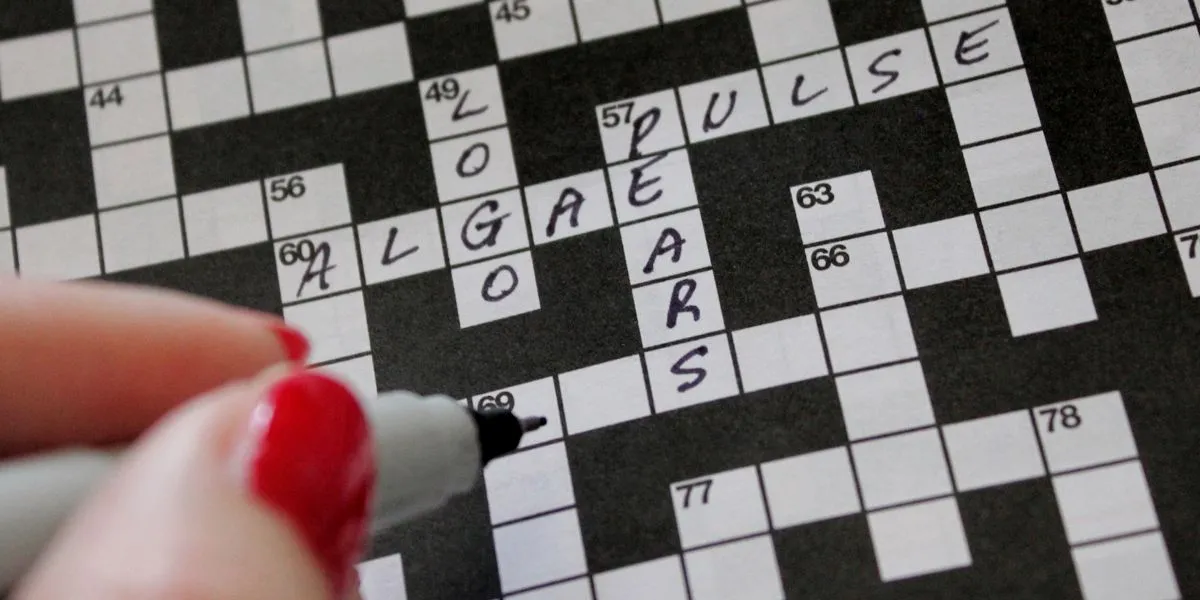
- Crosswords: Solving crosswords improves vocabulary and verbal memory. Players must find words that fit a pattern, which also promotes concept association and lateral thinking.
- Mazes: Navigating a maze requires planning and spatial visualization, which enhances problem-solving ability and strategic thinking.
- Logic puzzles: These include games like riddles and logic puzzles that require identifying patterns and solutions based on logical principles, thereby improving deductive reasoning and analytical skills.
2. Practise active reading
Active reading is essential for improving comprehension, memory, and analytical skills. By actively engaging with the text, the reader not only absorbs information but also processes it critically and reflectively, resulting in deeper and more lasting learning. Here are some tips for practising active reading:
- Take notes: Writing down key points while you read helps reinforce memory and better understand the material. You can use a notebook or a note-taking app to record your thoughts and questions.
- Highlighting or underlining important phrases and concepts allows you to quickly identify the most relevant parts of the text. This is useful for future reviews and ensures you understand the main points.
- Summarise the information: After reading a section or a chapter, try to write a summary in your own words. This not only checks your understanding but also strengthens your synthesis and analytical skills.
- Ask questions: While reading, pose questions about the content. Why has the author made certain decisions? What does this information imply? This habit fosters a critical and reflective approach to the material.
- Connect with prior knowledge: Relating what you are reading to knowledge you already have helps integrate new information and understand it in a broader context.
- Discuss with others: Sharing your thoughts and opinions about what you have read with friends or in reading groups can enrich your understanding and provide new perspectives.
To get the most out of active reading, it is important to diversify your reading materials:
- Novels from different genres (science fiction, mystery, drama, etc.) to expand your imagination and vocabulary.
- Non-fiction books (biographies, essays, history books) to acquire new knowledge and perspectives.
- Academic and research articles to delve into specific topics and develop analytical skills.
- Magazine articles on science, technology, art, and culture to stay informed about the latest developments and trends.
- Daily reading of newspapers and reliable news sites to keep up with current events and improve your understanding of the world context.
- Blogs and opinion columns to explore different viewpoints and encourage critical thinking.

3. Play board games
Board games are excellent tools to stimulate various cognitive abilities such as memory, attention, strategic thinking, and decision-making skills. Participating in these games not only entertains you but also exercises your brain, which can improve your mental and cognitive health.
Examples of board games:
- Chess: This classic game is known for its ability to develop strategic thinking and anticipation skills.
- Scrabble: Besides being fun, this game improves vocabulary and memory.
- Monopoly: An economic strategy game that teaches financial management and negotiation skills.
- Card Games: Games like Bridge, Poker, or Gin Rummy develop memory, attention, and decision-making skills.
- Catan: This strategy and trading game challenges players to manage resources and plan their moves to win.
- Risk: A territorial conquest game that enhances strategic thinking and long-term planning skills.
- Memory: A game specifically designed to improve memory and attention.
4. Train visual memory
Visual memory and attention to detail are crucial cognitive skills that can be improved through games and exercises specifically designed for this purpose. Training these abilities can lead to better retention of visual information, a greater capacity to recognise patterns, and sharper attention to details in the environment. If you are not familiar with them, we suggest the following games:
| Game or Exercise | Description | Benefits |
| Memory Games (Memory) | The game consists of a set of cards with images placed face down. Players must flip two cards at a time to find matching pairs. | Improves visual memory by remembering the location of the cards and enhances attention to detail. |
| Image Puzzles | Puzzles require players to assemble individual pieces to form a complete image. | Develop visual perception and the ability to recognise patterns and details. |
| Observation Games (Where’s Wally?) | Games that require finding specific characters or objects in complex, detailed images. | Promote attention to detail and improve the ability to visually scan an image. |
| Simon | An electronic game that displays a sequence of lights and sounds that players must correctly repeat. | It improves sequential memory and the ability to recall visual and auditory patterns. |
| Matching Gamess | Similar to memory games, but focused on pairing objects or images that have a logical relationship. | Improves sequential memory and the ability to recall visual and auditory patterns. |
| Matching Games | Similar to memory games, but focused on pairing objects or images that have a logical relationship. | Enhance visual memory and the ability to recognise associations. |
| Observation Exercise | Look at an image or scene for a limited time, then try to remember and describe all possible details. | Improves observation skills and retention of visual details. |
| Visual Sequence Exercise | Look at a sequence of images in a specific order and then try to recall and reproduce the correct sequence. | Enhances sequential visual memory and attention to detail. |
| Drawing from Memory | Observe an image for a few minutes, then try to draw it from memory, including all the details you recall. | Improves visual memory and attention to detail, while also stimulating creativity. |
5. Solve Mathematical Problems
Mathematical exercises are an excellent way to keep your mind sharp and improve logical reasoning skills:
- Sequential thinking.
- Problem-solving.
- Improved concentration.
- Development of analytical skills.
This type of cognitive activity promotes mental agility and can help prevent cognitive decline associated with ageing. Here are some examples:
- Algebra problems: Solve equations and systems of equations to find unknown values.
- Geometry problems: Calculate areas, volumes, and perimeters of different geometric shapes.
- Probability and statistics problems: Analyse data and calculate probabilities and statistics.
- Sudoku: This popular number game improves logic and sequential reasoning.
- KenKen: Similar to Sudoku, but with the addition of mathematical operations like addition, subtraction, multiplication, and division.
- Kakuro: A logic game that combines addition with number placement in a grid.
- Mental arithmetic: Perform arithmetic operations (addition, subtraction, multiplication, and division) without using calculators to improve mental speed and accuracy.
- Number series: Identify patterns in numerical sequences and continue the series correctly.
- Fractions and decimals: Convert between fractions, decimals, and percentages to improve understanding of these concepts.
- Mathematical riddles: Solve puzzles that require unconventional thinking to find creative solutions to mathematical problems.
- Logic problems: Solve puzzles involving logical deduction and critical reasoning, such as “who did what” problems based on logical clues.

6. Engage in Creative Writing
Creative writing is a powerful activity that can keep your brain active, prevent cognitive decline, strengthen memory, and stimulate creativity. By engaging in creative writing, you not only improve your literary skills but also promote overall cognitive health.
How to do it?
- Free Writing: Dedicate time to writing without restrictions or judgement, simply letting your thoughts flow, which can unlock new ideas and foster creativity.
- Prompt Writing: Using writing prompts or creative writing challenges can inspire new ideas and push you to think outside the box.
- Creating Imaginary Worlds: Building fictional worlds with their own rules, geographies, and cultures stimulates the imagination and allows for exploring creative ideas without limits.
7. Play Strategy Video Games
Strategy video games are powerful tools to enhance planning ability, critical thinking, and problem-solving under pressure. These games require players to think methodically, analyse complex situations, and make quick decisions, all of which can significantly improve cognitive skills.
| Type of Game | Description | Benefits |
| Chess Games | Digital chess offers a way to play against opponents from around the world and adjust the difficulty level. | Improves planning ability, critical thinking, and foresight by anticipating the opponent’s moves. |
| War Games (RTS – Real-Time Strategy) | Games like StarCraft, Age of Empires, and Command & Conquer involve building and managing bases, as well as coordinating attacks and defences in real time. | Promote resource management, strategic planning, and quick decision-making. |
| Puzzle Games | Games like Tetris, Portal, and The Witness challenge players to solve complex problems using logic and creativity. | Improve problem-solving, spatial thinking, and adaptability. |
| Turn-Based Strategy Games | Games like Civilization, XCOM, and Heroes of Might and Magic require players to plan their moves in advance and adapt their strategies with each turn. | Promote long-term planning, resource management, and critical analysis of situations. |
| Management Simulation Games | Games like SimCity, RollerCoaster Tycoon, and Factorio involve creating and managing cities, theme parks, or complex industrial systems. | Develop planning and organisation skills, resource management, and problem-solving. |
HSN Supplements for your Brain
Within the extensive HSN catalogue, we can find Brain Care, a supplement with ingredients such as vitamins B5 and E, minerals like Zinc and Copper, along with herbal extracts from Ginkgo biloba leaves and Huperzia, as well as phosphatidylserine, citicoline, and glycine.
It is a formula developed under the latest scientific evidence to support cognitive function, memory, and overall brain health.
Its potential benefits include:
- Helps maintain mental well-being.
- Contributes to mental and cognitive activities.
- Helps maintain memory.
- Improves overall mental functions.

Related Posts
- Benefits of Acetyl-L-carnitine to boost your mind and body
- Best foods for the brain
- The best supplements for an active and healthy old age