Fitness, Nutrition, Health and Sports Blog In the HSNstore Blog you will find tips about Fitness, sport in general, nutrition, and health – HSNstore.com

Nonsteroidal anti-inflammatory drugs (NSAIDs), such as Ibuprofen, taken after training reduce the body’s natural inflammatory response, which is key to hypertrophy and generating exercise adaptations.
Muscle hypertrophy
We know that muscle hypertrophy is the result of a variety of factors resulting from proper training planning, adequate nutrition and sufficient rest.
Muscle hypertrophy basically consists of an increase in the size of muscle myofibrils as an adaptation to the stimulus received.
Therefore, a long-distance runner has a much higher Vo2max than a person not adapted to aerobic endurance training. Likewise, a strength athlete shows neural adaptations, a higher discharge frequency and ease of activating motor units than a person not adapted to high-load training.
Muscle damage and Skeletal muscle hypertrophy
One of the mechanisms most involved in the achievement of muscle hypertrophy is the acute process of post-exercise inflammation.
A consequence of the generation of EIMD (Excercise-Induce Muscle Damage) generated by subjecting muscles to mechanical stress which generates an increased presence of inflammatory markers both in the trained muscle group (local) and in the blood (systemic) (Clarkson and Hubal, 2002).
Muscle damage appears to result in the activation of phospholipase A2, a consequence of a large physical stimulus that alters trans-membrane ion exchange by changing the cell structure.
This allows the entry of Ca+ which is the “activator” of this enzyme involved in the synthesis of arachidonic acid by hydrolysing the phospholipids (phosphatidylcholine and phosphatidylethanolamine) of the cell membrane.
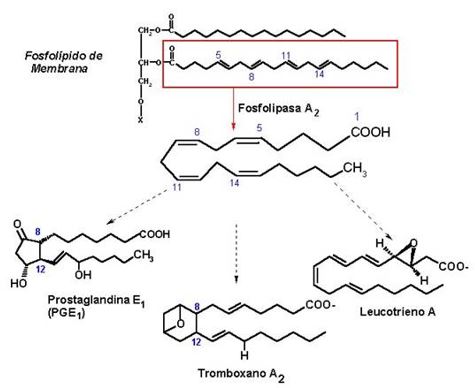
Figure I. Prostanoid Biosynthesis
Arachidonic acid
The biosynthesis of arachidonic acid in the cell membrane causes it to be metabolised by enzyme systems of which we are mainly interested in the cyclooxygenase (COX) family, which catalyses the conversion of arachidonic acid to pro-inflammatory prostanoids (prostaglandins, thromboxanes and leukotrienes).
Prostaglandin production
Specifically, prostaglandin production has been linked to muscle hypertrophy by stimulating the proliferation of satellite cells. As well as their differentiation and fusion favourable to muscle cells (Bondensen, Mills, Kegley and Pavlath, 2004) and an increase in protein synthesis (Palmer, 1990) which as we already know helps the development of muscle hypertrophy.
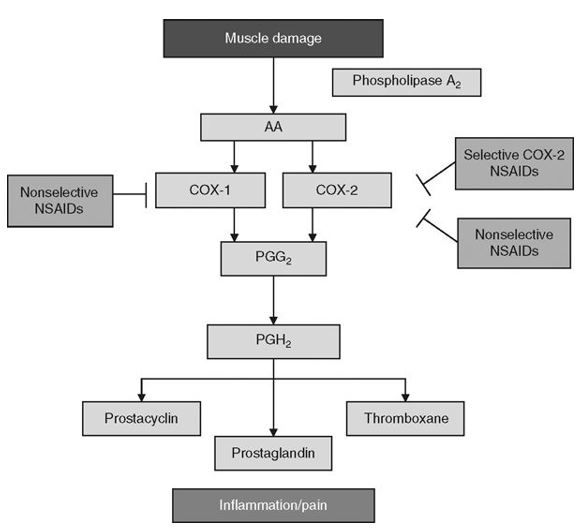
Figure II. Cascade of reactions by which muscle damage leads to inflammation
Role of NSAIDs on muscle hypertrophy
Drugs (NSAIDs) such as ibuprofen or naproxen inhibit the action of COX, preventing its enzymatic activity that converts arachidonic acid to prostanoids.
Therefore, if they were consumed close to training, we would partially inhibit the acute inflammatory process induced by the mechanical stress of the stimulus to which we have been subjected.
And to some degree, we would be limiting our potential for improvement by blocking the metabolisation of AA to eicosanoids.
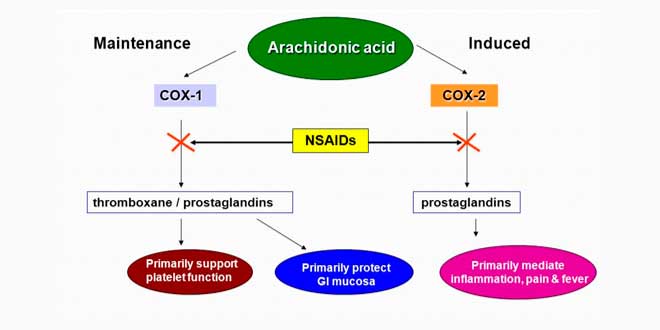
Figure III. Action of NSAIDs on COX inhibition
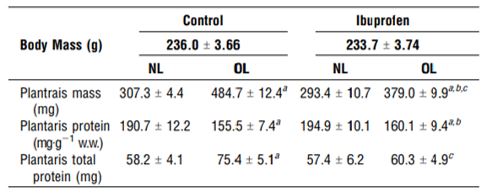
Figure IV. Changes in muscle mass and protein content of plantar muscle in chronically overloaded (OL) vs. non-overloaded (NL) ibuprofen-consuming rats and control group (Soltow et al. 2006).
Anti-inflammatory drugs and Exercise
Soltow, Better, Sellman, Lira, Long and Criswell (2006), showed changes in plantar muscle mass in rats.
These had undergone gastrocnemius and soleus removal surgery to force chronic muscle overload (OL) vs. sham surgeries on the contralateral leg to force normal loading (NL).
As can be seen in the table, despite there being no changes in muscle protein concentrations, there are alterations in muscle development, with a lower plantar mass in the ibuprofen-consuming group, both NL and OL, being greater in the second group, showing the limitation in the inflammatory effect when subjected to an overload (in our case, voluntary training).
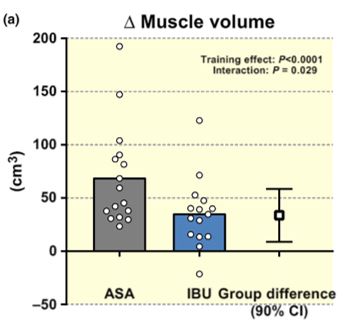
Figure V. Changes in quadriceps muscle volume (cm3) in experimental groups taking aspirin (ASA) vs ibuprofen (IBU) (Lilja et al. 2018).
Ibuprofen VS Aspirin
Lilja et al. (2018) showed in a very current trial how after subjecting a group of men and women to two different types of training using methods aimed at strengthening the knee extensor musculature:

Those who consumed 1200mg ibuprofen dailys (IBU) showed 3.8% less muscle development in the quadriceps than the group who consumed 75mg acetylsalicylic acid (aspirin).
Bibliographic sources
- Clarkson, P. M., & Hubal, M. J. (2002). Exercise-induced muscle damage in humans. American Journal of Physical Medicine & Rehabilitation, 81(11 Suppl), S52-69. https://doi.org/10.1097/01.PHM.0000029772.45258.43
- Bondesen, B. A., Mills, S. T., Kegley, K. M., & Pavlath, G. K. (2004). The COX-2 pathway is essential during early stages of skeletal muscle regeneration. American Journal of Physiology. Cell Physiology, 287(2), C475-83. https://doi.org/10.1152/ajpcell.00088.2004
- Palmer, R. M. (1990). Prostaglandins and the control of muscle protein synthesis and degradation. Prostaglandins, Leukotrienes, and Essential Fatty Acids, 39(2), 95–104.
- Lilja, M., Mandic, M., Apro, W., Melin, M., Olsson, K., Rosenborg, S., … Lundberg, T. R. (2018). High doses of anti-inflammatory drugs compromise muscle strength and hypertrophic adaptations to resistance training in young adults. Acta Physiologica (Oxford, England), 222(2). https://doi.org/10.1111/apha.12948
- Soltow, Q. A., Betters, J. L., Sellman, J. E., Lira, V. A., Long, J. H. D., & Criswell, D. S. (2006). Ibuprofen inhibits skeletal muscle hypertrophy in rats. Medicine and Science in Sports and Exercise, 38(5), 840–846. https://doi.org/10.1249/01.mss.0000218142.98704.66
Related Entries
- Altered Analytics in Athletes
- Medication and Exercise: how do they affect training?
- Do antioxidants speed recovery after exercise?