Fitness, Nutrition, Health and Sports Blog In the HSNstore Blog you will find tips about Fitness, sport in general, nutrition, and health – HSNstore.com

Certainly, the key factor in a diet is not only the total calories, but where they come from and how they are distributed: how many meals should we eat per day?
Calories are the key to a correct dietary approach. However, they need a correct distribution of macronutrients to enable us to achieve our goal.
Energy Balance
In the field of nutrition and sport, it is difficult to agree on the justification of one theory or the other. From the above, something that no one can refute is that according to the law of energy balance IN/OUT:
- Eating more than we consume: we cause a calorie surplus that leads to a gain in fat, muscle or both.
- Ingesting less than we expend: this is a calorie deficit that will result in loss of fat, muscle or both.
- Taking in as many calories as you expend: no weight gain or weight loss.
5 meals a day, yes or no?
Below, we bring you different perspectives on the same reality.
We often read on the internet or hear from renowned nutritionists that eating 5 meals a day is a fundamental premise. However, everything is debatable depending on the scientific basis on which we look at it.
We can say that the number of meals you should eat per day is the number that fits into your routine and allows you to meet your nutritional needs. Nothing more and nothing less.
Again we emphasise that what you eat is much more important than how often you eat it.
Thermal effect of food
The thermic effect of food (ETC or ETA thermic effect of food) is the amount of energy consumed to digest and absorb food and is considered to be about 10% of the total calories expended by the body.
Thermal Effect of Food | |
| PROTEINS | 20-30% of calories ingested |
| CARBOHYDRATES | 5-10% of calories ingested |
| FATS | 3-7% of calories ingested |
Effect of macronutrients
We must bear in mind that the thermal effect of each meal is not the same, we do not use the same amount of energy to digest each macronutrient. Therefore, the type of food we introduce does affect the organism.
Protein is the macronutrient with the highest thermic effect.
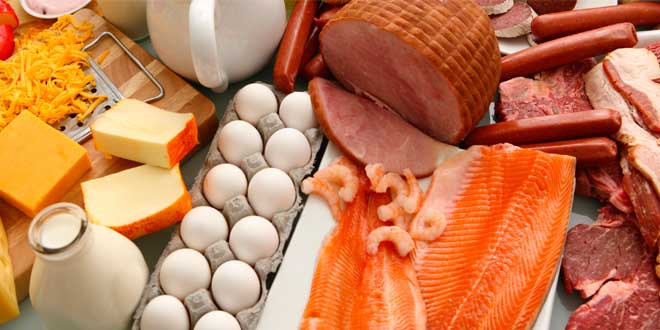
Thus, in addition to helping us to maintain muscle mass, a correct protein intake can give us some extra benefits.
If you skip meals, you will slow down your metabolism and stop losing weight
It depends.
The less you eat, the less you have to digest, you may not be properly nourished or you may need to face daily activity without energy but you will not necessarily stop losing weight.
It is important to remember that severe calorie restriction over a long period of time is detrimental to health.
What is the opinion of the International Society of Sports Nutrition?
They concluded that more research is needed to obtain clear data. Even so, so far and by analysing the studies it can be stated that:
- Sedentary people: having more intakes throughout the day does not positively influence their body composition.
- Athletes with a higher frequency of meals: it DOES help to preserve muscle mass, as long as the protein intake is adequate.
- Blood markers: increasing meal frequency has a positive effect on LDL-cholesterol, total cholesterol or insulin, keeping glucose more stable.
- Energy expenditure: increased meal frequency does not appear to increase thermogenesis, basal metabolism or total energy expenditure.
- Appetite control: eating several meals a day DOES help to reduce hunger and control appetite and cravings, although the main control is again by the type of food that makes up those meals.
How does basal metabolism influence?
“…I don’t lose weight because I have a slow metabolism…” is like saying “…I can’t be thin because I am broad-boned…”.
Both absurd, although it is true that having a high metabolism can make it easier to lose body fat, it does not mean that a slower metabolism is impossible.
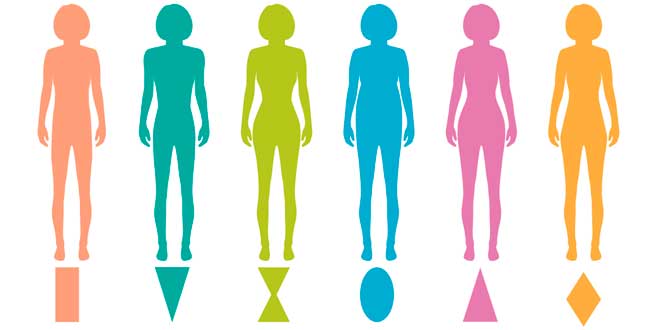
A study carried out by “The American Journal of clinical nutrition” in 2016 refers to the fact that basal metabolism is not as relevant to fat loss as diet and exercise, and a low metabolic rate is not directly related to a greater predisposition to gain body fat.
What happens to blood glucose?
Blood glucose is the amount of glucose in the blood, the body needs to have these levels under control in order to avoid problems. The hormones that regulate this stability are glucagon, adrenaline, cortisol, adrenocoricoropausal hormone, thyroxine, insulin…
Benefits of eating 4-6 times a day
Thus, if you eat 4 to 6 meals a day, depending on your waking hours and your situation, you will provide your body with a constant supply of protein, carbohydrates and fats.
It may also be easier for the body to store carbohydrates or glycogen.

Recent studies show considerable controversy about the benefits of eating so many meals a day.
How many meals should I eat per day?
There is no specific number of meals However, there is a nutritional balance that we must adhere to in order to have a healthy diet.
This article sheds some light on the situation, comparing the results of science with official recommendations and a dash of common sense.
The danger of eating 5 or 6 times a day is that very few people end up eating all of their healthy meals.

In the end, they turn to processed snacks, products loaded with refined carbohydrates, sugars, hydrogenated vegetable oils, flavourings, etc.
Conclusions
In general, eating 5 times a day has some benefits or makes it easier for some people to achieve their goals, but it should not be set as a fixed rule.
Bibliographic sources
- Bakhach, M., Shah, V., Harwood, T., Lappe, S., Bhesania, N., Mansoor, S., & Alkhouri, N. (2016). The Protein-Sparing Modified Fast Diet: An Effective and Safe Approach to Induce Rapid Weight Loss in Severely Obese Adolescents. Global pediatric health, 3, 2333794X15623245.
- Fairburn, C. G. (2001). Eating disorders. John Wiley & Sons, Ltd.
- Palgi, A., Read, J. L., Greenberg, I., Hoefer, M. A., Bistrian, B. R., & Blackburn, G. L. (1985). Multidisciplinary treatment of obesity with a protein-sparing modified fast: results in 668 outpatients. American journal of public health, 75(10), 1190-1194.
- Trexler, E. T., Smith-Ryan, A. E., & Norton, L. E. (2014). Metabolic adaptation to weight loss: implications for the athlete. Journal of the International Society of Sports Nutrition, 11(1), 7.
- https://academic.oup.com/ajcn/article/104/4/959/4557125
- “Fasting, los principios y beneficios del ayuno intermitente” Rèmi Raher
Related Entries
- How Many Calories Do You Need to Gain Muscle Mass?
- How Much Fat Do You Need Per Day?
- Nutritional Guide and Tips for Beginners in the Gym