Fitness, Nutrition, Health and Sports Blog In the HSNstore Blog you will find tips about Fitness, sport in general, nutrition, and health – HSNstore.com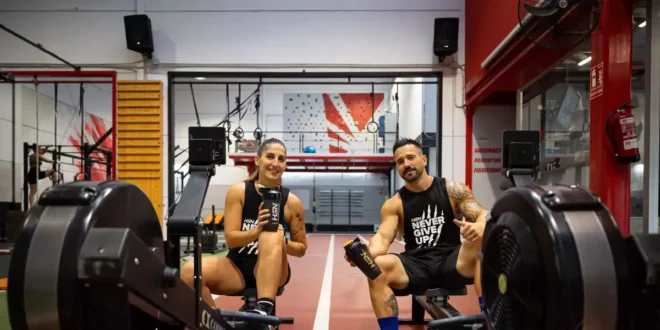

Nowadays, it is common to find a Rowing Machine in the cardio area of any gym. It is an activity that has an impact on our lung capacity and muscular endurance, and it does not involve impact, as running does.
It can be the perfect complement to a workout session with weights, doing HIIT training or, alternatively, dedicating an entire session and boosting aerobic capacity.
Indoor Training
A few years ago, and still today, the Indoor Cycling activity, or known by its registered trademark, Spinning, was a boom in all sports centres, introducing the concept of group classes.
It also provided a series of benefits such as calorie expenditure in a short period of time, no joint impact, improved anaerobic capacity, and above all, a good dose of fun in each session.
Hence its success.
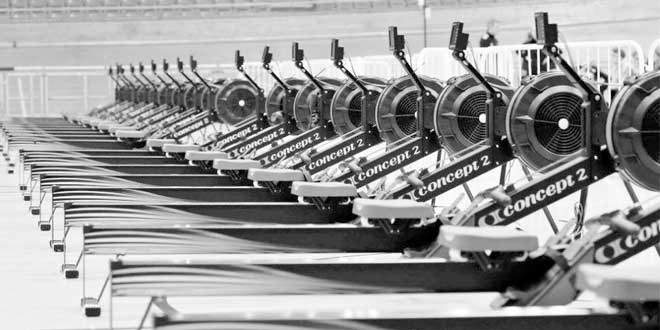
However, collective indoor rowing sessions are gradually being introduced and reaching the same level as spinning sessions.
What is an Ergometer?
An ergometer is a machine used to measure a person’s work capacity.
In this sense, we can make the following definition: an ergometer can test the performance and fitness level of a person.
To some extent, using the necessary equipment, it is possible to monitor different constants, such as heart rate, respiration, blood pressure, and obtain a report on the subject’s condition.
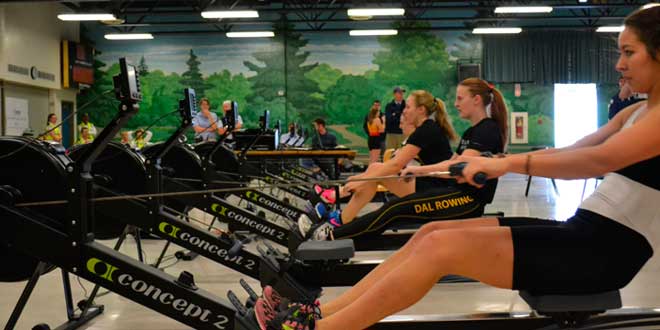
In this way, we get a result that is closer to reality.
What is the Rowing Machine?
An oar simulates the action of rowing, i.e. it is a combination of a pull-push movement, the resistance being offered by the water (simulated in the machine), plus any friction between the gears.
Therefore, by using this machine, we will be doing an activity that combines Strength and Endurance in the horizontal plane.
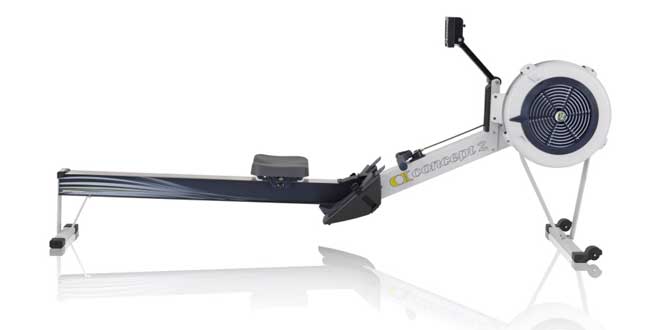
Rowing Concept 2
Structure
- Sliding seat
- Fixed pedals with adjustable footrests
- Chain-linked grip with gears
- Simulation or endurance system (it can be magnetic, air-operated…)
- LCD display to show information about any current variable. It also allows to navigate and select within the menus the training program (depending on the model).
Benefits of Rowing Machine
For everyone
The action of rowing is extremely easy to learn, and of course, as long as you have someone with the necessary training, it won’t take you much longer than the first session to get the basics of rowing technique down.
Calorie expenditure
By recruiting a large number of muscles (around 85%, more than other types of cardiovascular exercise), both lower and upper body, such as the quadriceps, hamstrings, glutes, dorsals, core, triceps and biceps, and producing muscle contractions, you will generate an excellent workout, both muscular and cardiovascular, involving the consumption of a good number of calories.
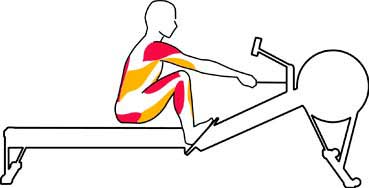
Muscles involved during the Catch phase
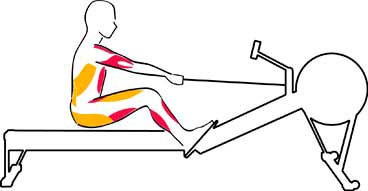
Muscles involved during the Recovery phase
It minimises the risk of injury
It does not cause a joint impact like other sports, and for those who are overweight, the way in which the knees have to maintain the load will be lighter.
Cardiovascular Improvement
Any medium-intensity activity will have a series of benefits for our cardiovascular system, from the heart muscle itself, to the oxygen transport system, blood…
However, we will be able to carry out more intense sessions, such as series days…
Fun
The Rowing Machine can offer hours of fun and enjoyment. In some cases, it can be the biggest pain, but generally speaking, everyone who tries it is convinced and chooses it as “their cardio machine”.
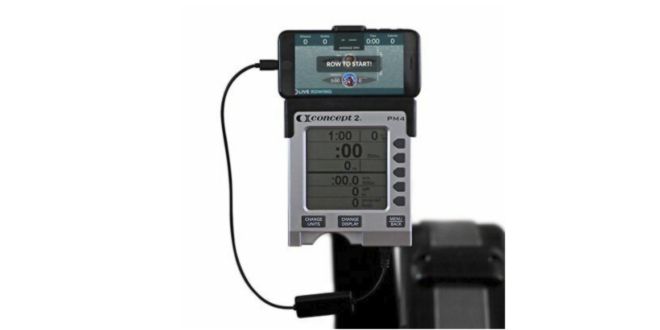
Concept models can be fitted with an accessory to hold our smartphone and the corresponding app.
Aid to recovery
The Rowing Machine is perfect to combine with any sporting discipline, either as an active element during the same session in combination with other movements or accessories, within guided sessions in a group activity, or as a passive element, focusing on muscle recovery, i.e. active recovery.
Rowing technique, how to row?
Although at first glance it may appear to be a simple push-pull movement, it is not.
In the mechanics of rowing there must be a sequencing of the phases of the complete movement cycle as precise and rhythmic as possible to achieve good efficiency during the exercise, regardless of whether we perform long sessions of 3 kilometres or more, short series or intensity intervals.
Like any other exercise that requires an optimal execution technique, if it is not carried out properly, the only thing we will achieve will be to overload the muscles involved, increase the probability of injury and not achieve the proposed objective.
The rowing cycle can be divided into 3 phases:
The Catch
Starting position: in which we keep our legs bent and our arms fully extended in front of us. It is important that you take into account the position of your back both at the start and during the exercise, so it should be straight without exaggerating kyphotic or lordotic curvatures.
The Drive
We start the movement by extending our legs and pushing ourselves backwards. Just at the moment of maximum extension is when we pull the oar until the handle is positioned below your chest.
Return to the Catch or Recovery
In this phase we return to the initial starting position. First, we extend our arms fully and bring them back to the front and then, let them bend our legs to bring us back to the starting position.
Rowing Technique Video
Rowing Machine and Psychological Training
Yes, you read correctly, the Rowing Machine offers a continuous dispute against ourselves.
This is because at all times we have a screen with real-time information on calorie consumption, heart rate, speed, metres travelled, metres remaining, active time, etc. In other words, any variable will be constantly updated with every paddle we do.
This means that we are subject to control over our movement, and if we are training with a specific objective for the session, for example to obtain a total number of metres rowed in a set time, this will put extra pressure on us (although reading this you may not believe it, when you start rowing, you will see what I mean), and your heart rate will rise rapidly.
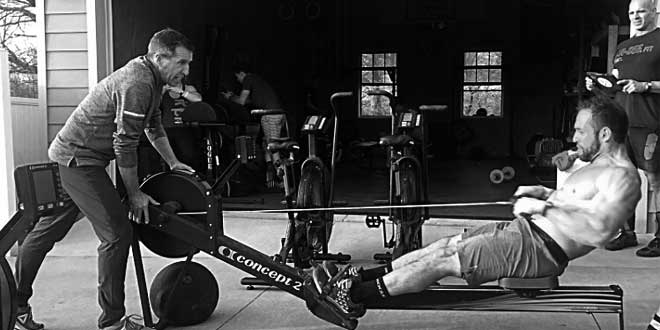
Therefore, it is necessary to keep calm, control breathing and movement, try to maintain a stationary pace (or rhythm), analysing our muscular fatigue with each new stroke, in order to be able to reach the set goal.
Rowing Machine and CrossFit
A large majority of users have probably turned to the Rowing Machine due to the rise of CrossFit. In this discipline, it is common to use a machine for aerobic sessions, such as the “Assault Bike” bicycle or the “TrueForm” treadmill.
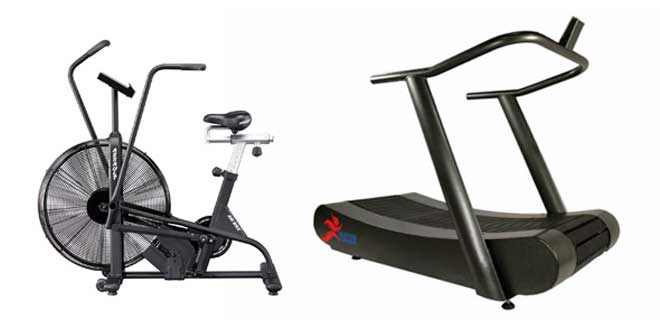
But it is the Rowing Machine that is perhaps the most widely used.
An immediate use of rowing, within a CrossFit routine, would be to combine metabolic circuits or MetCons, in which our power and physical capacity are demonstrated, through combinations of aerobic efforts (rowing) together with other anaerobic and power efforts (lifting weights or variants of Olympic movements), or gymnastic or bodyweight exercises.
Here we see a clear example of a CrossFit MetCon where the Rowing Machine is used, together with the loading movement and gymnastic exercise, being executed at maximum speed:
Rowing Machine Training
When implementing a training session with the Rowing Machine, we have several options, being the choice of the type of physical capacity we intend to train, as well as the type of energy substrate:
- Aerobic
- Anaerobic
For the first case, we are making almost exclusive use of the oxidative substrate, i.e. we are using fats as fuel. For the second case, the energy pathway will come from glycolysis, i.e. oxidising glucose (which will be stored in the form of muscle and liver glycogen) and obtaining available energy.
If we are looking for an improvement in endurance, and where we prioritise the use of the fat substrate, we will have to carry out a type of time-based training. In this, our task will be to maintain an equal pace over the course of the distance. The intensity should be moderate. The intensity should be moderate.
For the more adventurous, you can try a half marathon, i.e. 21km…
https://www.instagram.com/p/BdHwu4rnFob/?taken-by=beatman84
If, on the other hand, we want to increase our anaerobic capacity, as well as our VO2 MAX, we will train in intervals or series. This is quality training.
Rowing Machine Concept
This is one of the models most often seen in CrossFit Boxes, given the sponsorship agreement that exists. However, in any other centre, it will be possible to train with one.
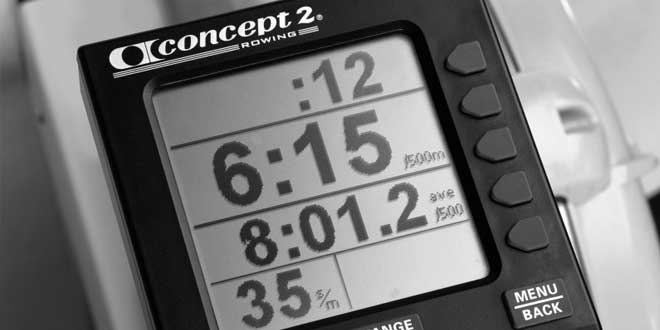
On Concept models, the information displayed on the screen corresponds to our instantaneous effort, or a projection for 500m.
This data will allow us to know at all times what our pace is, and if, having set a distance, we will be able to reach it within the planned time.
Another modality, which at least this model offers, is to train by calories or by the power variable:
- Each stroke generates a series of watts of power, which translated and extrapolated, will be an approximate caloric expenditure of our effort.
- Thus, it is often observed in training that the goal of each round, or time span, is measured not by distance, but by the number of calories expended.
Where to buy the Rowing Machine?
It is possible to perform workouts similar to those of professionals, as with any CrossFit wod, or as an element of Indoor conditioning, and to enjoy this fabulous rowing machine in the same room at home. Thanks to its characteristics, it takes up very little space once folded in two parts.
Rowing Tips
- Grip: don’t grip too hard, or you may experience forearm fatigue if you’re going to be doing it for a long period of time. Therefore, during each stroke, in the recovery phase, open your grip slightly to loosen your muscles.
- Lead with your legs: to a large extent, the legs play a fundamental role in paddling, and since they are much stronger than your arms and torso, they will be the ones that will provide the most power. If you do power training, your quads and glutes will feel it. Those with longer lower limbs have an advantage.
- Don’t just pull on the arms: as we have seen before, it is the legs that power the movement.
- Remember the order: legs, hips, arms, arms, arms, hips, legs. This is how the movement flows from Catch to Recovery.
- Push backwards: if you want to be efficient, the movement after the Catch will be in the reverse direction, so the grip will be displaced in almost the same horizontal plane.
- Keep your elbows relaxed: maintain a natural position and angle, without forcing them.
- Don’t shrink your trapezoids too much: you don’t need to shrink at every stroke and your shoulders should come up to your ears.
- The feet also have a role to play: i.e. you should feel them throughout the whole trajectory, supporting them and putting pressure on the heels in the concentric part, and releasing them slightly when pulling.
- Avoid excessive seat displacement: a benchmark would be to stop just when your shins are perpendicular to the floor. Keep your hips below your heels.
Indoor Rowing Record
As in any facet and activity where achievements can be measured and recorded, there will always be those who seek to claim the title of the best record achieved. In this case, the Indoor Rowing modality also offers a wide diversity and categories for the records: age, gender, distance… The following videos show two quite spectacular records:
100m Indoor Rowing Record
300m Indoor Rowing Record
Related Entries
- Deepen the technique of Barbell Rowing. See our specific post.
- Lactate and its effects
- CrossFit and Energy Pathways