Fitness, Nutrition, Health and Sports Blog In the HSNstore Blog you will find tips about Fitness, sport in general, nutrition, and health – HSNstore.com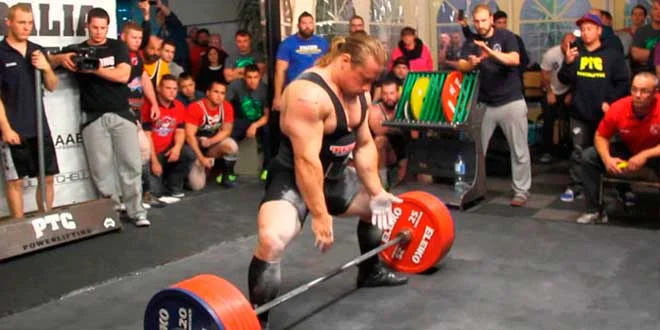

Powerlifting competitors have a body composition very different from other similar disciplines
What does strength in Powerlifting depend on?
Research suggests that the anthropometric characteristics of powerlifters contribute to their impressive strength development
Just like Olympic weightlifters, having short limbs can boost these lifters’ performance, especially in squat and bench press. This is because it reduces the distance the bar has to be lifted (less muscular work done, which means less chance of fatigue), giving a mechanical advantage by shortening the moment arms.
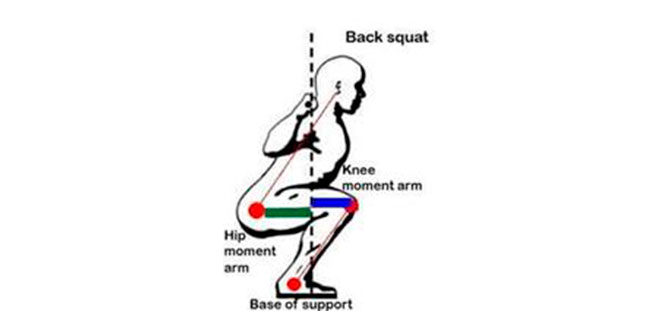
However, limb indices that favor some lifts (like the crural index, which relates leg length to thigh length) might work against others.
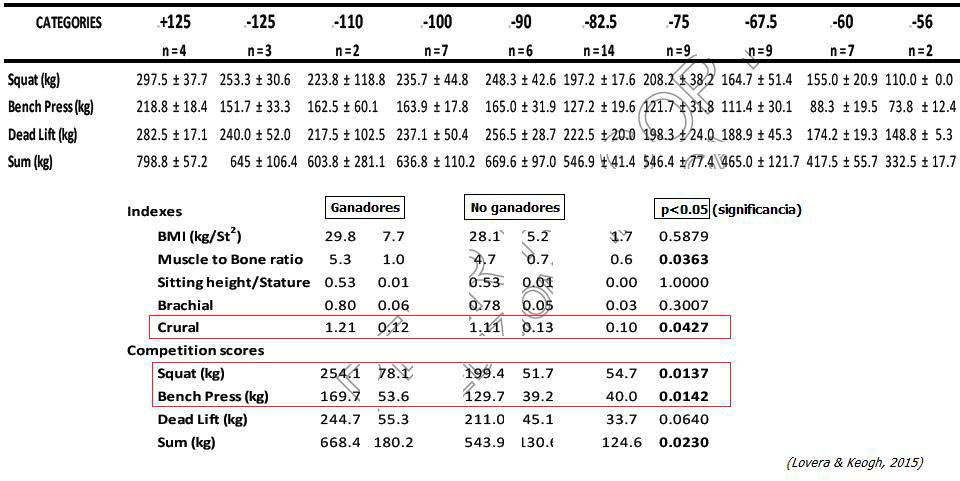
So, based on anthropometric evaluation, it’s been estimated that there’s a higher success rate in subjects whose body indices related to limbs (especially the crural index) give them a mechanical advantage in squat and bench press.
Muscle mass of Powerlifters
The muscle mass of winners is significantly higher than that of other competitors in all categories (+2,7%), as well as the muscle-to-bone ratio (see “Muscle to Bone ratio” in the previous table).
The amount of muscle mass in lifters from the higher Powerlifting categories usually ranges around 60-70 kg, with an average body fat percentage of 20%
Body fat percentage of Powerlifters
This reference aligns with previous data where the average body fat percentage hovers around that figure (20%)
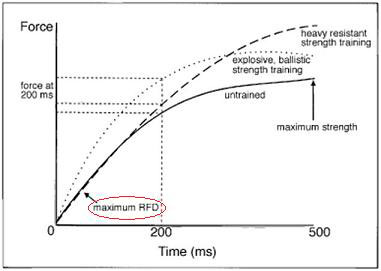
Therefore, it’s not considered productive to try to increase muscle mass by raising body fat percentage—that is, gaining weight without caring about the quality of the gain. In powerlifting, the neuromuscular factor plays a key role in the rate of force production (how quickly force is generated), and that adaptation leading to improved maximal strength is achieved more through training methodology than through nutritional strategies involving caloric surplus.
Bone mass of Powerlifters
Regarding bone mass, the heaviest lifters also stand out with an average of 12,5±0,7 kg (10% of body weight), which is two standard deviations above the average for someone of their height (though obviously not their weight).
Strength training once again shows itself as the best prevention, along with impact exercise, against osteoporosis and decreased bone mineral density; far ahead of any supplement
Experience and age of Powerlifters
A degree?
Although there are no differences in the average age of elite winning and non-winning powerlifters, nor in years of training (see table below), the conclusion regarding these variables is that those competing usually have between 8 and 11 years of experience with the lifts and an age range of 29 to 40 years.
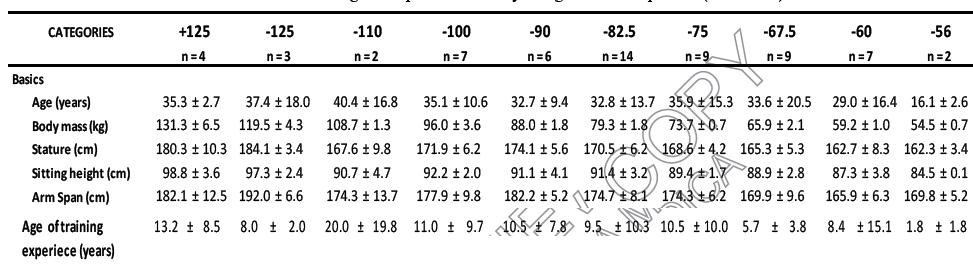
Interestingly, the experience and age of master athletes and lighter weight classes would be evaluated, whose age does not exceed 17
Sources
- Brechue, W. F., & Abe, T. (2002). The role of FFM accumulation and skeletal muscle architecture in powerlifting performance. European journal of applied physiology, 86(4), 327-336.
- Keogh, J. W., Hume, P. A., Pearson, S. N., & Mellow, P. J. (2009). Can absolute and proportional anthropometric characteristics distinguish stronger and weaker powerlifters?. The Journal of Strength & Conditioning Research, 23(8), 2256-2265.
- Lovera, M., & Keogh, J. (2015). The anthropometric profile of powerlifters: differences as a function of bodyweight class and competitive success. The Journal of Sports Medicine and Physical Fitness.
Related Posts