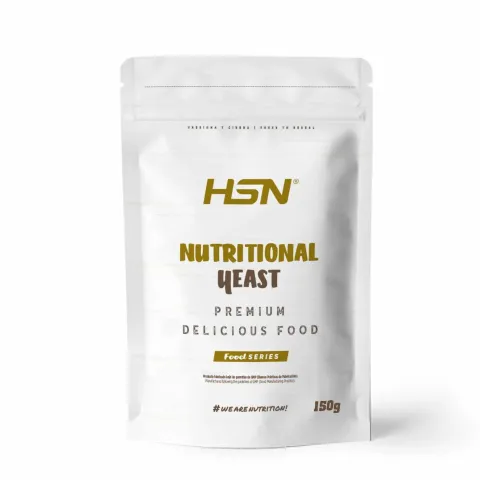
A basic that gives your meals more flavor and nutritional value
Nutritional yeast (Engevita®) in flakes by FoodSeries is a food made from dehydrated, inactive yeast from Saccharomyces cerevisiae, designed to easily boost recipes. It doesn’t work like baking yeast, because it’s not meant to ferment doughs, but to be eaten straight as a food ingredient.
Its big appeal is that it brings together three things that fit really well in everyday cooking: delicious, intense flavor, a practical format, and a very interesting nutritional profile.
A super convenient way to make your recipes tastier, more complete, and way more versatile.
What it is exactly and what it gives you
Nutritional yeast in flakes is made from yeast that’s grown, then inactivated and dried for consumption as food. In this format, we use Engevita® raw material, a well-known reference in the nutritional yeast market thanks to its consistency and its focus as a direct-use ingredient in food.
Its composition is simple: dehydrated inactivated yeast. From there, it stands out for offering a concentrated nutritional profile, with a high protein and fiber content, plus vitamins from the B group such as B1, B2, B3, B5, B6, folic acid, biotin, and B12. It also provides minerals like zinc and potassium.
The most interesting part of its composition:
- High protein content.
- High fiber content.
- A wide natural presence of B-group vitamins.
- Flake format that’s convenient for cooking use.
- Engevita® raw material.
- Suitable for vegans.
The key to this ingredient isn’t just what it contains, but how well it fits into your day-to-day recipes. Used in small amounts, it helps improve flavor and enrich dishes without changing how you cook completely. That’s why it’s so interesting for people looking for functional, simple ingredients that are easy to include in a varied diet.
What it’s for in the kitchen and why people love it so much
Nutritional yeast in flakes is mainly used to add flavor, improve a recipe’s nutritional profile, and give a little boost to the texture of mixes, sauces, or savory preparations. Its sensory profile brings to mind toasted notes, nuts, and cheese, with a highly appreciated umami touch in plant-based cooking.
This makes it a really popular option for sprinkling on pasta, rice, salads, vegetables, creams, purées, or popcorn. It can also be worked into sauces, dips, vegetable pâtés, crackers, savory fillings, spice blends, or recipes where you want a more savory, well-rounded finish.
It’s not a “one-use” ingredient. It works great as a finishing touch, but it’s also part of the recipe for adding flavor, body, and a more complete nutritional profile.
Why choose nutritional yeast with Engevita® raw material
One of the biggest differences of this product is that it’s made with Engevita®, a raw material known in the nutritional yeast category. This gives an extra boost of trust for anyone who’s looking for a known ingredient, with its own identity and a solid track record in food applications and plant-based proposals.
Plus, Engevita® is associated with a well-defined flavor profile that can range from mild to toasted, with very characteristic tasty nuances. That’s exactly why it’s used so much in cooking: it helps enrich the final result without needing to rely on complex ingredients.
When you’re looking for nutritional yeast, it’s not only about whether it’s practical: it also matters where it comes from and how it behaves in your recipes.
How to fit it into your routine
It’s super easy to use, because it doesn’t need to be cooked beforehand. You can add it directly right before serving, or mix it in during preparation if you want it to spread more evenly throughout the whole recipe.
Easy ideas to get the most out of it
- Sprinkle it over pasta, pizza, rice, or roasted vegetables.
- Mix it into creams, purées, or soups to add an extra savory touch.
- Use it in vegetable sauces and dips to add body and umami notes.
- Add it to breading, homemade crackers, or seasoning mixes.
- Include it in plant-based recipes where you want a touch like shredded cheese.
Who it suits especially well
It’s a really interesting option for people who follow a plant-based diet, for anyone who enjoys experimenting with healthy cooking, and for anyone who wants a practical ingredient at home to add flavor and enrich everyday recipes.
It also fits really well in kitchens where versatile, easy-to-use products are prioritized, with a good balance between culinary usefulness and nutritional value. It’s one of those ingredients that, once you try it, you keep finding more and more ways to use it.
Recommended combinations
- With spices and seasonings: to create tasty blends for vegetables, potatoes, rice, or homemade snacks.
- With nut creams: ideal in sauces and dressings for a creamier texture.
- With neutral plant proteins: a good way to enrich savory preparations as part of a plant-based routine.
- With flours or bases for healthy cooking: perfect for crackers, savory doughs, or more complete homemade recipes.
A simple way to level up your everyday recipes
Nutritional Yeast (Engevita®) in flakes is one of those ingredients that makes a difference without complicating cooking. It adds flavor, works in tons of preparations, and improves the nutritional profile in an easy-to-use format.
If you’re looking for a versatile pantry staple, with its own culinary personality and lots of ways to use it, this FoodSeries option is a practical and tasty way to take your recipes one step further.
Frequently asked questions
Is it the same as yeast for making bread?
No. It’s an inactive yeast, so it’s not meant to ferment doughs, but to be eaten directly as food.
What does it taste like?
It has a delicious flavor with notes that remind you of cheese, nuts, and umami—so it’s used so often as a culinary alternative to shredded cheese in many recipes.
Does it need to be cooked?
No. You can eat it right away, sprinkled on top, or add it to cold and hot preparations.
Does it only work for vegan recipes?
No. Even though it’s very popular in plant-based cooking, it also works with any diet where you want to add flavor and enrich meals in a practical way.
Bibliography
- Perli, T., Wronska, A. K., Ortiz-Merino, R. A., Pronk, J. T., & Daran, J.-M. G. (2020). Vitamin requirements and biosynthesis in Saccharomyces cerevisiae. Yeast, 37(4), 283-304.
- Bertolo, A. P., Biz, A. P., Kempka, A. P., Rigo, E., & Cavalheiro, D. (2019). Yeast (Saccharomyces cerevisiae): evaluation of cellular disruption processes, chemical composition, functional properties and digestibility. Journal of Food Science and Technology, 56(8), 3697-3706.
- Pereira, P. R., Freitas, C. S., & Paschoalin, V. M. F. (2021). Saccharomyces cerevisiae biomass as a source of next-generation food preservatives: evaluating current trends and future perspectives. Comprehensive Reviews in Food Science and Food Safety, 20(5), 4450-4479.
- Avramia, I., & Amariei, S. (2021). Spent Brewer’s Yeast as a Source of Insoluble β-Glucans. International Journal of Molecular Sciences, 22(2), 825.
- Puligundla, P., Mok, C., & Park, S. (2020). Advances in the valorization of spent brewer's yeast. Innovative Food Science & Emerging Technologies, 62, 102350.
- Oliveira, A. S., Pereira, J. O., Ferreira, C., Faustino, M., Durão, J., Pereira, A. M., Oliveira, C. M., Pintado, M. E., & Carvalho, A. P. (2022). Spent Yeast Valorization for Food Applications: Effect of Different Extraction Methodologies. Foods, 11(24), 4002.
- Oliveira, A. S., Ferreira, C., Pereira, J. O., Pintado, M. E., & Carvalho, A. P. (2022). Spent brewer's yeast (Saccharomyces cerevisiae) as a potential source of bioactive peptides: An overview. International Journal of Biological Macromolecules, 208, 1116-1126.