Fitness, Nutrition, Health and Sports Blog In the HSNstore Blog you will find tips about Fitness, sport in general, nutrition, and health – HSNstore.com

The lat pulldown is a vertical pulling exercise that is excellent for working the muscles of the posterior upper body, while also engaging the abdominal wall to a lesser extent. It helps build strength in much of the back musculature, as well as the rear shoulders, the area between the shoulder blades, and the arms, depending on the grip used.
How do you do the lat pulldown?
To perform the exercise correctly, follow these steps:
- Adjust the machine: sit on the bench and position your thighs under the padded supports to keep your body stable throughout the exercise.
- Grip the bar: use a grip slightly wider than shoulder-width, with your palms facing forward.
- Adopt a stable position: keep your chest up, your back neutral, and your core slightly engaged. Avoid shrugging your shoulders.
- Initiate the movement: drive your elbows down and slightly back as you bring the bar toward your upper chest. Think about moving your elbows rather than simply pulling with your hands.
- Pause briefly: when the bar reaches approximately upper-chest level, maintain control without forcing it any farther down.
- Return to the starting position: gradually and controllably extend your arms, allowing the bar to rise without suddenly releasing the weight.
- Repeat the movement: maintain a controlled pace throughout the set and avoid using swinging or momentum to move more weight.
What muscles does the lat pulldown work?
The lat pulldown is primarily an exercise for developing the back muscles. Although the latissimus dorsi is one of the main muscles involved, other muscles in the back, shoulders, and arms also contribute to the movement.
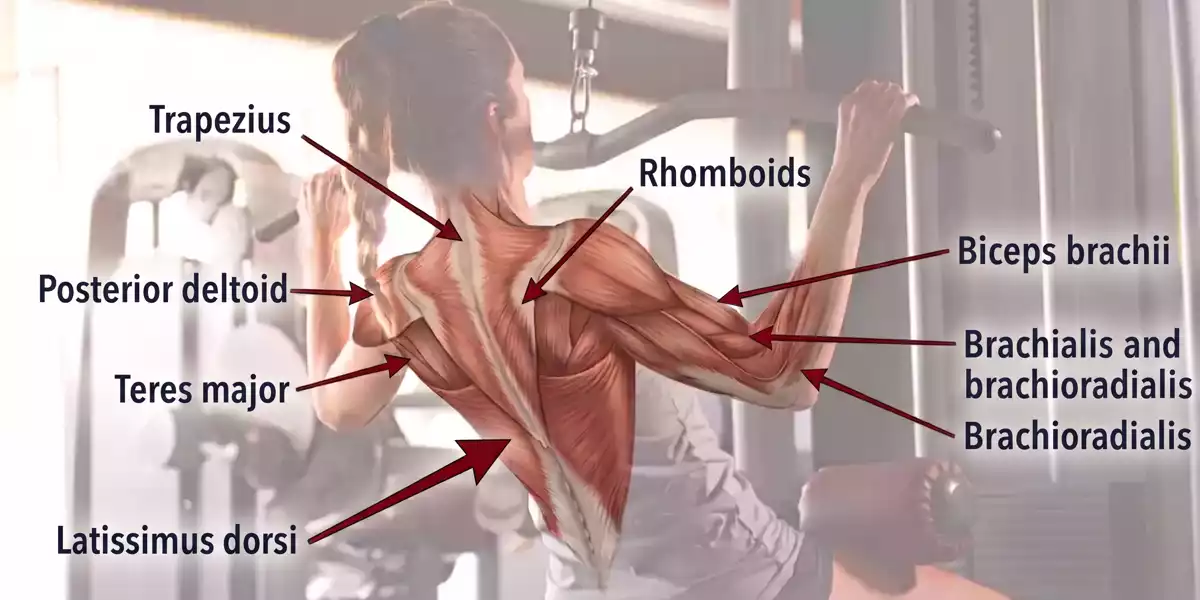
- Latissimus dorsi: the main muscle responsible for shoulder adduction and extension during the downward phase of the movement. Developing this muscle helps increase back width.
- Teres major: contributes to arm extension and adduction and works alongside the latissimus dorsi during the movement.
- Trapezius: contributes to the control and movement of the shoulder blades, particularly during the pulling and return phases.
- Rhomboids: help stabilize and retract the shoulder blades during the pull.
- Biceps brachii: contributes to elbow flexion and acts as an assisting muscle during the downward phase.
- Brachialis and brachioradialis: also contribute to elbow flexion and are therefore stimulated during the exercise.
- Posterior deltoid: may act as an assisting muscle depending on the arm path and the variation used.
Benefits of the lat pulldown
Including the lat pulldown in your training routine can provide several benefits, particularly when performed with proper technique and progressive overload.
- Develops the back muscles: particularly the latissimus dorsi, helping to build a stronger and more muscular back.
- Improves pulling strength: trains the vertical pulling pattern and your ability to pull a load toward your body.
- An alternative to pull-ups: the load can be adjusted, making it accessible for those who have not yet mastered pull-ups.
- Makes progression easier: the machine allows you to easily increase or decrease the weight according to your level and goals.
- Allows for different variations: different grips and attachments make it possible to adapt the exercise to each individual.
- Works the upper body: in addition to the back, it engages the elbow flexors and the muscles that stabilize the shoulders and shoulder blades.
Common lat pulldown mistakes to avoid
There are several common mistakes when performing the lat pulldown that can not only reduce the effectiveness of the exercise but may also increase the risk of neck or shoulder injuries.
Here are some of the most common mistakes:
- Using too much weight: excessive load encourages swinging, jerky movements, and poor technique.
- Swinging your body: avoid using torso momentum to move the bar and keep the movement controlled.
- Pulling only with your arms: focus on driving your elbows down to properly engage your back.
- Not controlling the upward phase: perform the return phase slowly and under control, preventing the bar from rising abruptly.
- Shrugging your shoulders: avoid lifting them toward your ears and maintain a stable position throughout the movement.
- Leaning your torso too far back: excessive backward lean turns the movement into something closer to a row and reduces the vertical pulling component.
- Using too short a range of motion: use a wide, controlled range of motion, provided your mobility and technique allow it.
- Sacrificing technique: prioritize proper execution over increasing the weight or completing more repetitions.
Types of lat pulldown grips
The lat pulldown can be performed using different grips. Changing hand position alters the path of the arms and can influence the relative involvement of the muscles being worked.
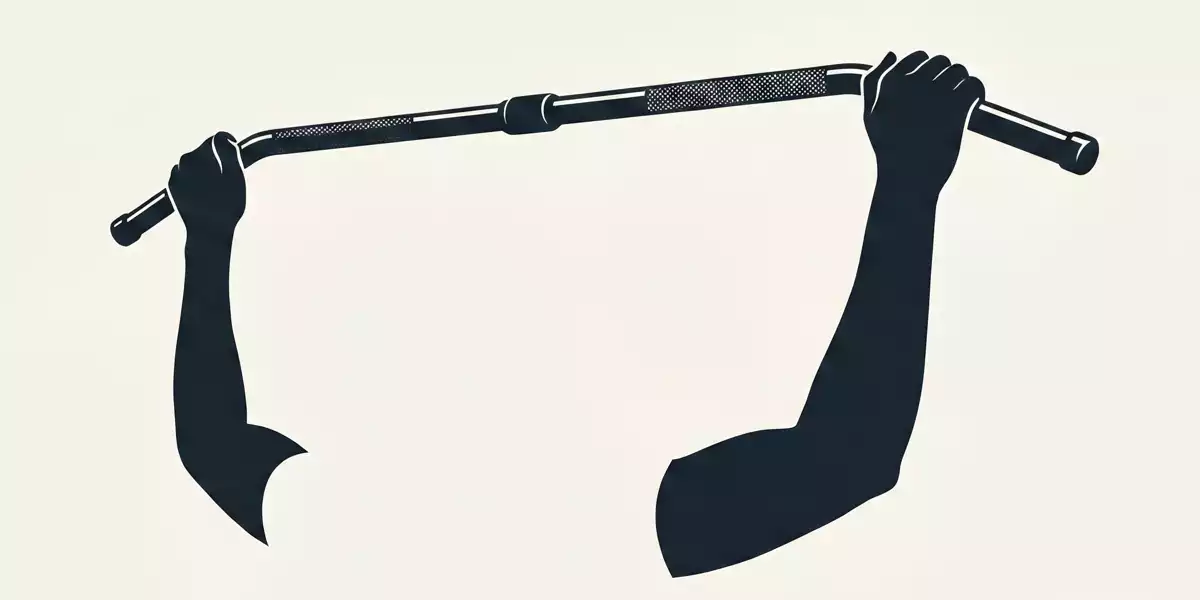
Pronated grip
- This is one of the most common grips used for the lat pulldown. Your palms face forward, away from your body.
- It is usually performed with a straight bar and follows the classic vertical pulling pattern.
Supinated grip
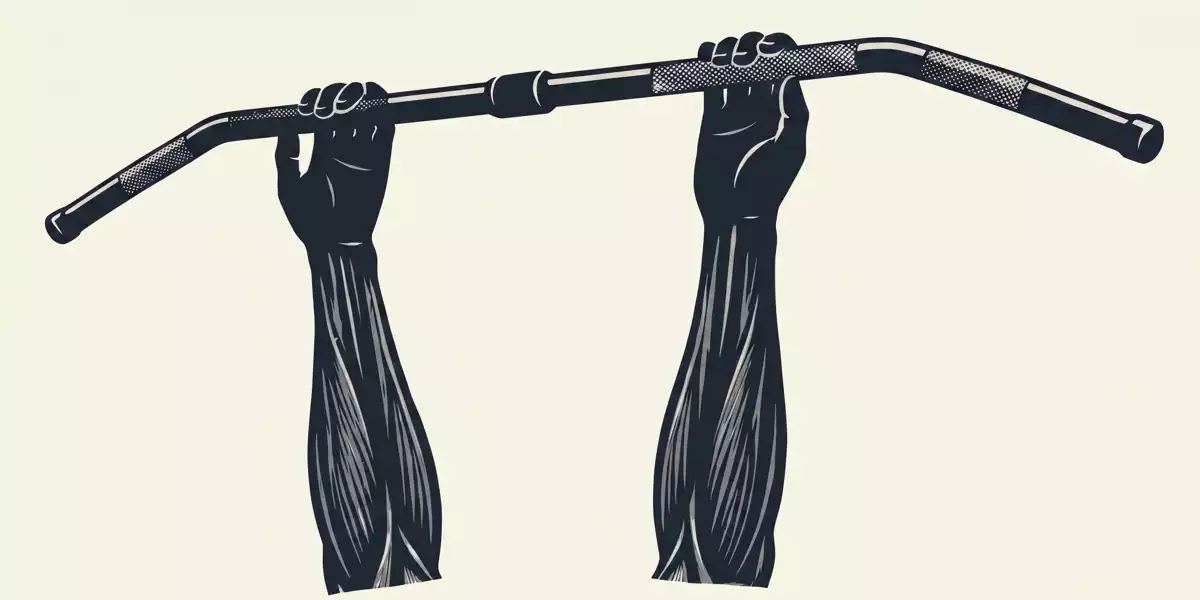
- In this case, your palms face toward your body. The hands are normally positioned around shoulder-width apart or slightly narrower.
- This position may increase the involvement of the elbow flexors, which is why some people feel their biceps working more.
Neutral grip
- With a neutral grip, your palms face each other. This is usually performed using specific cable-machine attachments.
- It may be a comfortable option for some people and allows the movement to be performed with a different shoulder, elbow, and wrist position.

What is the best grip for the lat pulldown?
The best grip will depend on the individual and their goal. Rather than looking for a single position that supposedly isolates a specific area of the back, it is generally more useful to incorporate different variations into a training program.
Available evidence indicates that changing the grip can alter the activation of certain muscles, but these differences do not mean that one grip is necessarily superior in every situation.
Therefore, a grip that allows you to perform the exercise with good technique, an appropriate range of motion, and no discomfort can be an excellent choice.
Frequently asked questions about the lat pulldown
Are lat pulldowns better than pull-ups?
There is no single answer. Pull-ups involve moving your own body weight, while the lat pulldown allows you to select and adjust the load more precisely. Both exercises can be included in a back training program.
How far down should you pull the bar during a lat pulldown?
The bar should be pulled toward the upper chest while maintaining control of the movement. There is no need to force the range of motion by trying to pull the bar farther down if doing so causes compensatory movements or a loss of proper technique.
Can you do lat pulldowns every day?
You do not need to perform lat pulldowns every day to make progress. The appropriate frequency will depend on your total training volume, experience level, and overall training program.
What should I do if I feel the lat pulldown more in my biceps than my back?
It is normal for the biceps to contribute to the movement. To encourage greater back involvement, focus on driving your elbows down, avoid using excessive weight, and control both the downward and return phases of the movement.
Are lat pulldowns good for building muscle?
Yes. Lat pulldowns can be part of a hypertrophy-focused training program when combined with an appropriate load, sufficient training volume, progressive overload, and a diet suited to your goal.
Related Posts
- Check out the best back exercises
- If you want to improve your grip strength, this article is for you.