Fitness, Nutrition, Health and Sports Blog In the HSNstore Blog you will find tips about Fitness, sport in general, nutrition, and health – HSNstore.com
 The back brings together several muscles that, with training and effort, completely transform your posture and aesthetics. There are no tricks here: growth comes from performing the right exercises and applying principles such as: training with intensity, progressively increasing the load, and respecting recovery.
Although no exercise fully isolates one area, by combining the right movements you’ll achieve a wider, stronger, and more proportionate back. Learn from HSN professionals practical exercises, how to program them, and simple progressions to start seeing real results.
1 One-arm dumbbell row (neutral grip)
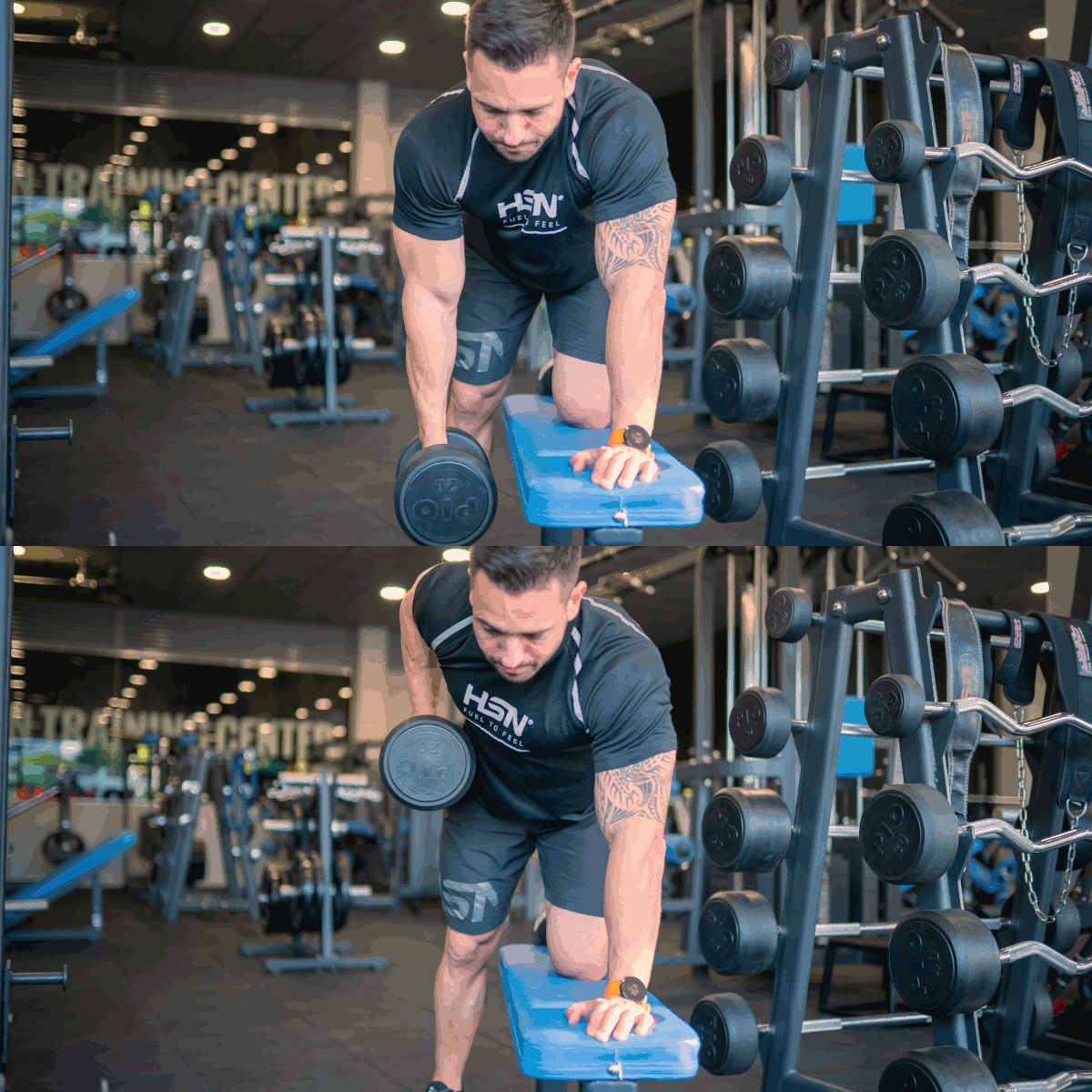
- Stand with one leg slightly back and the hand on the same side supported on a bench.
- Hold a dumbbell with the free hand, keep your back straight, and pull the dumbbell toward your hip, focusing the effort on your back.
- Lower the dumbbell under control until the arm is fully extended.
?️Muscles worked: latissimus dorsi, teres major, rhomboids, rear deltoid.
?Repetitions: 3 sets of 12 reps per side.
?HSN Tip: avoid rotating your torso. Keep your core tight and pull with the elbow, not the forearm.
2 Close-grip neutral lat pulldown
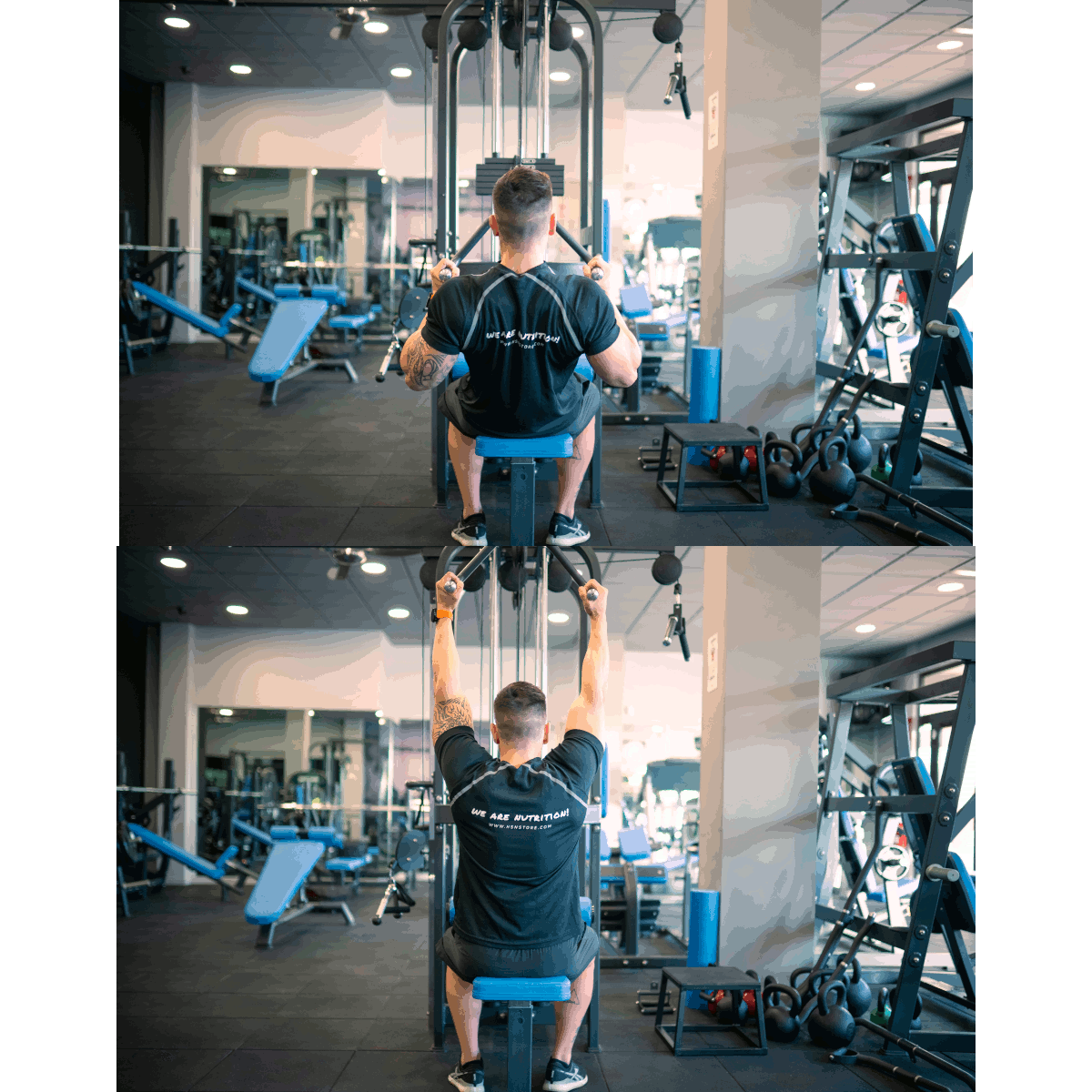
- Sit at the pulldown machine with your chest up.
- Grip the bar with a neutral grip (palms facing each other).
- Pull the bar to the top of your chest, bringing your elbows back and squeezing your shoulder blades.
- Extend your arms under control to return to the start.
?️Muscles worked: latissimus dorsi, teres major, biceps, rhomboids.
?Repetitions: 3 sets of 15 reps.
?HSN Tip: don’t swing your torso. Focus on pulling with your elbows, not your arms.
3 Seal row with barbell
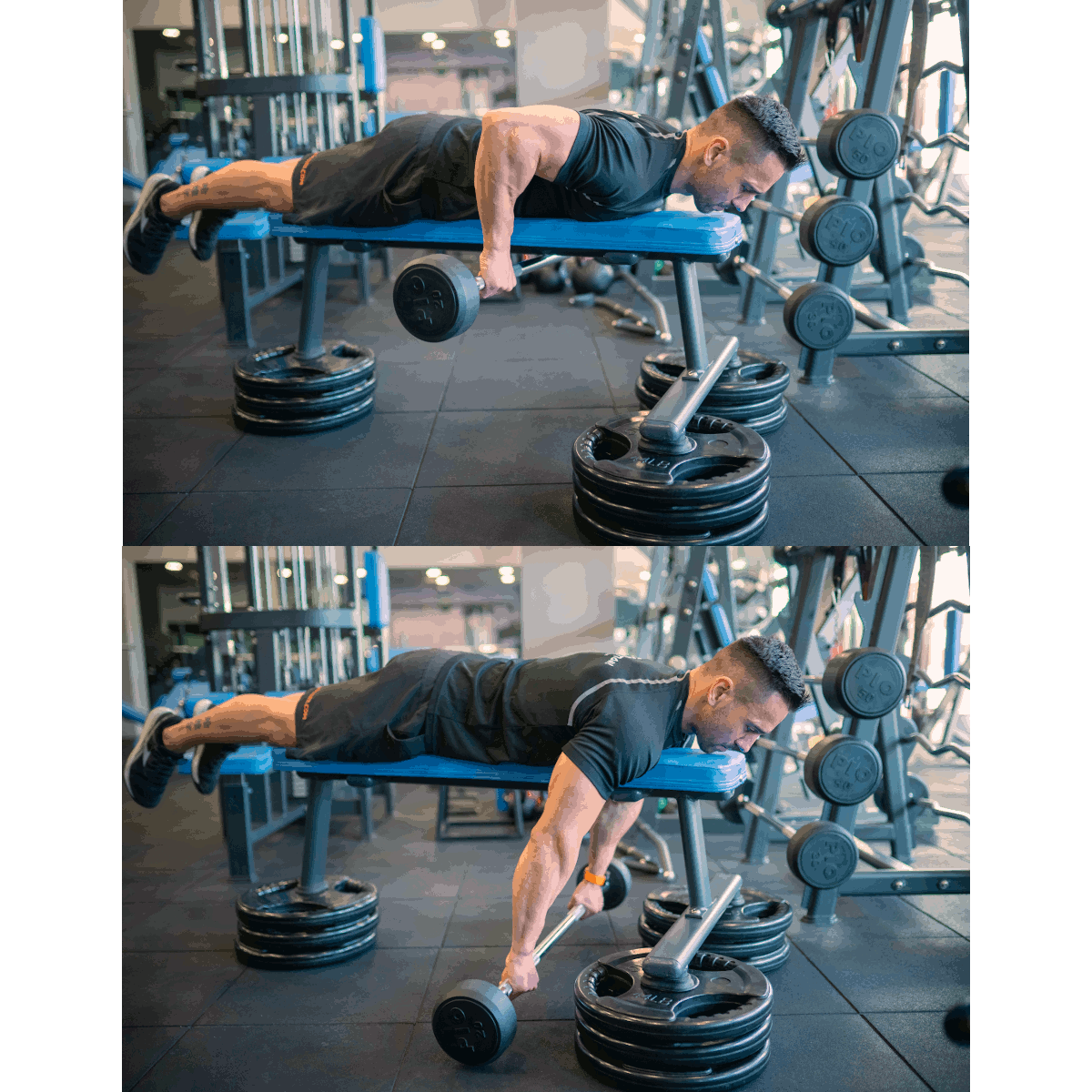
- Lying face down on a raised bench or high surface, hold a barbell with hands shoulder-width apart.
- With your chest unsupported, raise the bar until it touches the underside of the bench or your hips, maximally contracting your back.
- Lower the bar under control back to the start.
?️Muscles worked: rhomboids, mid-trapezius, rear deltoid.
?Repetitions: 5 sets of 6 reps.
?HSN Tip: pause at peak contraction. Avoid using momentum.
4 Pullover with barbell (narrow grip)
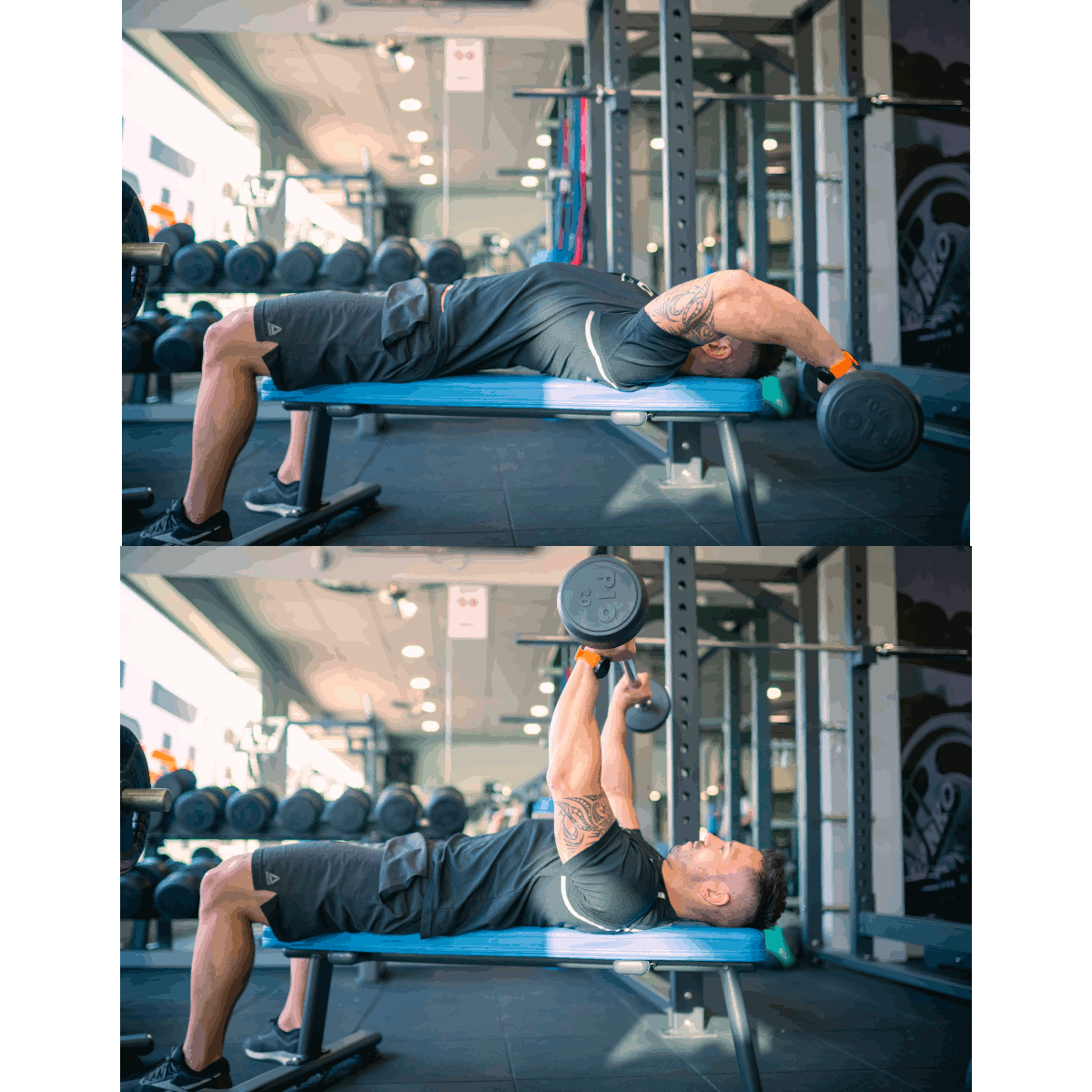
- Lying on a bench, hold a barbell with a narrow grip.
- With arms slightly bent, move the bar from above your chest back behind your head, feeling the lat stretch.
- Return to the start position using your back strength.
?️Muscles worked: latissimus dorsi, pectoralis (sternal portion), serratus anterior.
?Repetitions: 2 sets of 12 reps.
?HSN Tip: keep your elbows slightly bent and fixed throughout.
5 Behind-the-back barbell shrugs
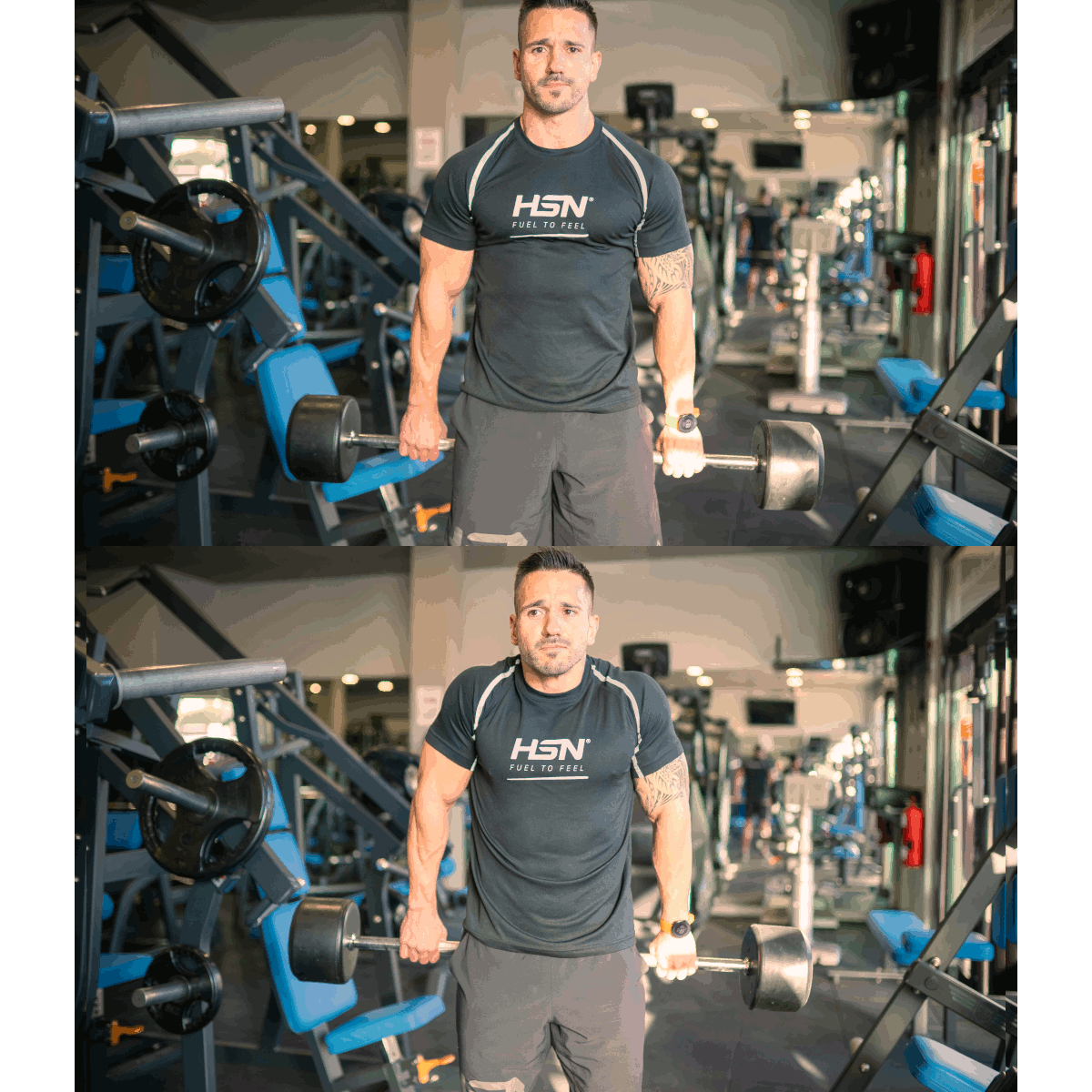
- Standing, hold a barbell behind your glutes.
- With arms straight, elevate your shoulders as high as possible, as if trying to touch your ears.
- Lower your shoulders under control to the start.
?️Muscles worked: upper trapezius.
?Repetitions: 1 set of 6 reps.
?HSN Tip: the movement should be purely vertical.
6 Resistance band shrugs
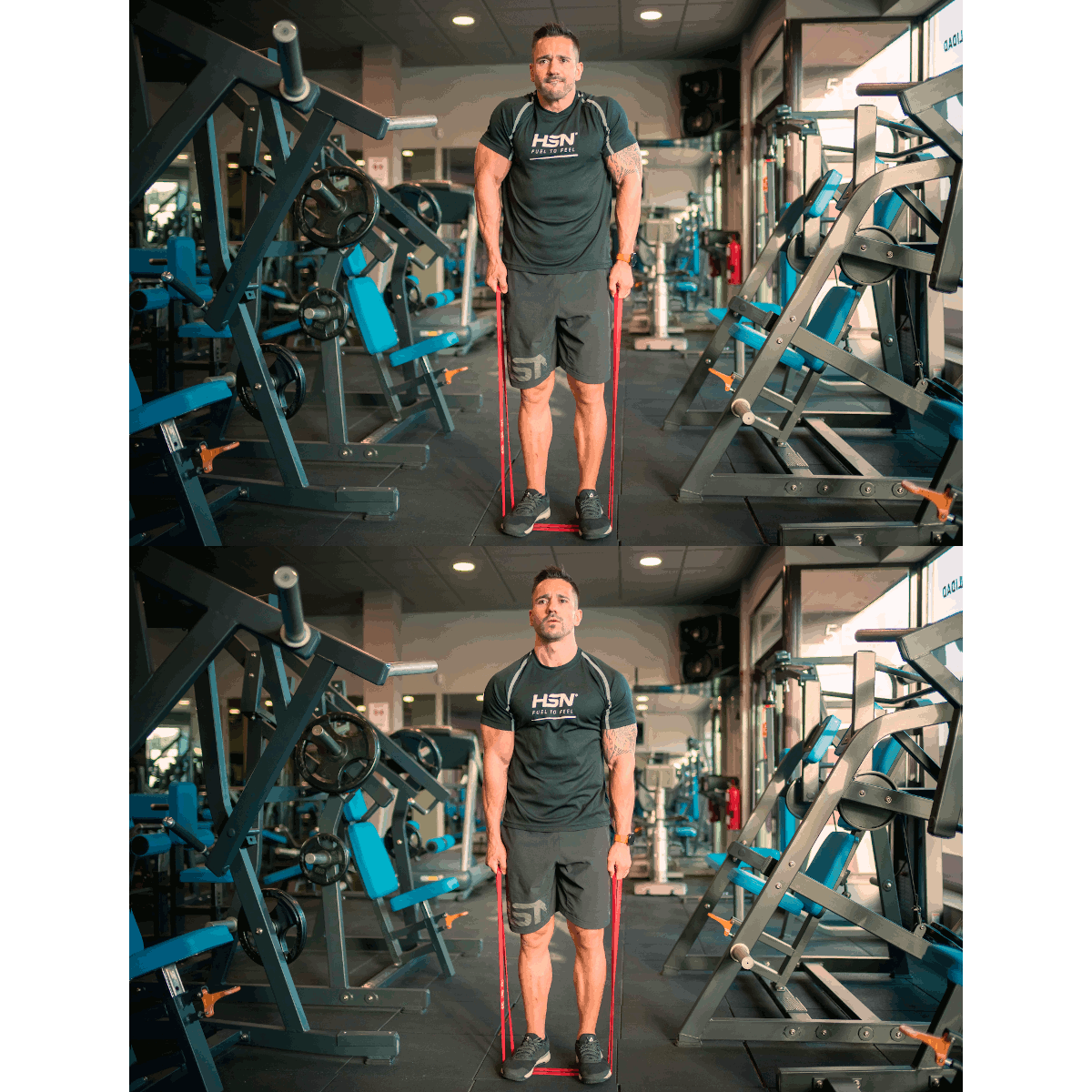
- Stand with both feet on a resistance band. Hold one end in each hand.
- With arms straight at your sides, raise your shoulders toward your ears.
- Lower your shoulders with control.
?️Muscles worked: upper trapezius.
?Repetitions: Complete 100 reps in blocks to muscular failure.
?HSN Tip: focus on the pump and continuous contraction.
7 Supinated pull-ups
- Grab a pull-up bar with a supinated grip (palms facing you) at shoulder width.
- With a stable torso, pull your body up until your chin clears the bar, focusing on contracting your back.
- Lower yourself under control to full arm extension.
?️Muscles worked: latissimus dorsi, teres major, biceps brachii.
?Repetitions: 3 sets to muscular failure.
?HSN Tip: if you can’t with bodyweight, use an assistance band.
8 T-bar row
- Position yourself on a T-bar row machine or with a bar in a corner.
- With feet set and knees slightly bent, grab the handles.
- Keep your back straight and pull the weight to your chest, chest up and shoulder blades squeezed.
- Extend your arms forward under control.
?️Muscles worked: latissimus dorsi, rhomboids, mid-trapezius, rear deltoid.
?Repetitions: 4 sets of 8–10 reps.
?HSN Tip: don’t use a load that forces you to over-arch your lower back. Your chest should “receive” the bar.
9 Face pull with rope
- Set a rope on a high pulley.
- Hold the ends with a neutral grip.
- Pull the rope toward your face, separating the hands to the sides and pointing the elbows back and out.
- At the end position, hands should be at ear level.
- Return under control to the start.
?️Muscles worked: lower trapezius, rear deltoid, rhomboids.
?Repetitions: 3 sets of 15–20 reps.
?HSN Tip: focus on scapular retraction and external shoulder rotation.
10 Romanian deadlift with barbell
- Standing, hold a barbell at shoulder-width.
- With slight knee bend and a neutral spine, hinge forward keeping the bar close to your legs and pushing your hips back.
- Return to the start by extending the hips and contracting the glutes.
?️Muscles worked: spinal erectors, hamstrings, gluteus maximus.
?Repetitions: 3 sets of 10–12 reps.
?HSN Tip: keep the bar close to your legs throughout. Your back must stay neutral—don’t round it.
How many times per week should you train back?
As with other muscle groups, weekly back training frequency depends on:
- Training volume (effective sets) planned for this muscle group;
- Your recovery capacity; and
- Available time to dedicate to training.
As a general rule, we can set the following split based on the number of sets close to muscular failure:
- 0–10 sets: 1 time per week.
- 10–18 sets: 2 times per week.
- 18+ sets: more than 2 times per week.
We will roughly reach a maximum tolerable volume around 25–30 effective sets, a workload that would require splitting into 4 sessions and would be limited to specific back-development blocks.
In most cases, 10 to 18 sets are sufficient for efficient development of these muscles.
Tips to perform back exercises correctly
It’s important to train all the movements the back muscles can perform to stimulate the maximum number of muscle fibers and their different regions from every possible angle. Additional tips:
- Vertical pulling exercises usually work best with higher volume.
If we use low reps and heavy loads, “cheating” is common, since force production in an upright position at end-range shoulder flexion is lower than in the mid and end ranges of the movement.
- “Horizontal pulling” exercises tend to work best with heavier loads.
They allow you to handle much more weight without relying on other muscle groups (like the legs) to execute the movement.
- It’s important to perform sets close to muscular failure.
Allow for a larger margin in exercises like the deadlift, where structural safety must prevail, but use a moderate load in the rest to reduce arm dominance.
Related posts
- Perfect technique for the barbell row
- How to do pull-ups for beginners
- How to do Jefferson Curl squats correctly
- Causes and exercises to relieve back pain