Fitness, Nutrition, Health and Sports Blog In the HSNstore Blog you will find tips about Fitness, sport in general, nutrition, and health – HSNstore.com

In recent years, many runners and trainers have been making use of power meters to measure running power in their training sessions.
The trend of being able to obtain as much data as possible, so as to be able to analyse it and improve in each discipline, is a fact that is becoming increasingly relevant among popular athletes and their trainers.
What is power training?
Is there anything that immediately and objectively gives us information about the intensity at which we’re running? This is where the running power meter or power running comes in.
With this, we have POWER as a reliable factor for measuring the intensity of the running effort.
Likewise, it’s possible to acquire a lot of data that can be of great value to trainers and use them to quantify the loads and programme the training sessions.
That’s to say, unlike training by power in cycling, in the case of running, rather than training by power establishing training zones, we train with a power estimator to have more data about the athlete’s performance, intensity, recovery.

That is, it’s another add-on that helps create a much more accurate picture of how you’re training.
Reasons for using a power meter for running
Generally speaking, we always use several parameters to quantify and determine the intensity of the load of a running session:
- Heart rate (by establishing training zones from a stress test with gas analysis);
- Subjective perception of effort; and the
- Race / running speed.
These parameters can be affected by external factors that directly affect them:
- Thus, a hot and humid environment, will cause an increase in body temperature with a consequent increase in heart rate and a greater perception of exertion.
- It also does not reflect the intensity immediately, i.e. often there’s a drift and the heart rate lags behind.
Race power meter
In the case of the device we’re talking about in this article, STRYD, it allows power training by performing three force measurements: horizontal, vertical and lateral.
In any case, the most interesting thing when it comes to analysing the data is the horizontal power that allows us to move forward.
And the other two?
Given that we’re looking to be efficient runners and spend as little energy as possible, it’s of interest that these other two (lateral and vertical) are as minimal as possible.

What should we observe to find out if we’re more efficient? How do you know if your running economy has improved?
Here are some examples:
- Running at the same pace but with a lower number of watts.
- Running a familiar circuit at a faster pace while producing fewer watts.
- Running for longer in a watts range.
- Decrease in wattage range.
- Decrease in HR at a given pace or at a per-set number of watts.
How to train for power in running?
The main goal as runners is to be efficient: to be able to run as fast as possible while consuming as little energy as possible.
That’s to say, to have a faster running pace while spending less.
Following Coggan’s ideas (“Training and Racing with a Power Meter”, 2013), when we talk about running in the context of power, we mean the speed we run in relation to the watts we produce.
So you’re looking to generate watts that help you move forward, not upwards or sideways.
There are other factors that affect the efficiency we’re talking about too, such as: body weight, metabolic flexibility, type of running shoes worn, degree of fatigue etc.
When comparing data over a period of time, we should focus on the following:
- Efficiency Ratio: average speed divided by average power. The higher the index, the more efficient it is.
- Efficiency Factor: normalised pace / average HR
Weight and power ratio in running
Another relevant parameter for monitoring efficiency is watts per kilogram of weight (W/kg).
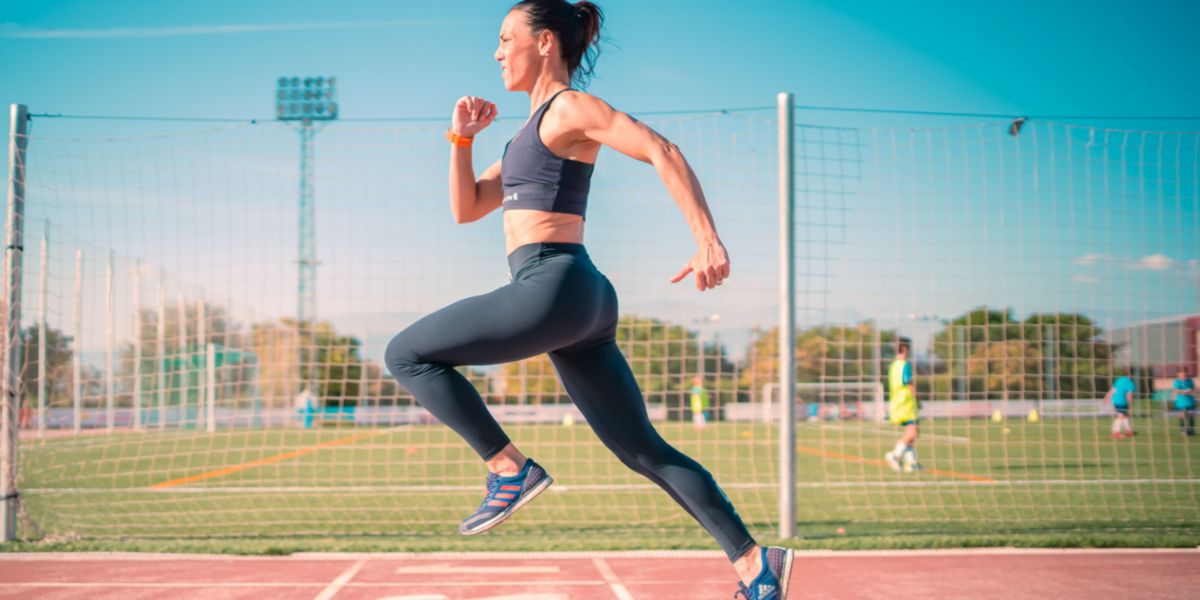
It’s one of the best indicators of performance, especially in routes with variable terrain and a lot of hills to overcome, where gravity is important.
FTP Test
Power helps us to define intensity, to understand all the data we collect, and to quantify training load.
But how do you determine the Functional Threshold Power – FTP for running?
In the case of cycling, it corresponds to the maximum intensity that the athlete can maintain for 60 minutes. And it’s the same for running.
Just as in cycling we use field tests or cycle-ergometer tests to determine this threshold, without subjecting the athlete to an hour of testing, in the case of running, there are also different field tests to determine the running FTP:
Protocol 1
- Warm-up for 15 minutes.
- 3′ run at maximum possible intensity.
- 30′ (5′ walking + 10′ gentle + 5′ walking, 5 ‘gentle running + ‘ walking + 9’ running at the maximum possible intensity).
Protocol 2
For more experienced runners, this test consists of:
- Running continuously for 30 minutes at the highest possible intensity, after a 15-minute warm-up.
The FTP is obtained from the average power of the last 20 minutes of maximum intensity running.
Power zones in running
Although I’ve already mentioned that it is possible to run with power data, it’s not ideal to establish power zones for running, as it’s much more complicated than in cycling.
But what does this mean?
As stated, we can produce more watts in total (horizontal, vertical and lateral forces), but that doesn’t mean we’re efficient (vertical and lateral forces should be as low as possible).

Thus, determining the training zones by power is not the best way to do it.
Remember, the most important thing is to learn how to analyse the data provided by these running power estimators
Even so, Coogan makes a comparison and establishes training zones based on the criteria he uses for them in cycling.
Advantages and disadvantages of training by watts
Summarising the above, it’s clear that the usefulness of power training in running is obtaining data, meaning you can analyse more variables in order to improve running economy.
Data obtained from heart rate, cadence, pace and power should not be exclusive, but rather, you need to understand how they affect one another and make the necessary adjustments so that improvements can be made.
Which devices measure power when running?
They’re known as running potentiometers, among which the Stryd brand stands out:
Stryd Revolution
It offers a complete recovery, performance prediction and skills breakdown that makes data analysis insightful and fast. Many coaches are currently using it with their athletes.
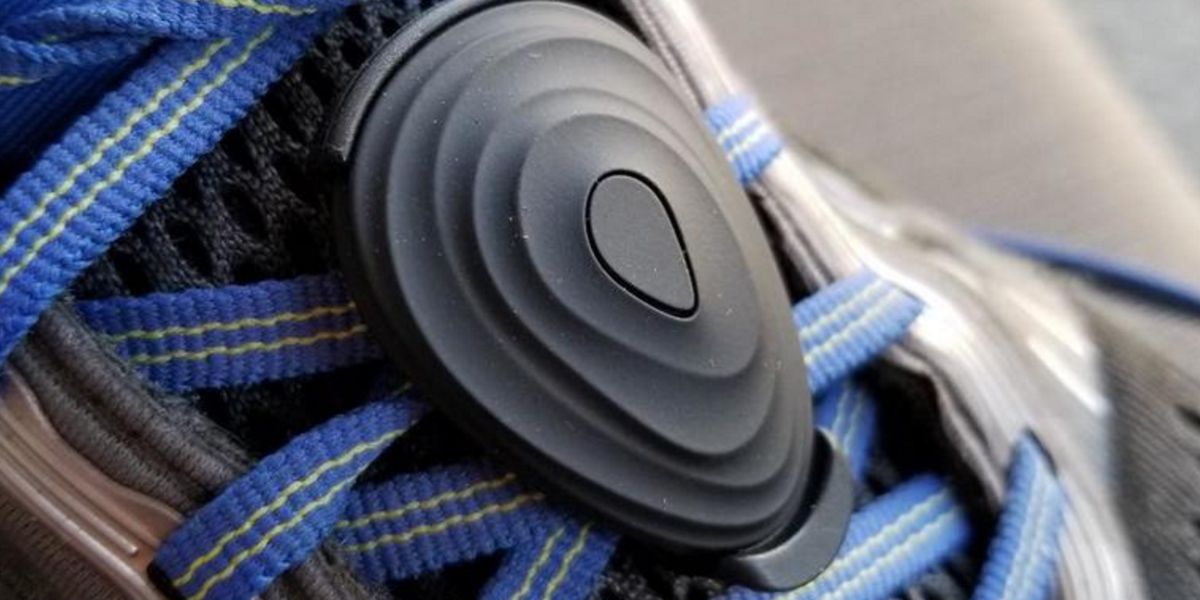
STRYD is a power meter for running and power running.
Basic Features of Stryd:
- This device is a power estimator that is placed in one of the shoes.
- It weighs just 8 grams, so it’s hardly noticeable.
- This is in addition to its relatively small size.
- It can be connected to any GPS watch that runners and triathletes typically use, which will collect data from the session in addition to the data from the power meter.
- The price is around 229 Euros.
Running training, HR VS Power
At this point, you may be wondering which variable to use to determine the intensity of your running training sessions, right?.
Training according to the training zones established from a stress test and taking them into consideration according to the heart rate, will undoubtedly always be one of the best alternatives to determine the load and intensity of the training.
And also keeping within the zones set according to the type of session.
That said, I wouldn’t dismiss the running potentiometer, we can make use of it and the data it offers us for a more global and complete vision of an athlete’s performance throughout the different periods.
Conclusions
Training with power gives us an extra edge when analysing and interpreting the data post-training.
Interpretation is the key
For example:
- If the watts increase but the speed doesn’t, it means we should probably revise some of our technique or take a few days off.
- If we lose efficiency, it may mean a lack of recovery, and a drop in load may prevent injury or a state of over-training.
Bibliographical Sources.
- Coggan, A. (2016). WKO4: New Metrics for Running With Power.
- Vance, Jim (2016) “Run with Power: The Complete Guide to Power Meters for Running”.
Related Entries.
- Everything you need to know about Hydration for Runners at this link.
- If you want to know the Best Supplements for Runners according to science, click here.