Fitness, Nutrition, Health and Sports Blog In the HSNstore Blog you will find tips about Fitness, sport in general, nutrition, and health – HSNstore.com

Training volume is an essential component of training programme planning
We’re going to look at the following question: What is the perfect number of sets and repetitions we should be doing per week?
What is training volume?
Within our training programmes, we need to take into account certain variables in order to efficiently improve our Sporting Performance
Training volume is one of the most relevant metrics for maximising our results in the gym.
Authors such as McDonagh and Davies defined training volume as the total amount of work done, either in a session or in a microcycle or training week (1).
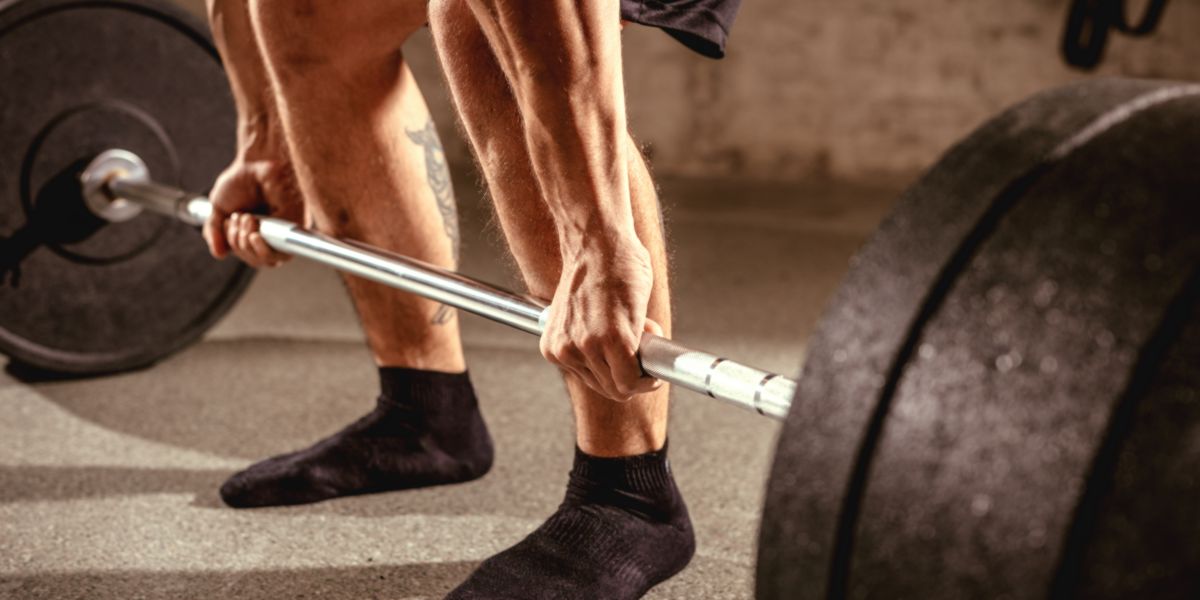
Other authors define volume as the total amount of work done
Although it can also be expressed as the product of multiplying sets, repetitions and raised load (3, 4).
How do we quantify our training volume?
This is an extremely common question amongst fitness and strength training fans
However, there’s no 100% correct answer.
It’s a metric that should be adapted and individualised to each subject. As always, everything depends on the individual in question, as each person needs a different stimulus for effective training.
That’s to say, it will vary depending on a whole host of metrics, such as the strength training experience of the subject
- Rest: recovery is a fundamental factor for correct adaptation to the volume.
- Food: like rest, food is a hugely important aspect to take into account.
- Age: this is a factor as it affects recovery. A young person has a greater adaptive response and therefore a more efficient recovery.
- Years of training: experience is an important factor. The longer a person has spent in the gym, the more stimuli they need to progress and therefore the more they need to take into account the principle of progression.
- Injuries and Genetic Potential
How much can we train a week?
This is determined by the distribution of sets and repetitions
Authors such as González Badillo state that 24 sets with 8 repetitions on average for each set, per training session, represents an optimal stimulus for muscular hypertrophy (5).
Other authors, however, defend a range of 6 to 12 repetitions per set, in 3 or 4 sets per exercise of each muscle group (6). Most authors conclude that the volume of training is therefore fundamental when it comes to muscle hypertrophy.
However, it’s important to prioritise between volume and intensity.
According to authors such as Mangin, GT and collaborators, intensity is the most important (10)
Conclusions
Taking into account all of the sources consulted, it’s important to note that
training volume stands out as the fundamental variable to take into account if we want to establish improvements in muscle hypertrophy and physical performance.
Every training session should be adapted to a set duration depending on the subject’s experience and tolerance.
The optimal number of repetitions per week for the largest muscle groups is estimated to be between 60 and 120 repetitions and for the small ones between 30 and 60 repetitions.
Perform 8-9 sets of chest work, twice a week, and you’ll have a total of 16-18 sets per week.
Nevertheless, it’s important to individualise the training and the evidence suggests that it’s not as essential for beginners as it is for subjects who already have some training experience.
Bibliographic Sources
- McDonagh, M. J, Davies, C. T (1984). Adaptive response of mammalian skeletal muscle to exercise with high loads. Eur J Appl Physiol 52: 139-55
- McDonagh, M. J., & Davies, C. T. (1984). Adaptive response of mammalian skeletal muscle to exercise with high loads. European journal of applied physiology and occupational physiology, 52(2), 139-155.
- Chandler, T. J., & Brown, L. E. (Eds.). (2008). Conditioning for strength and human performance. Philadelphia, United States: Lippincott Williams
- Coburn, J., & Malek, M. (2014). Manual NSCA (1st ed.). Badalona, España: Paidotribo.
- Badillo, J. J. G., & Ayestarán, E. G. (2002). Fundamentos del entrenamiento de la fuerza: Aplicación al alto rendimiento deportivo (Vol. 302). Barcelona, España.
- Bompa, O., & Cornacchia, L. J. (2002). Musculación. Entrenamiento avanzado. Barcelona, España: Editorial Hispano Europea.
- Brown, L. E. (2007). Strength training. Champaing IL, United States: Human Kinetics.
- Rubin, M. R., Kraemer, J., Maresh, C. M., Volek, J. S., Ratamess, A., Vanheest, J. L., … & Gomez, A. L. (2005). High-affinity growth hormone binding protein and acute heavy resistance exercise. Med Sci Sports Exerc, 37(3), 395-403.
- Schoenfeld, B. J. (2010). The mechanisms of muscle hypertrophy and their application to resistance training. The Journal of Strength & Conditioning Research, 24(10), 2857-2872.
- Mangine, G. T., Hoffman, J. R., Gonzalez, A. M., Townsend, J. R., Wells, A. J., Jajtner, A. R., … & LaMonica, M. B. (2015). The effect of training volume and intensity on improvements in muscular strength and size in resistance‐trained men. Physiological reports, 3(8), e12472.
Related Posts
- Volume Training
- Meals for Gaining Weight
- How much protein should you consume for strength and endurance training?
- The Importance of Sleep in Gaining Muscle Mass