Fitness, Nutrition, Health and Sports Blog In the HSNstore Blog you will find tips about Fitness, sport in general, nutrition, and health – HSNstore.com

Improve your lifts (strength and power) using elastic resistance bands.
They make the final movement of the different basic and multijoint exercises more difficult.
Strength-speed
The following graph shows that the greater the weight we handle in an exercise, the slower the speed the weight will be lifted at.
In other words, if we lift at percentages close to 1RM then we’re going to lift the bar with very little speed.
However, when we stay away from those percentages, we can execute the lifts with greater speed.
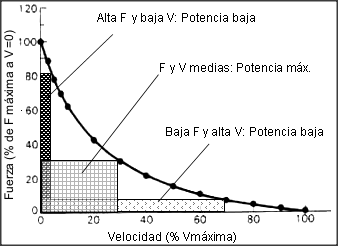
Another example would be to do press-ups, in which the execution sped would be maximum but the strength needed would be much less.
In the middle is the Maximum Power, i.e. the maximum strength exerted at maximum speed.
Elastic Band Exercises
When we train in the gym, something very strange happens: our lifts are not done uniformly.
That’s to say, the initial part of the movement, generally speaking, is the hardest part (like in the dead lift).
And with pull-ups, the opposite happens, but as a joint extension happens there’s a mechanical advantage that creates a greater speed of movement.
In other words, the initial part is the hardest for lifting, and when you extend your different joints the lift becomes easier.
As a result, we can say that we’re limited by the initial part of the movement.
Benefits of Elastic Resistance Bands
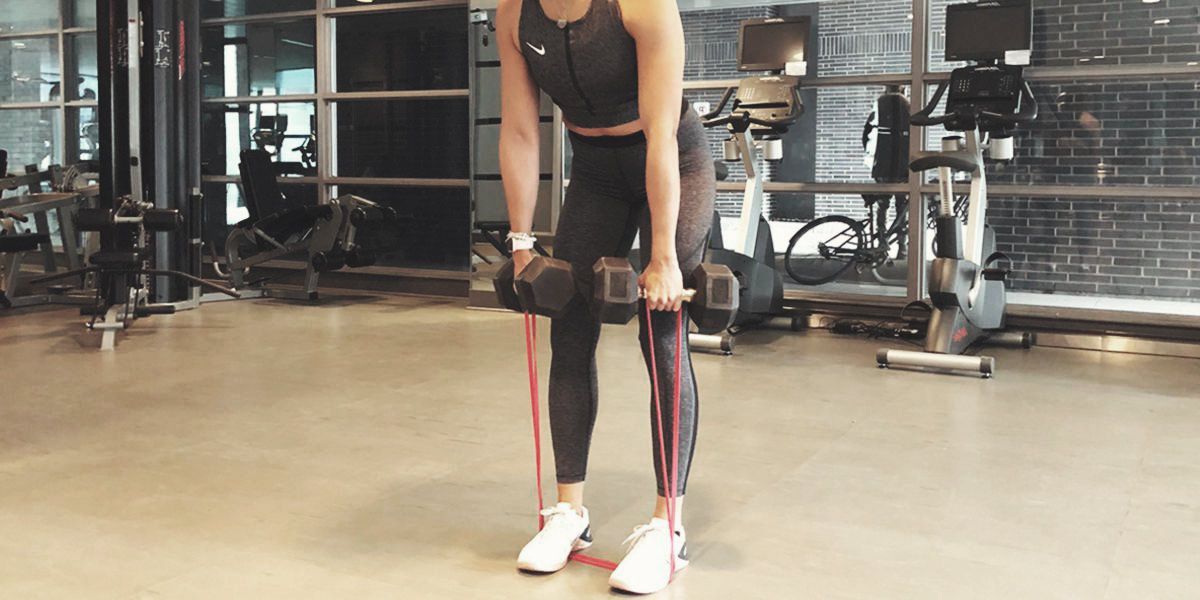
My method for counteracting the graph I’ve just explained is to use resistance bands.
It’s a method that’s very in vogue right now, above all in powerlifting, and it’s particularly useful as it allows you to surpass this limitation and perform your lifts much more explosively.
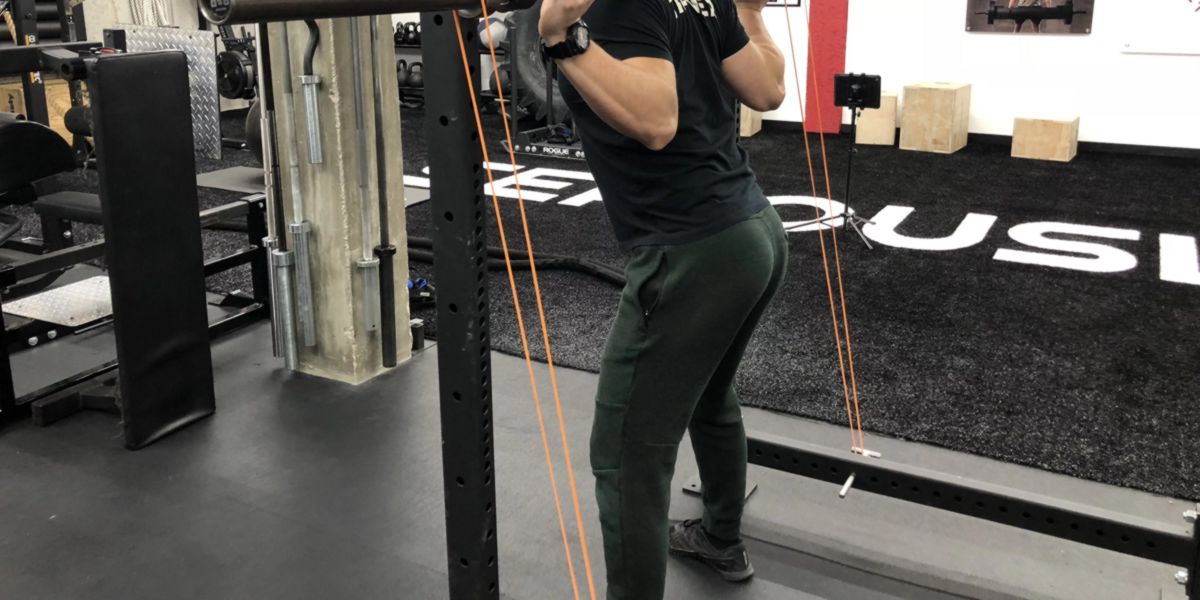
This means that we can carry out lifts where we’re correctly managing the weight in the initial part (which is that part that limits us), but using the bands the resistance can be increased, meaning the strength required is much greater and we can handle more weight in the final part.
Why use Rubber Bands?
They’re extremely useful, principally, for:
Learning to accelerate weights
We learn how to gain more explosivity, more power, and as a result we can improve our 1 RM, our maximum strength.
Avoiding injuries
We know, for example, that the initial part of the dead lift is when most most injuries occur, but once we get past the knees, generally, we can move more weight.
Applicability to other exercises
Elastic resistance bands can be used with almost any exercise.
Bench Press and Squat
For example, using them in a bench press or squat will help us work with greater intensity in the final part of the movement, and we can use the initial part to add pauses (eliminating the myotatic reflex) and improve this stage at the same time.
Pull-ups
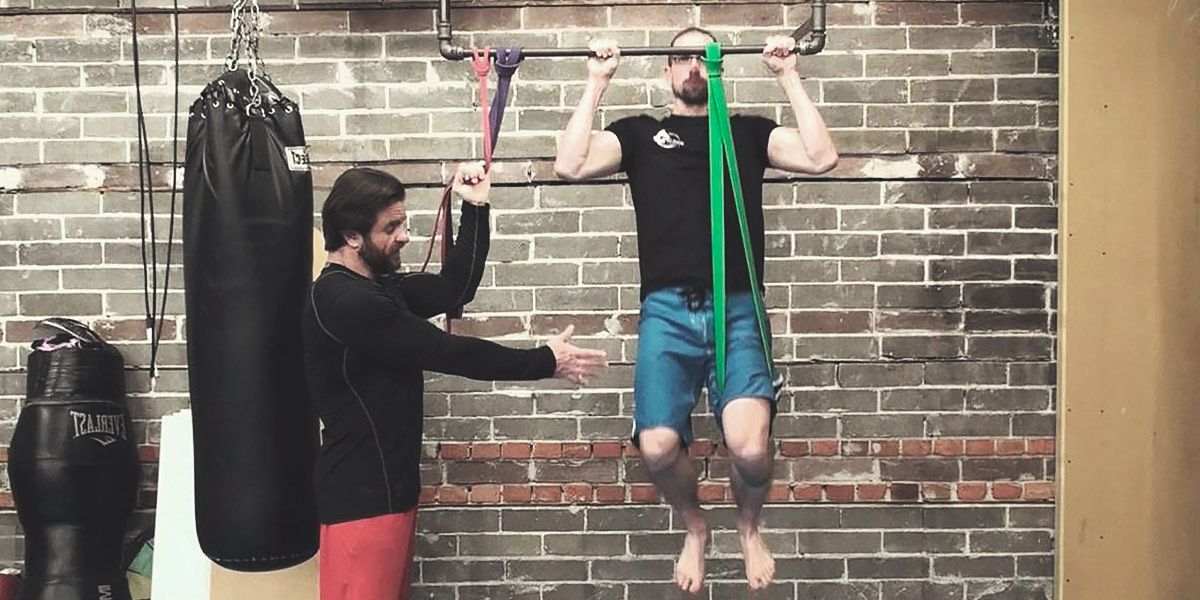
And they’re also great with pull-ups, where they have a similar effect (helping facilitate the initial part of the lift movement and increasing the initial speed, with the band placed on the bar and our knees on it).
Sources
- J Strength Cond Res. 2013 May 9. Elastic Bands as a Component of Periodized Resistance Training. Joy JM, Lowery RP, Oliveira de Souza E, Wilson JM.
Related Entries
- If you want to find out more about Elastic Resistance Bands, Click here
- If you want to improve your pull-up work, this article might be of interest!