 Fitness, Nutrition, Health and Sports Blog In the HSNstore Blog you will find tips about Fitness, sport in general, nutrition, and health – HSNstore.com

This article isn’t meant to be a step-by-step guide, but rather some guidelines that, from my point of view, are essential to know if your goal is to build the most muscle mass possible for users with some training experience
Keeping the above in mind, these principles should be adapted to each individual, who must assess their own situation, the training style that suits them best, and if needed, tweak them to fit properly into their planning.
Train each body part once a week
Among professional competitors, it’s very common to follow this model. Some even plan to train every 5 days. This might sound obvious, but there’s a reason behind it, and it’s because the human mind thinks that more is always better.
The foundation of weight training is clear, and the Training Principles must be met: Stimulus-Recovery-Adaptation…
Therefore, one of the main problems that can arise if you go for high-frequency training is that your recovery process gets compromised and never fully completes. In this scenario, bad news.

Likewise, another question arises: how much time do I need before training again? It’s very subjective, but we can apply the following:
The greater the damage (stimulus) you’ve caused, the more time you’ll need to recover. Pretty obvious. Still, the best approach is for everyone to experiment with their own body, and a great tool is keeping a training log to note everything related and then intelligently analyze and decide how to act next time.
Try to find the balance between training frequency and recovery time that allows you to get the maximum adaptation, that is, visible results! So, a good recommendation is to start by leaving about 5-7 days of recovery and observe changes to decide if more rest is needed. Often, it’s better to “undertrain” than to “overtrain”.
Do 3-4 exercises per muscle
Continuing with the previous theme, where balance between training volume, intensity, and frequency is key, a good tip when planning your session is:
KISS (Keep It Super Simple), meaning keep it easy. Don’t overcomplicate training, and doing between 3-4 exercises per body part will surely put you on the right track.

This number of exercises is enough to hit the muscle from different angles and ensure it gets the right and necessary stimulus. Also try varying rest times, number of reps…
Do 3 sets per exercise
Here it’s important to specify that when we talk about sets, we mean effective sets.

Warm-up and/or approach sets don’t count.
Include a power and strength exercise for each body part
The goal of a muscle-building program is to improve our physique, not to be the strongest or most powerful. However, training focused on improving strength or power can actually benefit us.
Here’s the deal:
When training to improve power, which basically means doing work in the shortest time possible, our muscles develop an amazing ability to recruit and activate fibers, known as neuromuscular efficiency.
Of course, this makes you stronger, but it can also help with our goal, because if we can recruit many more muscle fibers, it means a higher degree of hypertrophy, since only fibers that are stimulated will adapt and grow.
How to include this in your plan? Do around 3×3-5 reps exercises, but without reaching muscle failure, since the goal isn’t hypertrophy directly, but power. In contrast to power, which means moving “something” as fast as possible, strength is about lifting the maximum weight, regardless of speed.
We can get the best of both worlds, improving muscle gains, and including these exercises in each session will also benefit more analytical hypertrophy-focused exercises.
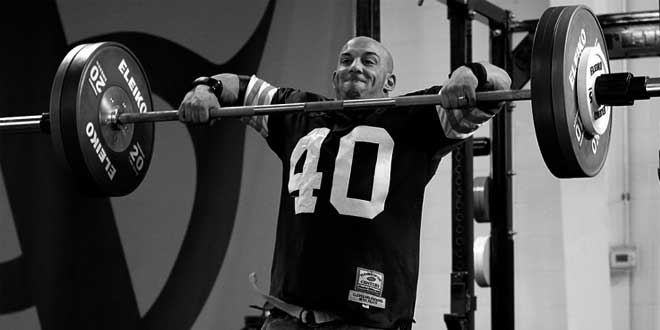
Starting your workout, before doing Bench Press, with heavy snatch pulls can lead to excellent upper body activation. Have you tried it?
Do Strength / Hypertrophy exercises for each body part
As mentioned earlier, low reps (1-5) are optimal for increasing strength, and if done with lighter resistance and higher speed, power improves.
But this approach doesn’t cause much hypertrophy, which is better achieved through the TUT principle, which induces greater metabolic stress on the muscle.
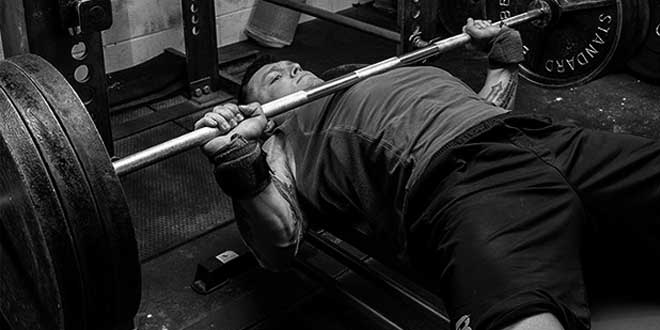
The goal in mind is a hybrid training, exercises that work both qualities at once: metabolic stress and mechanical tension
Do a Resistance / Volume exercise for each body part
While some like to feel the burn and pump in their muscles but neglect heavy training with low reps, others who prefer moving heavier loads also forget to work in high rep ranges.
Although doing sets above 10-12 reps is really focused on muscular endurance and might not be your main goal, you might not know it, but it can cause muscle growth, giving visual results worth considering.
Training in high rep ranges increases time under tension (TUT), which also stimulates hypertrophy more. This type of muscle growth differs from the strict sense: it’s called non-functional hypertrophy or generally volume.
Obviously, this guideline applies to certain exercises, mainly isolation ones. Though sometimes, applying it to squat sets…

We’ll work in ranges above 12 reps (20…)
Include Compound and Isolation Exercises
What’s better for hypertrophy gains, compound or isolation exercises? The answer: both, no debate.
Each has pros and cons, but there’s no doubt that if you want the maximum muscle stimulation, you need to attack fibers from different angles.
You’ll always get better results by avoiding exclusivity when choosing exercise types in the gym
Compound or multi-joint exercises give better gains in terms of functional strength, but that’s not the main goal for a bodybuilder. They’re side effects of training this way, without undervaluing the benefits.

Isolation exercises, without the “functional” label, put more emphasis on the area you want to work, focusing all your effort on hitting that part.
The joint exercise (squat) not only tires more but works other muscle groups and stabilizers… while the quad extension isolates that muscle. The first is more complete, but the second can be used to give that extra emphasis…
Choose Exercises that Improve Your Weaknesses
We understand weakness as the part of your physique you’re not happy with and is priority to improve so it fits your mental image of the dream physique, within your reach.
In bodybuilding, muscle size and density are very important, as well as the aesthetic effect, balance, and symmetry.

It’s no use having a super-developed upper body if when you look down, your lower body doesn’t match what you see above…
It’s common to train just to lift more weight and get as many reps as possible. That’s training for better performance rather than visual gains, which isn’t compatible with a bodybuilder’s goals.
Tip: take a photo showing the area you want to change, and every week measure your progress, be critical, and study your path based on results
If a body part is lagging behind compared to overall muscle, you need to focus on improving it, and it’s pointless to keep emphasizing the rest more.
Our job is to build perfection, obviously within our limits, so improvisation has no place here. The path is clear: build muscle, yes, but smartly!

Think of yourself as an artist, and your body as your masterpiece, always polishing flaws. In our world, we train to meet the demands our body silently screams for.
Do the Hardest Exercise First
If, as mentioned earlier, you want to include an exercise to improve a specific weak point, it makes sense to do it at the start of your session, where you can use heavier weights and more reps to fix weaknesses.
If you do it at the end of your routine, it’s obvious that fatigue will stop you from giving your best and focusing on that part of your body eager to be sculpted your way.

Doing an exercise first lets you recruit more motor units or muscle fibers to stimulate them, because remember, only fibers that go through this process will grow.
Reps and Rest Time Are Inversely Proportional
So far, all principles described seem intuitive, but at this point, the relationship between reps and rest time sounds different, even contradictory.
Imagine doing 1 set of 3 heavy bench press reps. When you rest, your heart rate gradually returns to baseline in about 60″. But if you do 15 reps of squats, you’ll need much more than 60″, at least 2 minutes to almost fully recover, maybe more.

We tend to have a poor sense of recovery. Although heart rate and breathing rate (BPM) are relevant recovery markers, there’s something we don’t feel: internal cellular level
If you reach fatigue, meaning muscle or contractile failure, in a low-rep heavy set, it’s mainly due to ATP-CP depletion, the primary energy source for your muscles.
And to restore these stores, you need about 2-3 minutes before you can use the same intensity again.

Low-rep heavy sets under tension stimulate protein synthesis, so it’s crucial that performance in each set isn’t compromised and you hit max reps for the given weight.
You don’t want to reduce the bar load to avoid hurting the set’s performance and keep working under tension to stimulate muscle fibers and grow them.
So if you rest based on how you feel, you’ll probably load the bar before your energy is fully restored.
For performance, training high reps with longer TUT leads to metabolic fatigue.

This type of training doesn’t maximize actin and myosin fiber activation but stimulates other structures involved in muscle growth, like sarcoplasmic reticulum, mitochondria, capillaries, …
To simplify:
- Training high-rep sets doesn’t require long rest, meaning you don’t need to be fully recovered for the next set, and this way you work metabolic fatigue stimulus, causing hypertrophy of muscle fiber cellular components.
- Training heavy low-rep sets requires longer rest to be fully recovered before the next set, so weight and tension factors work synergistically to stimulate muscle growth.
Intensity and Volume Are Inversely Proportional
These concepts are crucial; if you don’t handle them well, your progress will be minimal.
- Intensity means the capacity to perform a set with maximum load and a set number of reps, what you’re capable of giving…
- Volume refers to total exercises, sets, and reps done in a training session.

Properly speaking, volume means the number of working sets done in a workout.
Don’t Imitate Professional Bodybuilders
To illustrate, we can mention the training systems of two Mr. Olympia champions, Dorian Yates and Jay Cutler.
Dorian was known for doing few sets, almost just one effective set per session. His training was very intense but low volume.
On the other hand, Jay was the opposite. He did many exercises per body part, many sets per exercise, training every 5 days, while Dorian preferred 7 days.
At first glance, Jay’s training seems more intense, but it’s not, since none of his sets reached muscle failure, maybe just a couple reps shy.
Beware of Overtraining
Here lies the mistake many make: training as intense as Dorian but with high volume like Cutler, all at once! That’s not productive or sustainable.

Even if you think you can do another rep, increase the load, or reach failure, it can be more harmful than beneficial.
Conclusions
- If you’re one of those who need to feel that “gave it all” feeling after a session, training very intensely, reaching failure every set, loading heavy… you’d better rethink your strategy, because you might not last long in this sport…
- The problem is that your muscles might be recovered and without any damage, but your nervous system is still in the ICU due to high volume and intensity, sidelining you for days.

Even if you think you’re ready to hit the gym again, you can fall into a chronic fatigue cycle that’s harder to get out of than skipping that exhausting session you planned.
- Remember point number 1: “…train each muscle group once a week…”, so your system has time to recover.
- Keep the distinction between volume and intensity clear, remembering they’re inversely proportional.
- Because of our mindset, you might break this rule… so “if anything,” aim to reach failure only on the last set. You can set this balance going forward to plan exercises and reps.

If you really want to know what overtraining and fatigue mean, try Cutler’s style but with high intensity, and you’ll be out of the gym for a couple of weeks…
Related Posts
- All About Supersets, Advanced Training Technique
- No Brain, No Gain!