Fitness, Nutrition, Health and Sports Blog In the HSNstore Blog you will find tips about Fitness, sport in general, nutrition, and health – HSNstore.com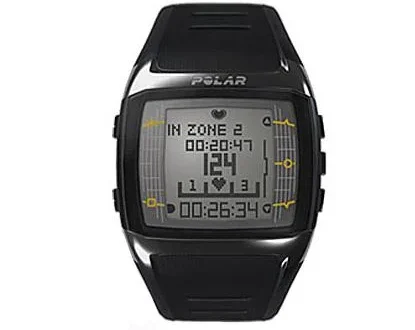

Heart rate monitors have been around for several years, but it’s only relatively recently that the most innovative technology has come along to take training to its full potential. In this article, we’ll show you the advantages of training with a heart rate monitor and what to look for when buying one to get the most out of your workouts.

why use a heart rate monitor?
Heart rate monitors are devices designed to be used during exercise and serve to measure and record heart rate while giving you instant info about how hard your heart is working. The heart’s fitness level is key to defining each person’s aerobic endurance. Whether for health reasons or to assess performance, aerobic endurance is a focus point for almost any runner. Heart rate monitors are one of the most effective tools for tracking and developing progress on the path to boosting aerobic endurance.
accuracy and ease
Heart rate monitors are the only effective way to track and record heart rate throughout a full workout. Not only do they provide a complete record of your heart rate during training, but they’re also more accurate than manual methods. Stopping mid-run to count your pulse messes with both your workout and heart rate. The heart rate monitor doesn’t care about wind, other runners’ footsteps, crowd cheers, or the silence of lonely stretches near the end of some races. It’s an objective observer that helps you keep a steady work pace, whether on varied terrain or in zones where outside factors affect motivation and speed.
keep track of your fitness
Cardiovascular fitness is the biggest factor in running speed. So being able to track cardiovascular health (not to mention adjusting your workouts to hit cardiovascular goals) is a super useful training tool. Measuring your heart’s work rate is the most accurate way to see how much benefit you’re getting from your training. Other methods, like breathing or fatigue, can reflect other factors and give a misleading impression of how effective your workout really is.
avoid overtraining
For many competitive runners, the weekly training routine is basically a seven-day dance along the fine line between optimal training and overtraining. Using a heart rate monitor to avoid overtraining will maximize your training efficiency and minimize the risk of injury. Injuries are much less likely when you don’t overload your body, and avoiding injuries means avoiding setbacks in your training. While opinions differ on what counts as too much training, once you set your desired weekly training intensity, you can use the heart rate monitor as a guide.
prevent undertraining
Though less common than overtraining, some runners just don’t train often enough. In this case, the heart rate monitor can act like a coach, telling you when your body can handle more and when it’s time to pick up the pace. You can even set a minimum heart rate target for your run, and the monitor will alert you with an alarm if you drop below it, warning you to push harder.
stimulation during training
Maybe the most obvious use for a heart rate monitor is measuring cardiovascular performance. Sometimes time isn’t the best measure of how hard you’re working. Training on different terrain, varying energy levels, inconsistent distance measurements, and a bunch of other factors can trick you into thinking a workout went well or badly when the opposite might be true. Your cardiovascular performance is best measured by your heart’s work rate, so if your training pace is based on your heart rate, it’s the best way to guide your cardiovascular health as you train.
motivation
Heart rate monitors can accurately and funly quantify your progress, helping you get recognition for your training and keep your motivation high.
what to consider when buying a heart rate monitor?
While there are several styles of heart rate monitors, the most accurate and popular have two parts: a chest strap containing the sensor and transmitter, and a wristwatch with the display and a receiver. These devices come with a range of features and can vary widely in price.
basic functions
The most fundamental feature of a heart rate monitor is the ability to measure heart rate. Also, since it’s worn on the wrist like a watch, most monitors have all the functions of a sports watch, plus a feature that lets you set adjustable heart rate limits. These displays can differ in digit size, screen size, backlight resistance, water resistance, and so on. The display should be easy to read. If you train when it’s dark, you need a display with light. If the monitor lets you set upper and lower limits, it should give an optimal visual and sound alert when you hit them. Start, stop, and lap buttons should be in the center of the watch. Buttons for other functions should be on the edges.
coded signal
It should have a coded frequency for transmitting data collected by the chest strap. Otherwise, you might get wrong readings if you run with a buddy who’s also using a heart rate monitor.
other features: A bunch of advanced features can be really useful.
complex data analysis
High-end heart rate monitors can do more complex calculations and summaries of recorded data. Some monitors automatically record max and min heart rates during training to do more advanced calculations, like overall averages, differences between high and low rates, and the like.
more sophisticated data collection
Some monitors can estimate calories burned and even measure ambient temperature. Other options include altitude measurement and estimating your VO2 (a value related to your body’s oxygen consumption). The newest models have built-in GPS, which uses satellites to calculate position, distance covered, and total time. Thanks to this, you can map your route and share it with other runners.
larger memory bank
Many heart rate monitors can only record one training session at a time, forcing you to save data elsewhere between uses. Monitors with bigger memory banks can store results from multiple workouts without deleting previous records. This can be handy (especially if the monitor isn’t computer-compatible) and recording results manually is a must.
pc compatibility
If you want to save results quickly and accurately, it might be best to look for a heart rate monitor that can connect to your computer, though this tends to be one of the pricier features. These monitors come with software that lets you save and graph various workouts the monitor has tracked over time. After one (or several) workouts, you can download the results to your computer, where you can view and analyze the data in different ways.
training data recording for bikes
Some of the pricier models have options for use while cycling, like distance measurement. This can be useful both for those who train on bikes and those who need to use a bike to get fit after a leg injury.