Fitness, Nutrition, Health and Sports Blog In the HSNstore Blog you will find tips about Fitness, sport in general, nutrition, and health – HSNstore.com

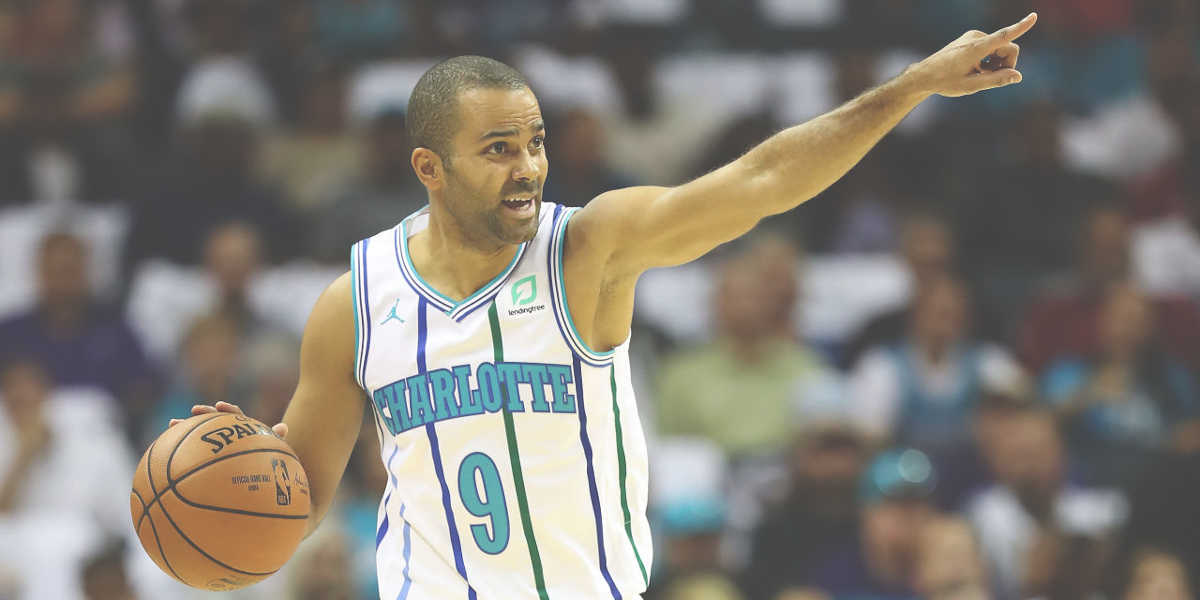
What is exactly a point guard? It is a player that needs to have a high aerobic resistance and tolerance to anaerobic effort. While they do not need as much strength as other positions, partly due to their lower body weight (Ferioli et al., 2018). Let’s have a look at this training guide for point guards.

We have already talked about all of this in this article. Have a look in case you have not read it yet.
How is the training guide of a point guard?
How can point guards become more resistant according to their needs?
| Zone | % Maximum Frequency |
| 1 | 50-60% |
| 2 | 60-70% |
| 3 | 70-80% |
| 4 | 80-90% |
| 5 | 90-95% |
| 6 | >95% |
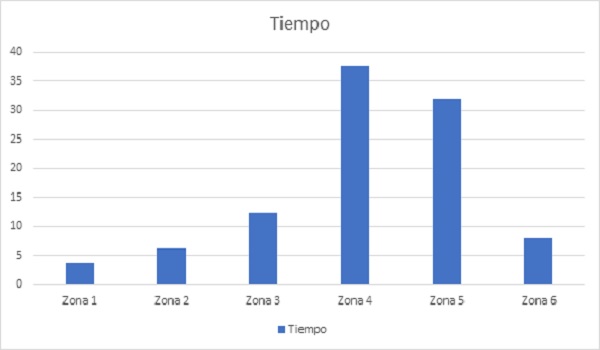
Quite intense, right?
That is why our point guards should exercise in zones 4 and 5 most of the time. Moreover, they should feel comfortable with that range of heart frequency, around an 80-95% Max. Frequency.
What is the training guide all about?
The most interesting would be to read the scientific studies that have assessed the effects of different workout routines on the parameters we want to improve. Fortunately, there is plenty of literature in this regard.
Delextrat et al. (2018) compared the effects of a physical conditioning in basketball players for 6 weeks. It relied on small sided games (3×3) or on a high intensity interval training (HIIT).
In other words, they had to play basketball matches and do sprints.

What happened?
According to the authors:
“We have concluded that both the SSG and the HIIT improved the aerobic and anaerobic variables in a similar way. In addition, they also improved the muscle oxygenation”.
Is this important? Well, how do you think that the point guard from the Movistar Students Team Phil Pressey managed to cut the pass, run with the ball in fatigue and successfully finish that play? You can see it in the following video…
Exactly, with a good development of the aerobic capacity and aerobic potency.
Something similar happened in the study by Maggioni et al., (2018). They compared the effect of BDT (Basketball Decision Training) with RSAT (Repeated Sprint Ability Training) and GBT (Gough Basketball Training) .
However, we can see two things when we look at this information:
1. RSAT was superior to BDT
Producing fatigue (due to a higher intensity)
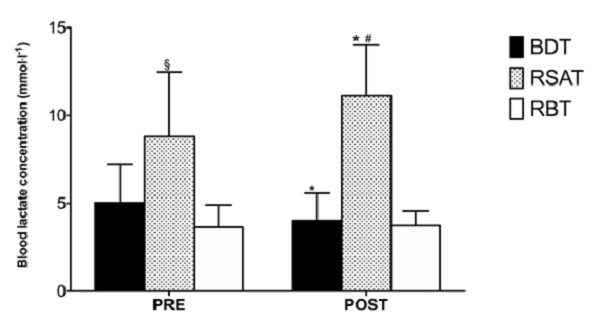
2. Improvements with BDT
All the specific abilities for basketball improved more with the second system (dribbling, throwing, passing, rebound, defense and attack abilities).
Because, apart from running, Toney Douglas (Movistar Students) will be capable of passing the ball with precision, one of the best plays of the Liga Endesa ACB.
Possible training guide for Point Guard
How can we combine all of this? Here is our proposal, a physical training guide for point guards (Morning and Evening).
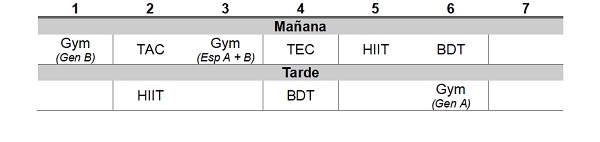
The Technical (TEC) and Tactical sessions (TAC) will depend on the time of the season, the needs of the team, the next rivals… They will be coordinated by the main coach and the assistants.
HIIT Sessions
3 sets x 6 repetitions of 40′ (20’+20′) in a high intensity race with direction changes. 20″ of passive recovery between repetitions and 3′ between sets.
BDT Sessions
2VS2 with constant attacks-defenses, without free throws or time-outs. 2 blocks with 3 sets of 4′ of constant activity with 2′ of rest between blocks.
2 x (3 x 4′) + 2′ Rest
Now all you need to do is enjoy this training guide for point guards yourself. Put on your trainers and let’s get to it!
Bibliography:
- Delextrat, A., Gruet, M., & Bieuzen, F. (2018). Effects of small-sided games and highintensity interval training on aerobic and repeated sprint performance and peripheral muscle oxygenation changes in elite junior basketball players. Journal of Strength and Conditioning Research, 32(7), 1882–1891.
- Ferioli, D., Rampinini, E., Bosio, A., La Torre, A., Azzolini, M., & Coutts, A. J. (2018). The physical profile of adult male basketball players: Differences between competitive levels and playing positions. Journal of Sports Sciences, 36(22), 2567–2574.
- Maggioni, M. A., Bonato, M., Stahn, A., Torre, A. La, Agnello, L., Vernillo, G., … Merati, G. (2019). Effects of ball drills and repeated-sprint-ability training in basketball players. International Journal of Sports Physiology and Performance, 14(6), 757–764.
- Román, M. R., García-Rubio, J., Feu, S., & Ibáñez, S. J. (2019). Training and competition load monitoring and analysis of women’s amateur basketball by playing position: Approach study. Frontiers in Psychology, 9(JAN), 2689.