Fitness, Nutrition, Health and Sports Blog In the HSNstore Blog you will find tips about Fitness, sport in general, nutrition, and health – HSNstore.com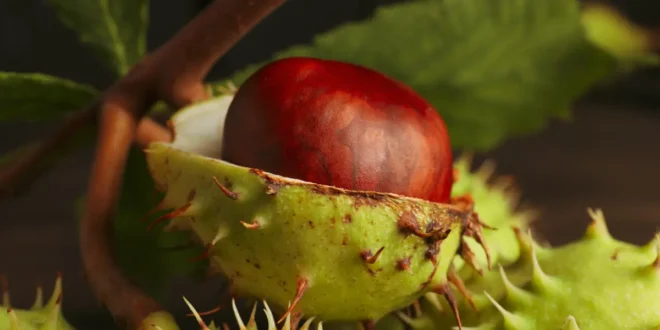

Horse chestnut, scientifically known as Aesculus hippocastanum, is a tree with unique medicinal properties, widely valued for its ability to relieve circulation problems, swollen legs and varicose veins.
Native to the Balkans and Asia Minor, this tree has been used for centuries for its escin and saponin content, key compounds that reduce inflammation. In this post, we will explain the benefits and uses of this powerful natural ally for vascular health. Keep reading to discover how it can help you!
Do you know the benefits of false chestnut?
As we have been mentioning, there are more and more therapeutic benefits of a tree highly valued for its anti-inflammatory and vasoconstrictor properties, due to the presence of flavonoids, which help increase the resistance of capillaries and blood vessels in the skin. Take note of its main benefits!
1 Improves the appearance of varicose veins
If horse chestnut is known for anything, it is for the decisive role it plays as a venous tonic, as its use prevents the formation of varicose veins and spider veins in the legs, reducing inflammation or dilation in the veins. This helps prevent the appearance of the typical ulcers that accompany them. Therefore, it contributes to reducing symptoms and pain.
Do you spend a lot of time standing because of your job? If so, you may be interested in taking horse chestnut extract, as an excellent preventive measure against the appearance of varicose veins.
Did you know that this venous problem affects almost half of the adult population from the age of 40 onwards? That is the case, and the veins most affected are those that are just beneath the skin, due to the impressive tension they have to withstand when you have to remain standing for so many hours a day. In fact, staying in this position for too long increases pressure against the vein by up to 10 times.
Likewise, false chestnut can help in cases of sore and tired legs, which may be caused by fluid retention but also by poor blood circulation, tingling in the feet or leg cramps.
At the same time, it is an ally for your health in the face of conditions as important as phlebitis, caused by a blood clot. Finally, it can be very helpful in preventing embolisms or thromboses that occur during post-surgical recovery.

2 It is a source of antioxidants
The extract of this plant acts as a powerful protective shield that helps your body stop the damage caused by free radicals, effectively fighting against diseases.
In this regard, numerous study results indicate that both quercetin and kaempferol glycosides, present in horse chestnut, are two antioxidants worthy of praise, due to their strong ability to combat conditions of different types and severity.
3 Promotes the effects of prebiotics
Do you want to achieve greater support for your digestion? It is simple: combine the digestive-support effects of horse chestnut with those of a prebiotic treatment, so that your digestion benefits especially. Prebiotics are a type of non-digestible fibre compound, fermented by the microflora in the colon.
4 Contributes to resilience during the premenstrual cycle
Its main active component, escin, could help reduce swelling and fluid retention, common symptoms of PMS. By improving vascular permeability, it reduces fluid extravasation into the tissues, which helps ease the feeling of heaviness and oedema in the legs or abdomen.
PMS is often associated with pelvic congestion and lower back pain due to hormonal changes. Horse chestnut, by toning the veins, supports blood return and could reduce congestion and the feeling of heaviness.
5 It may help with the appearance of other diseases
Several studies carried out on horse chestnut have revealed its effects in the fight against cancer, specifically in cells related to leukaemia, breast cancer and cervical cancer.
The most encouraging findings were those related to Jurkat cells, which are used to assess a type of cancer called acute T-cell leukaemia, in which laboratory tests found a cell mortality rate close to 94%.
Needless to say, all these data must be interpreted with the utmost caution, although their promising nature is undeniable.
6 Reduces haemorrhoids
Painful haemorrhoids or varicose veins that develop in the rectum are another problem that horse chestnut helps address. How? By performing the same role as mentioned in the case of varicose veins generated by the body in other parts of the body, mostly in the legs.
When haemorrhoids appear, specialists recommend combining horse chestnut supplements in creams, capsules or infusions with the medical treatment indicated for their elimination.
How should this supplement be taken?
Since it is a plant, and although horse chestnut has traditionally been taken in different ways, bark and leaf infusions are the most characteristic.
In recent times, and thanks to research that has revealed the many ways its properties can support the body, a wide range of supplements derived from bark extract have appeared on the market. Alongside them, creams and oils for the treatment of tired legs stand out in their own right. Finally, we cannot forget the popular capsules for the regular intake of the nutritional properties of the bark.
- The amounts of horse chestnut to be taken in supplement form are around 250-500 mg daily, divided into two servings, with a twelve-hour interval between them.
Does horse chestnut have contraindications or side effects?
The fruit of horse chestnut contains esculin, a toxic substance that can cause serious side effects such as stomach upset, weakness, vomiting or even paralysis. To avoid risks, it is better to choose supplements based on bark extract, which does not contain this toxin.
Possible side effects from the use of extracts include: dizziness, headache, itching and digestive discomfort.
Who should not take this anti-varicose plant?
It is recommended to avoid taking horse chestnut in the case of:
- Pregnant or breastfeeding women.
- People with diabetes, whose blood sugar levels may decrease.
- Those with liver problems.
Bibliographic studies:
- Mojžišová G, Mojžiš J, Pilátová M, Varinská L, Ivanová L, Strojný L, Richnavský J. Antiproliferative and antiangiogenic properties of horse chestnut extract. Phytother Res. 2013 Feb;27(2):159-65. doi: 10.1002/ptr.4688. Epub 2012 Mar 26.
- Kapusta I, Janda B, Szajwaj B, Stochmal A, Piacente S, Pizza C, Franceschi F, Franz C, Oleszek W. Flavonoids in horse chestnut (Aesculus hippocastanum) seeds and powdered waste water byproducts. J Agric Food Chem. 2007 Oct 17;55(21):8485-90. Epub 2007 Sep 15.
- Fang Y, Zhao L, Yan F, Xia X, Xu D, Cui X. Escin improves sperm quality in male patients with varicocele-associated infertility. Phytomedicine. 2010 Mar;17(3-4):192-6. doi: 10.1016/j.phymed.2009.07.014. Epub 2009 Aug 13.
- Kimura H, Ogawa S, Ishihara T, Maruoka M, Tokuyama-Nakai S, Jisaka M, Yokota K. Antioxidant activities and structural characterization of flavonol O-glycosides from seeds of Japanese horse chestnut (Aesculus turbinata BLUME). Food Chem. 2017 Aug 1;228:348-355. doi: 10.1016/j.foodchem.2017.01.084. Epub 2017 Jan 19.
Related posts
- 7 Health Benefits of Fenugreek
- All the properties of Quinoa
- Benefits of Ashwagandha according to science
- Black maca to increase energy and sexual desire