Fitness, Nutrition, Health and Sports Blog In the HSNstore Blog you will find tips about Fitness, sport in general, nutrition, and health – HSNstore.com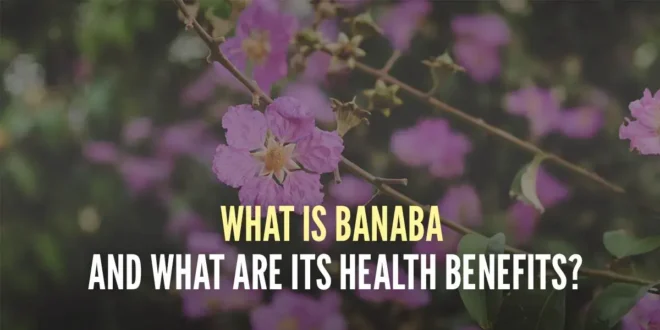

- Lagerstroemia speciosa, also known as the ‘Pride of India,’ is a tree species that can reach up to 15 metres in height. It has large, leathery, oblong leaves. The flowers come in various colours, including white, purple, and lavender, and are used as ornaments in many cultures and regions.
- This species is widely distributed across Asia and Australia, native to regions such as China, Cambodia, Thailand, Vietnam, Indonesia, Malaysia, and the Philippines, which gives the plant its well-known common name: ‘Banaba’.
Banaba leaf extracts are used to treat diabetes and as traditional medicine in Asia due to their natural chemical compounds.
More than 40 compounds have been identified and documented from Banaba leaves, primarily containing triterpenes such as:
- Ursolic acid.
- Corosolic acid.
- Asiatic acid.
- Alphitolic acid.
In addition to tannins, ellagic acids, glycosides, and flavones (Stohs et al., 2012). The most common uses of the plant include:
- Its hypoglycaemic (anti-diabetic) properties.
- Being a potent antibacterial antibiotic.
- Acting as a natural anti-inflammatory.
- A powerful antioxidant with the ability to scavenge reactive oxygen species.
- Providing hepatoprotective functions.
These effects have been studied for decades in various in vivo and ex vivo models, as reflected in the unified review by Tiwary et al. (2017).

What is Banaba used for?
Banaba is a plant with a long tradition of use. Interest in its use as a food supplement is not new, as its leaves have been used in infusions for centuries.
Traditionally, banaba leaf tea was used to reduce blood sugar (as an anti-diabetic infusion), for weight loss, as an antioxidant, and as a general invigorator to improve mood and vitality.
Today, we know about the great antidiabetic potential of corosolic acid, and possibly other lesser-known ellagitannins, naturally present in the leaves.
For this reason, in modern traditional medicine, standardised corosolic acid extracts from banaba leaves are recommended as adjuvant treatments for metabolic disorders linked to impaired glucose metabolism, meaning they are suggested for diabetics or pre-diabetics.
Banaba works because its corosolic acid can modulate the expression of different PPAR (Peroxisome proliferator-activated receptor) subunits found in various tissues, affecting lipid metabolism and potentially promoting fat loss.
Additionally, corosolic acid has mechanisms associated with the regulation of MPAK, NF-κb, and other factors involved in lipid and glucose metabolism.
Corosolic acid can partially inhibit gluconeogenesis and increase glucose uptake by cells, which helps lower blood sugar levels, providing a direct antidiabetic effect.
How to take Banaba?
There is some disparity regarding the most effective dose of banaba, especially concerning its corosolic acid content, as studies assessing its effects are mechanistic and cannot establish clear or effective doses.
Since most of the plant’s use is traditional, recommendations can be as vague as “drink a banaba leaf infusion with meals.”
However, when it comes to efficacy, the recommendation is as established in HSN’s food supplement:
- 1 capsule per day of a quality banaba leaf extract, highly concentrated and standardised to 2% corosolic acid, providing 10 mg per daily dose.
This is the recommended dose, and the ideal way to take the extract is just before a carbohydrate-rich meal.
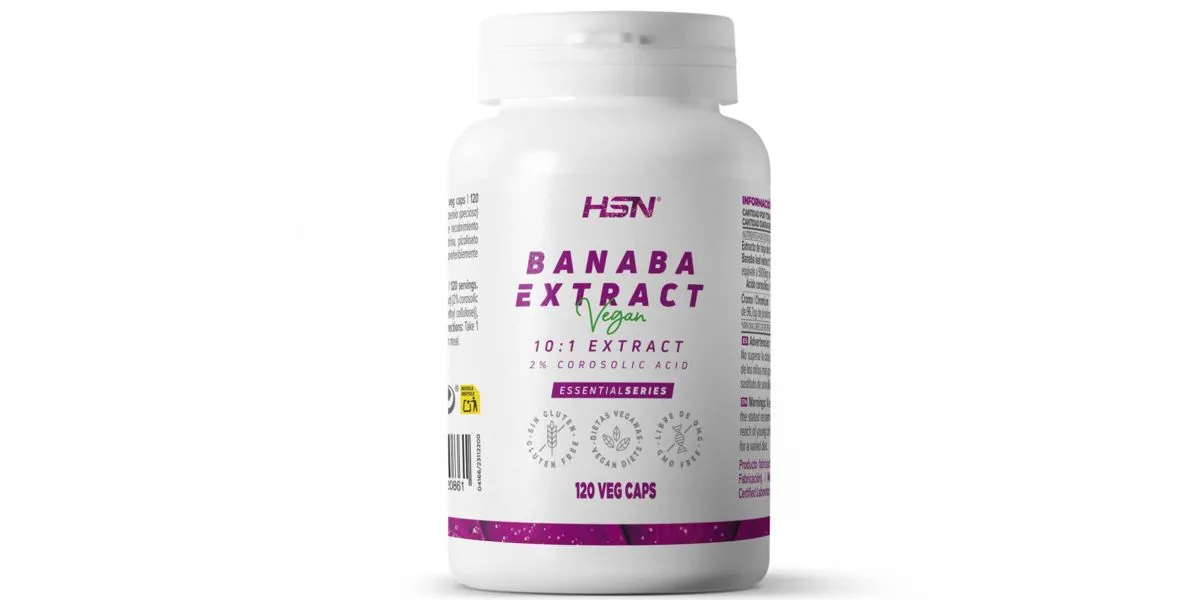
Banaba Extract (10:1) 500mg by EssentialSeries
Does it have side effects or contraindications?
As noted in the review by Stohs et al. (2012), one of the most extensive to date on this plant:
“No adverse effects have been observed or reported in animal studies or controlled clinical trials in humans.”
Therefore, the plant is considered safe for regular and general use.
In the case of extracts, which are more concentrated and might raise concerns among consumers, they are also considered completely safe by the food authorities of European countries.
Simply stick to the recommended doses on the extract packaging, and if you wish to exceed this, consult your doctor for guidance and monitoring based on your needs.
Conclusions
- Banaba is a plant with a long history of traditional use, for its antidiabetic properties, confirmed by both recent and older studies, which is why it is marketed and used as a food supplement.
- A quality product must be a high-concentration extract obtained from the leaf, which is the richest part in functional compounds, with corosolic acid being the most researched compound for its glucose-regulating properties.
- At HSN, you can enjoy a high-concentration extract in a convenient form, with just one vegetable capsule a day.
- Furthermore, banaba is considered completely safe with no reported adverse effects.
References:
- Karsono, A. H., Tandrasasmita, O. M., & Tjandrawinata, R. R. (2019). Bioactive fraction from Lagerstroemia speciosa leaves (DLBS3733) reduces fat droplet by inhibiting adipogenesis and lipogenesis. Journal of Experimental Pharmacology, 11, 39–51. https://doi.org/10.2147/JEP.S181642
- Klein, G., Kim, J., Himmeldirk, K., Cao, Y., & Chen, X. (2007). Antidiabetes and anti-obesity activity of Lagerstroemia speciosa. Evidence-Based Complementary and Alternative Medicine, 4(4), 401–407. https://doi.org/10.1093/ecam/nem013
- Miura, T., Takagi, S., & Ishida, T. (2012). Management of Diabetes and Its Complications with Banaba (Lagerstroemia speciosa L.) and Corosolic Acid. Evidence-Based Complementary and Alternative Medicine, 2012, 1–8. https://doi.org/10.1155/2012/871495
- Stohs, S. J., Miller, H., & Kaats, G. R. (2012). A review of the efficacy and safety of banaba (Lagerstroemia speciosa L.) and corosolic acid. Phytotherapy Research, 26(3), 317–324. https://doi.org/10.1002/ptr.3664
- Tiwary, B. K., Dutta, S., Dey, P., Hossain, M., Kumar, A., Bihani, S., … Chakraborty, R. (2017). Radical Scavenging Activities of Lagerstroemia speciosa (L.) Pers. Petal Extracts and its hepato-protection in CCl4-intoxicated mice. BMC Complementary and Alternative Medicine, 17(1), 55. https://doi.org/10.1186/s12906-016-1495-0
- Zhao, J., Zhou, H., Yanan, A. N., Shen, K., & Lu, Y. U. (2020). Biological effects of corosolic acid as an anti-inflammatory, anti-metabolic syndrome and anti-neoplastic natural compound (Review). Oncology Letters, 21(2), 84. https://doi.org/10.3892/OL.2020.12345
Related Posts
- Berberine and its many therapeutic applications
- How Holy Basil can improve your health
- Painless glucose monitoring with the Freestyle Sensor