 Fitness, Nutrition, Health and Sports Blog In the HSNstore Blog you will find tips about Fitness, sport in general, nutrition, and health – HSNstore.com

It is called Kombucha and it has earned a place of honour in the fridges of lovers of wellness trends. A probiotic nutrient like no other, it is a fermented drink made from tea or a sweetened infusion which, due to its high content of healthy bacteria, could provide a wide range of benefits for the body. For this reason, it is no surprise that some already call it the elixir of life.
Index
What is Kombucha?
As we have just mentioned, kombucha tea, or simply kombucha, which is also known as tea fungus, Manchurian fungus or Chinese fungus, is a drink whose fermentation is achieved through a culture of bacteria and yeasts, which brings together a wide range of vitamins, minerals, enzymes and essential organic acids.
Probiotic foods and food supplements stand out because their composition combines a series of rather particular ingredients, such as bacteria or fungi from non-pathogenic genera and species, or in other words, harmless ones. As for their function inside the body, they settle in the intestinal tract, an organ in which they carry out a highly beneficial role for health.
Broadly speaking, probiotics can be said to have the ability to tackle digestive disorders, among which colorectal cancer stands out, strengthen immune function, prevent urinary tract infections and even control circulating blood cholesterol levels. From this, it follows that, at the very least, they make up a category within nutrition and medicine that you should not overlook.
Taking a closer look at its description and, bearing in mind that, as we will see later on, it allows for certain variations, it is a drink made from sweetened black tea as its base raw material, with a mixed bouquet ranging from acidic to sweet, achieved thanks to the action exerted on the tea by a series of selected strains of bacteria and fungi.
A source of hydration
The legion of tea fungus devotees highlight the virtues of kombucha and, in particular, point out that:
- It is a drink and, therefore, plays an essential role as a source of hydration for the body
- It is a notable source of sugars (which account for between 5 and 13% of its composition), as a result of the fermentation and sweetening process of black tea as the original raw material. These sugars are accompanied by a certain alcoholic content (ranging between 1 and 3.5 g/litre)
In addition to this first approach to its chemical composition, it is also worth emphasising that:
As it normally comes from black tea (which you can replace with green tea or another raw material), it contains polyphenols, a family of compounds exclusive to the plant kingdom that is characterised by having a powerful antioxidant capacity. Although in the case of kombucha there is a slight reduction as a result of fermentation, this does not prevent the final product from representing an excellent option.
The aforementioned fermentation, which we will go into in more depth later, is carried out through a conglomerate of microbial species called Medusomuyces gisevi and requires a period of between 7 and 12 days, with no special temperature requirements, mainly at room temperature.
What we are talking about is a phenomenon that represents the spearhead of kombucha’s characteristics, which also allows a margin of adjustment by which we can obtain a product with a greater or lesser degree of sweetness or acidity, so that the longer the fermentation process lasts, the more acidity and less sweetness the drink will acquire.
What is its history?
Throughout its existence, kombucha has received up to around one hundred names. We have already mentioned some, but here are other well-known ones: tea kvass, kambotscha, fungus of immortality and Champignon de Longue Vie.
A drink that is now known in every corner of the planet, although this was not always the case. For very long periods, its consumption was limited to the regions of China, Russia and Germany. However, for some decades it has experienced a global boost, especially since it gained great popularity in the United States, once the medicinal virtues associated with its regular consumption began to spread by word of mouth.
Its preparation process: Scoby
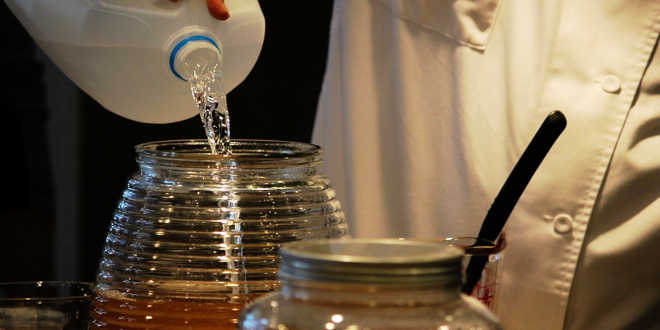
The usual substrate for preparing kombucha is sweet black tea, which is subjected to a particular fermentation process involving what is known as Scoby. This is the acronym for Symbiotic Culture of Bacteria and Yeasts, and translates as Symbiotic Culture of Bacteria and Yeasts.
To give you an idea, we could describe it as a somewhat gelatinous mass, whose appearance and colour are similar to a thick crêpe. It can be attributed the role of a supernatant in the fermentation vessel, playing a hinge-like role.
On the one hand, it receives oxygen when its external surface comes into contact with the air, while on the other, when its internal surface comes into contact with the tea, it triggers its fermentation, resulting in the release of its microorganisms into the medium.
In fact, manufacturing lines are being used with various fruits and vegetables, such as carrot juice, which, thanks to its high Brix degrees (a measure that determines the amount of dry matter, usually sugars, dissolved in a liquid), allows fermentation without added sugar.
Scoby strains
Experts indicate that scoby cultures have an irregular composition, as not all of them contain exactly the same microbial strains. This does not prevent some from being more relevant than others.
Take note of the main scoby strains!
- Acetobacter xylinoides and ketogenum: both are strictly aerobic bacterial species (they only reproduce in a medium with oxygen), constantly present in scoby. Their contribution to the culture is acetic and gluconic acid. Among their functions, their role in helping to build the fungus stands out.
- Lactobacillus: this is a genus of aerobic bacteria that produce lactic acid, although they are not always found in kombucha.
- Saccharomyces: this is a genus of yeasts that synthesise alcohol as a metabolite of the fermentation they carry out. They owe their fame to their role in beer production. They are the types of yeasts most commonly found in scoby and, among others, include the following species: saccharomyces cerevisiae, ludwigii and apiculatus and schizosaccharomyces pombe (the latter belonging to a very similar genus).
- Pediococcus: this is a genus of anaerobic bacteria that also produce lactic acid and whose presence is equally inconsistent.
- Gluconacetobacter kombuchae: this is an anaerobic bacterium genuine to kombucha. It feeds on the nitrogen contained in tea and generates gluconic and acetic acid as metabolites.
- Zygosaccharomyces kombuchaensis: this is a yeast species exclusive to kombucha scoby. It produces alcohol and an effervescent effect. As with the previous one, it helps form the fungus.
- Brettanomyces bruxellensis: this is another yeast species that appears inconsistently in kombucha, contributing acetic acid and alcohol to the culture.
We should not bring this list to a close without naming bacterium xylinum, gluconicum, xylinoides and katogenum, pichia fermentans and candida stellata.

What probiotics does Kombucha contain?
The fermentative transformation it undergoes would not bear fruit if it were not accompanied by a process that enriches the medium with:
- Vitamins (mainly those of the B complex and C)
- Amino acids
- Enzymes
- Various organic acids, especially glucuronic acid (a powerful detoxifier), lactic acid (which, as an eupeptic, facilitates digestion and improves blood circulation) and acetic acid (an antibiotic).
Cosmetic uses of the elixir of life
In addition to the many benefits and properties of Kombucha, its topical uses also show off its virtues.
Fully recognised as an anti-ageing factor, thanks to the regenerating power conferred by its richness in hydroxyacetic acid (AHA), vitamins and polyphenols, which deploy their benefits across the different dermal layers, it is a highly valued substance among those who give the care of their image the importance it deserves.
In keeping with its characteristics, it is appropriate to describe it as an anti-wrinkle factor, perhaps its most outstanding cosmetic application, which it exerts through the stimulation of adipocyte proliferation in the dermis.
It combines this action by providing greater volume to areas that have lost elasticity. The result? It smooths skin tissue and reduces wrinkles.
But if there is one factor that has given kombucha its almost iconic fame as a contributor of radiance and rejuvenation to the overall appearance of the skin, it is its moisturising power.
In another respect, it owes to its microbicidal action (given the presence of acetic acid, among others) its place in acne treatment, the cause of which is none other than the excessive proliferation of microorganisms that cause localised inflammatory points in the epidermis.
And all this without forgetting that it is a nutrient rich in vitamin C, so its skin-brightening effect, mainly perceived on the complexion, is priceless.
Does Kombucha have side effects?
Yes, the truth is that it should be pointed out that, despite the countless beneficial properties we have described in relation to kombucha, it is also necessary to highlight a series of physiological and pathological circumstances that mean this drink can sometimes cause unwanted consequences.
There are recurring voices from certain experts pointing to the possibility of a certain risk that Scoby may harbour, among its abundant collection of strains, some species of germs capable of causing disease.
The hypothesis under consideration is that the main cause of this risk, which would otherwise be described as remote given the scarcity of references obtained, is the fungus aspergillus.
In fact, there is evidence of cases of metabolic acidosis, pulmonary oedema, respiratory failure, vascular collapse and hepatotoxicity as serious clinical conditions derived from continuous and prolonged intake of kombucha, which in all cases exceeded two months of systematic consumption. Regarding less severe pathologies, cases of anorexia, weight loss, intestinal retention and skin rashes could also be noted.
And contraindications?
The same caution that we have expressed in relation to breastfeeding should be maintained until approximately twelve years of age. The reason? At young ages, the liver, that machinery for reprocessing substances, and the kidney, which prepares them for excretion, are not sufficiently developed to withstand that external pressure, which is otherwise unnecessary.
Not surprisingly, the microorganisms responsible for fermentation transform simple sugars into ethanol, carbon dioxide and acetic acid. What does this mean? The generation of alcohol (ethanol) up to 2% of the volumetric composition, a circumstance that should be paid attention to and which does not appear on most kombucha product labels.
To this must be added the risk that, as a product frequently prepared at home, it carries a danger of cross-contamination due to lack of sterility of the instruments and surfaces, which happens on many occasions and from which ready-made kombucha is exempt. From this risk arises the need to avoid its consumption in the case of pregnancy and breastfeeding.
For the reasons explained, this drink, when made at home (and therefore without the exhaustive health controls to which industrial Manchurian tea is subjected), should not be consumed by people whose immune system is compromised, as it can easily be contaminated by germs which, although in principle they might not be of great concern, could ultimately cause infections of a certain severity in immunocompromised patients.
Prepare Chinese fungus by hand
Let’s get to work! If you have decided to make homemade kombucha tea, the first thing you need to know is that the equipment you need for the simple operation of preparing this probiotic in your kitchen is no more than a glass jar, an elastic band and a kitchen cloth that is spotlessly clean.
These are the ingredients of Chinese fungus!
- The scoby
- 1 litre of filtered water
- 2 tea bags (preferably black tea)
- 60 grams of white sugar
- The starter culture, which is equivalent to ½ cup (120 ml) of kombucha left over from previous preparations. If you do not have it, use apple cider vinegar instead.
What does its preparation process involve?
These are the simple steps you should follow to obtain homemade kombucha tea:
- Once the water has reached boiling point, add the tea bags, which should steep for about 15 minutes with the heat turned off.
- Next, stir in the sugar until completely dissolved and cover the container with the cloth until its temperature drops to room temperature.
- Transfer the tea to the jar, into which you will pour the scoby and the starter culture. Cover again with the cloth and secure it with the elastic band.
- Place the jar for 10 days in a place with a stable temperature ranging between 20 and 26 degrees. Make sure it is not exposed to sunlight and that it has sufficient ventilation (without a draught being necessary).
We have already mentioned previously that tea does not have exclusive status when it comes to kombucha’s base raw material. In other words, it allows for variations such as:
- Coffee grounds infusion
- Toasted corn
- Coca leaf
- Chuño infusion (obtained from the dehydration of certain tubers)
How should you drink it?
Kombucha is normally drunk cold, as its primary purpose is to be a refreshing infusion. The daily amount considered to be a reasonable intake is around a quarter of a litre.
The most recommended approach is to drink a glass before breakfast. You can also start consuming kombucha gradually, beginning with half a glass (around one hundred millilitres) and increasing the amount little by little until you get used to the flavour.
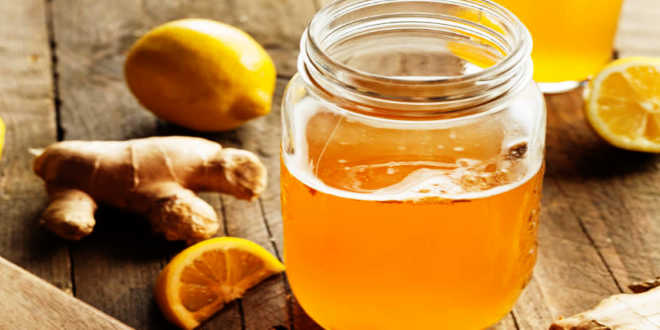
What can you combine it with? Water kefir
Have you ever heard of water kefir? In this case, it is another fermented and therefore probiotic drink, made from its culture.
Water kefir and kombucha are two drinks that complement each other perfectly, because although their compositions and properties differ from one another, they also enhance each other. By combining them, you will achieve such a high nutritional profile that it will help you understand why you should include them in your diet as a source of hydration and as a dietary supplement, although always after water, the element that should prevail.
Other combinations
Although kombucha is a substance that gives wonderful results per se, you also have the opportunity to combine it to achieve synergistic combinations. Here is a list of those that work best.
With cherry and ginger
Red fruits in general are ideal for enhancing the antioxidant effect of kombucha. Add a few chopped cherries and a pinch of grated ginger to the tea. This mixture gives it a striking colour and a slightly spicy touch.
With peach and mint leaves
Chop a piece of peach and macerate it together with a few crushed mint leaves. The mixture will be ready to pour into the kombucha.
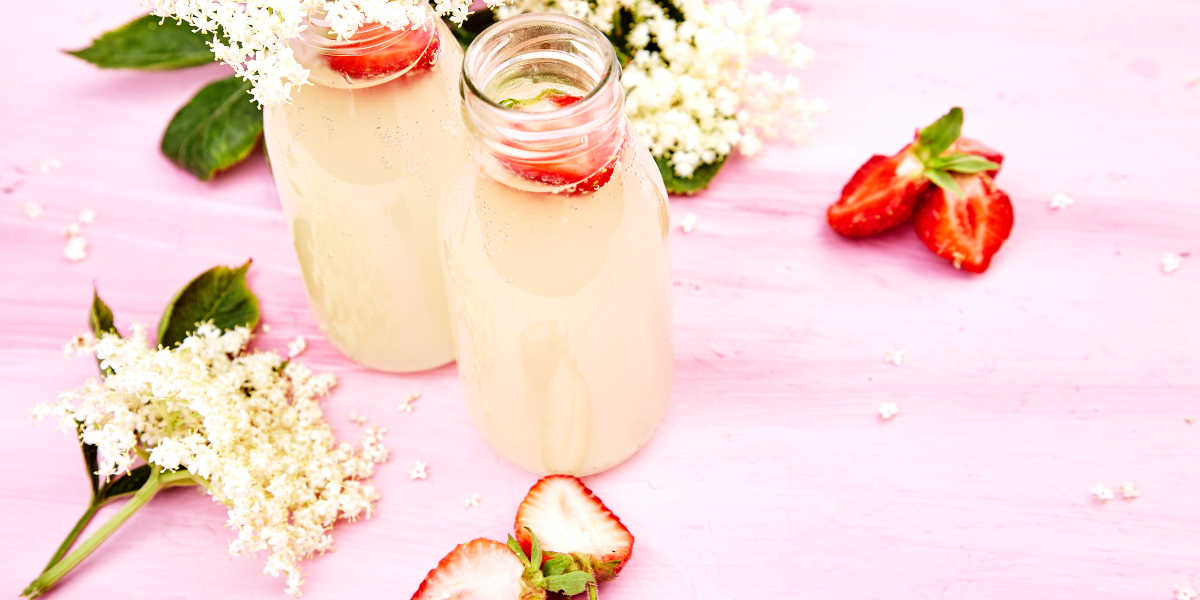
Kombucha with strawberries
Prepare a purée with four or five strawberries that you will add to the kombucha for a whole night, achieving fermentation at room temperature.
With cinnamon
Leave a cinnamon stick to macerate in a container with kombucha overnight, after which you can remove the cinnamon and it will be ready to consume.
With pear and rosemary
Make a rosemary infusion and, once it is cold, mix it with the tea fungus and the juice you extract from a pear.
With pineapple and anise
Very interesting for taking advantage of the purifying effects of Chinese tea. Mix natural pineapple juice with kombucha and an anise infusion. Alternatively, crush an anise seed while preparing the pineapple juice.
Where can you buy Kombucha?
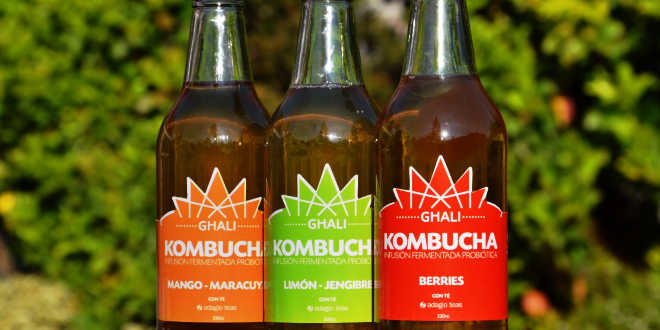
Bear in mind that it is essential that the kombucha you purchase has sufficient health guarantees and quality in terms of results. To do this, make sure the manufacturer shows that the preparation process it has undergone complies with the necessary health and quality controls.
It can be sold as an unpasteurised drink, which guarantees the almost total absence of microorganisms and its usefulness as a probiotic.
Also check that it reflects and adjusts the amount of sugar it contains. After all, the purpose of consuming this drink is not to obtain rapidly absorbed energy.
With bubbles, with few calories and with a little alcohol, but above all with therapeutic qualities. This is kombucha, and this is how we have presented it to you.
Bibliographic Sources:
- Houda Battikh, Kamel Chaieb, Amina Bakhrouf, Emna Ammar. Antibacterial and antifungal activities of black and green kombucha teas. 07 June 2012.
- Rasu Jayabalan, Radomir V. Malbaša, Eva S. Lončar, Jasmina S. Vitas, Muthuswamy Sathishkumar. A Review on Kombucha Tea—Microbiology, Composition, Fermentation, Beneficial Effects, Toxicity, and Tea Fungus. 21 June 2014.
- Ann M. Bode and Zigang Dong. Signal Transduction Pathways: Targets for Green and Black Tea Polyphenols. The Hormel Institute, University of Minnesota, Austin, MN 55912, USA. Received 28 October 2002.
- R.JayabalanaS, MarimuthubK. Changes in content of organic acids and tea polyphenols during kombucha tea fermentation. Food Chemistry. Volume 102, Issue 1, 2007, Pages 392-398.
- Semantee Bhattacharya, Ratan Gachhui, Parames C. Hepatoprotective properties of kombucha tea against TBHP-induced oxidative stress via suppression of mitochondria dependent apoptosis. June 2011Volume 18, Issue 3, Pages 221–234.