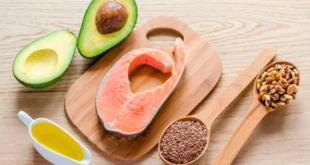
 Fitness, Nutrition, Health and Sports Blog In the HSNstore Blog you will find tips about Fitness, sport in general, nutrition, and health – HSNstore.com

Today we are going to talk about other factors that are being considered as potential factors of life expectancy in humans
In our last post, we analysed the role that could have in terms of increasing the longevity of our species and prevent disease.
Glycemic load: the fatter, the worse for your health
The are directly related to the incidence of cardiovascular disease and therefore link directly to life expectancy
The role that “the culprit” has taken both in cardiovascular disease and in the field of body composition of .
Of course, within the group of carbohydrates, the most worrying are those that provide a high glycemic load, as concluded by a meta-analysis such as this one with 220,050 patients and 4,826 incident cases of cardiovascular disease (1) .

Still think all foods are the same?
Two factors have to be analysed in terms of glycaemic load and mortality
The first of these is that women are worse off, probably because the decrease in HDL and the increase in triglycerides when ingesting simple carbohydrates is greater in women than in men (2).
And the second factor, even after adjusting for all potential confounders, simple carbohydrate intake is more deleterious in people who are overweight and than in healthy people, constituting the BMI as a modifying factor of this “deleterious effect” of simple carbohydrates.
Processed foods: Always bad for you
This cohort study of half a million people between the ages of 50 and 71 makes it abundantly clear: men and women with the highest red and processed meat consumption have increased overall risk of cardiovascular and cancer mortality (4)
Something confirmed by recent studies on the consumption of ultra-processed foods in Spanish cohorts (5)
One of the key elements in centenarian populations is precisely this: they eat local seasonal products.

Avoid processed foods you see on social media!
Precisely, the , takes advantage of this Machiavellian situation to sell us processed rubbish, although if we seek to increase our life expectancy, a good step would be: say NO to these products!
Low inflammatory index
Systemic inflammation is one of the most important risk factors in cardiovascular disease and therefore is expected to compromise life expectancy
A high consumption of vegetables, fruits, whole grains, nuts, healthy oils, oily fish and bioactive compounds such as polyphenols, are associated with an anti-inflammatory environment (6).
There is a score for the inflammatory capacity of a diet called the Dietary Inflammatory Index (DII) that is based on 45 parameters, such as the total content of energy, micronutrients or bioactive compounds (7).
In a meta-analysis of 9 prospective studies with more than 135,000 patients, the highest IID was associated with a higher risk of mortality from any cause (7,8).
High carbohydrate intake and lower risk of disease
The following fact makes us reflect:
The Tsimane, a Bolivian community with a high inflammatory burden of infectious origin and ultrasensitive CRP levels >3 mg/dL in more than half of the population, have the lowest levels of heart disease recorded to date.
Its macros are: 14% protein, 14% fat and 72% carbohydrates (from vegetables)(9).
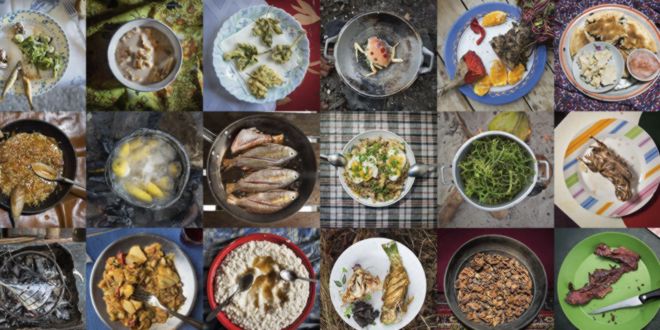
To think…
What centenarians tell us
There are regions of the globe that seem touched by the hand of God: places where the percentage of centenarians is extremely high compared to other regions
What’s different about them? Can its conditions be isolated, put into a pill and sold for gold? Why is their life expectancy so high even though it seems contradictory due to the circumstances…?
That’s what we in the West continually ask ourselves.
We are talking about places like: Okinawa (Japan), Loma Linda (California), Calabria and Sardinia (Italy), the Nicoya Peninsula (Costa Rica) and Ikaria (Greece).
We see that geographically they have nothing to do with each other, but they do have a lifestyle pattern that can be summarised as follows (10):
- Their diet is vegetable based and includes infrequent portions of fish, meat and nuts
- Low content of animal products and saturated and trans fatty acids
- Rich in complex carbohydrates derived from vegetable sources (whole grains, legumes, roots, some tubers)
- Low consumption of sugar
- Consumption of 2-3 meals and a frugal intake before nightfall
- Therefore they eat during daylight hours
- Consumption of seasonal and local products (not processed)
- High physical activity (not so much physical exercise)
- Close socio-family ties
- Very limited use of technology
- Deeply entrenched sense of spirituality and connection
- Proper rest and low levels of chronic stress
Conclusions on Life Expectancy and Influencing Factors
Can we transfer a lifestyle like that of the blue zones to Spain, Wisconsin or Tokyo?
Hardly.
The very fact that it is a lifestyle and not isolated factors means that the nascent epiphenomenon: “longevity” is not a candidate for becoming a pill that a pharmaceutical industry can sell at a reasonable price. of gold.

What we should do, however, is learn from them, look with fascination at optimized human biology
See how healthy lifestyles, over the years, have left a genetic imprint and generated a healthy inertia in these populations.
Are we designed to live more than 100 years?
The answer is yes.
Bibliographical sources
- Dong JY, Zhang YH, Wang P, Qin LQ. Meta-analysis of dietary glycemic load and glycemic index in relation to risk of coronary heart disease. Am J Cardiol. 2012;
- Knopp RH, Paramsothy P, Retzlaff BM, Fish B, Walden C, Dowdy A, et al. Gender differences in lipoprotein metabolism and dietary response: basis in hormonal differences and implications for cardiovascular disease. Curr Atheroscler Rep [Internet]. 2005 Nov [cited 2019 Jul 11];7(6):472–9.
- Bhupathiraju SN, Tobias DK, Malik VS, Pan A, Hruby A, Manson JE, et al. Glycemic index, glycemic load, and risk of type 2 diabetes: Results from 3 large US cohorts and an updated meta-analysis. Am J Clin Nutr. 2014;
- Sinha R, Cross AJ, Graubard BI, Leitzmann MF, Schatzkin A. Meat intake and mortality: A prospective study of over half a million people. Arch Intern Med. 2009;
- De Deus Mendonça R, Pimenta AM, Gea A, De La Fuente-Arrillaga C, Martinez-Gonzalez MA, Lopes ACS, et al. Ultraprocessed food consumption and risk of overweight and obesity: The University of Navarra Follow-Up (SUN) cohort study. Am J Clin Nutr. 2016;
- Medina-Remón A, Casas R, Tressserra-Rimbau A, Ros E, Martínez-González MA, Fitó M, et al. Polyphenol intake from a Mediterranean diet decreases inflammatory biomarkers related to atherosclerosis: a substudy of the PREDIMED trial. British Journal of Clinical Pharmacology. 2017.
- Shivappa N, Steck SE, Hurley TG, Hussey JR, Hébert JR. Designing and developing a literature-derived, population-based dietary inflammatory index. Public Health Nutr. 2014;
- Palmer SC, Maggo JK, Campbell KL, Craig JC, Johnson DW, Sutanto B, et al. Dietary interventions for adults with chronic kidney disease. Cochrane Database Syst Rev [Internet]. 2017 Apr 23 [cited 2017 Oct 4];4:CD011998.
- Kaplan H, Thompson RC, Trumble BC, Wann LS, Allam AH, Beheim B, et al. Coronary atherosclerosis in indigenous South American Tsimane: a cross-sectional cohort study. Lancet. 2017;
- Buettner D, Skemp S. Blue Zones: Lessons From the World’s Longest Lived. American Journal of Lifestyle Medicine. 2016.
Related Posts
- Sedentary Habits: For your health, change them as soon as possible!
- 10 Steps to Start Healthy Living