Fitness, Nutrition, Health and Sports Blog In the HSNstore Blog you will find tips about Fitness, sport in general, nutrition, and health – HSNstore.com

Have you ever wondered how your body works to eliminate fat (beta-oxidation)?
In my last article I talked to you about the role of adrenoreceptors in lipolysis.
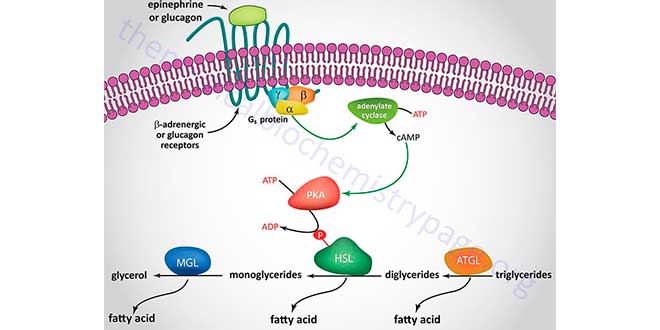
I explained the process by which triacylglycerides stored in the adipocyte are hydrolysed into one glycerol molecule and three fatty acid molecules, which have the ability to diffuse into the bloodstream for use as energy.
¿How to burn fat while maintaining muscle mass?
Lipolysis and Release of Fatty Acids into the Blood
Fatty acids from the hydrolysis of triacylglycerides are released into the bloodstream, making them “potentially available” for use as an energy source and thus “burning fat”.
Fatty Acid Entry into the Cell
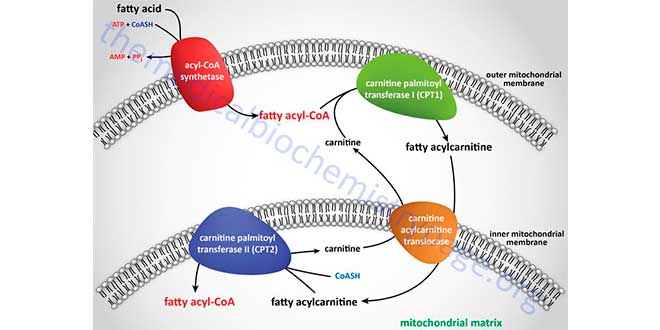
When the fatty acids enter the cell they cannot access the mitochondria, so they undergo an activation process by which they are transformed into fatty Acil-CoA that already has the capacity to cross the mitochondrial membrane thanks to a “shuttle” mechanism and the “Carnitine” conveyor.
Therefore the consumption of L-Carnitine in people with poor concentrations in this carrier can increase the entrance of fatty acids in the mitochondria where they will be oxidised.
The Beta-Oxidation Process
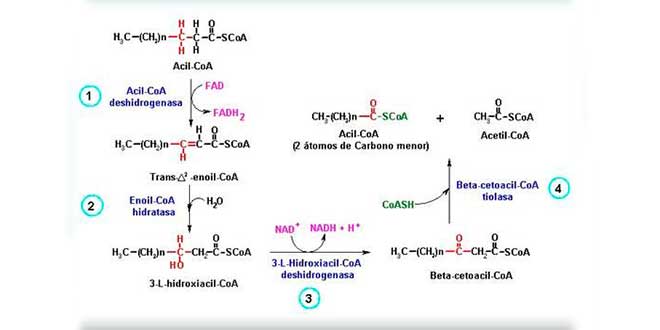
Once there, these fatty acids will undergo a process known as beta-oxidation.
This process is a catabolic mechanism in which several enzymes act on the products resulting from the activity of a previous enzyme and so consecutively, resulting in a total of 4 processes (Dehydrogenation by FAD;Hydration&Dehydrogenation by NAD+Thyrolysis) and generating at the end of them:
- One molecule of NADH+H and one molecule of FADH2; which will be transported to the electron transport chain where they will produce ATP (let us remember that ATP is the energy currency of the organism)
- An Acetyl-CoA molecule, which will enter the Krebs cycle to produce ATP.
- Acyl-CoA molecule (like the one that entered the mitochondria at the beginning), with two minor carbon atoms, which will re-enter the beta-oxidation until this molecule is totally reduced to Acetyl-CoA. The number of rotations until it is completely reduced will depend on the type of fatty acid that is oxidized and the length of its carbon chain.
The Krebs Cycle and the Electron Transport Chain
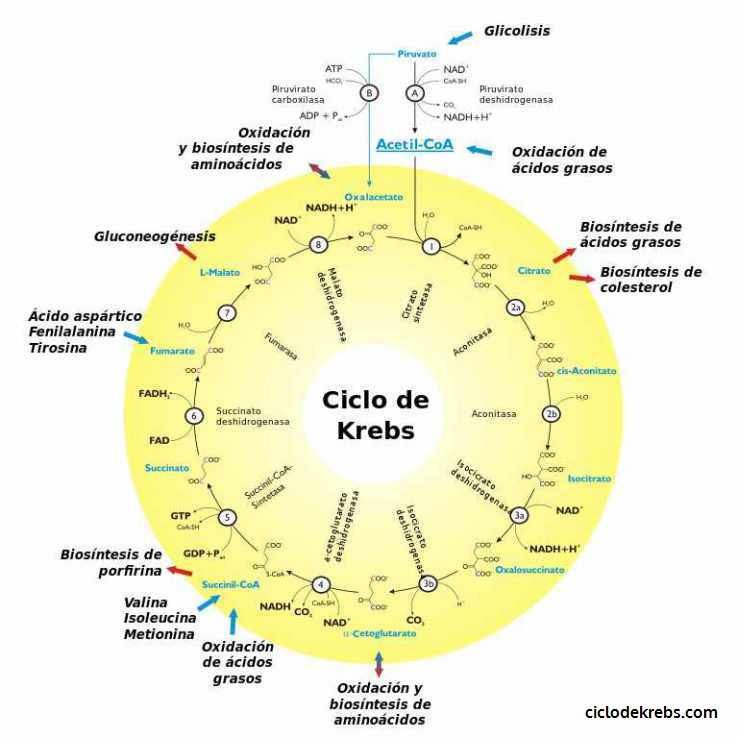
Acetyl-CoA molecules are subjected to a new catabolic process known as the “Krebs cycle“.
In it, the Acetyl-CoA molecule, in this case from the beta-oxidation of fatty acids, is subjected to an enzymatic process, similar to the previous one, this time, a total of 10 enzymatic reactions that will produce a resulting reaction in:
2Co2, CoA, 3 NADH+3H++GTP+FADH2 (for each molecule of Acetyl-CoA)
NADH+H+ and FADH2 molecules will be transported again, like those resulting from beta-oxidation where they will be oxidized to obtain ATP.
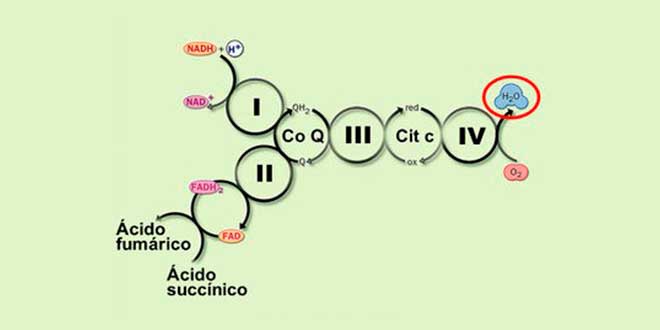
As a result, for every molecule of Acetyl-CoA that enters the Krebs cycle, 18 molecules of ATP are obtained taking into account the ATP obtained in the electron transport chain, plus 4 molecules of ATP from the molecules transported to the electron transport chain from beta-oxidation.
A total of 22 ATPs, minus the consumption of ATP produced for the activation of fatty acids that allow them to enter the mitochondria.
The take home message
Physical exercise stimulates the use of energy of these fatty acids released from the adipocyte into the bloodstream, as they require ATP to function. Once this is understood, we will understand the complete process by which the body “burns fat” by the normal and primary route.
Related Entries
- How can we burn more fat during exercise?
- HSN protocol to maximise fat loss and maintain performance
- Top 10 supplements that help promote weight loss