Fitness, Nutrition, Health and Sports Blog In the HSNstore Blog you will find tips about Fitness, sport in general, nutrition, and health – HSNstore.com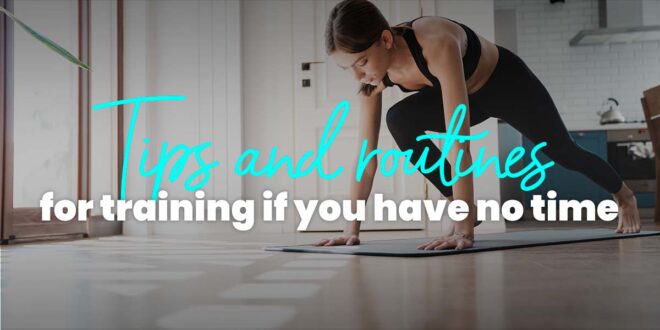

Training When You’re Short on Time?
Exercise is important for keeping in shape, body composition and your good all-round health.
Tips for training if you’re short on time
When time is limited, you need to find forms of exercise that provide unexpected results without having to spend long hours in the gym.
How do you exercise if you work all day?
You’ll need 20-30 minutes of high-intensity exercise, a training programme, the tips we’re about to give you, and the opinion and planning help of a professional.
Home workouts
We can turn our homes into the perfect gym.
One of the biggest advantages of this is that we can work out exactly when it suits us, and we can make use of the time normally spent in getting to the gym on other activities.
Our training density is the amount and volume of work during a set period of time. We should vary both the amount of time we’re active and the rest times, including exercise sequences without rest, adding active rest periods…

How do I work out if I’m short on time? Try skipping.
For a home workout, all we need is a mat and some dumbbells to create a resistance routine.
Warming up before working out
This is hugely important: it’s always essential that you warm up before working up, but particularly when it’s going to be high-intensity training.
Spend about 10 minutes warming up with some of the following activites:
- 5 minutes jogging
- Climbing up and down the stairs
- Skipping
Training on your lunch hour
Commitment is good for your well-being, and nobody can do it for you.
If you can’t work out in the morning, or it’s difficult to go after work, you can take a 30 minute walk at lunchtime, or even carry out some other form of exercise.
Getting daily exercise – burning calories and keeping in shape – is always time well spent

What to do if you don’t have time to go to the gym
Split your workouts
You can split your workout into two sections: for example 30 minutes in the morning and 30 minutes in the afternoon.
This way, you can optimise your time and maximise your results.
Short training intervals are recommended, but they need to be intensive to have as much as an effect as longer training sessions at lower intensities.
Training routines for when you’re short on time
If you’ve just about managed to carve out a space in your busy schedule for exercise, we recommend the following training routines for when you’re short on time.
10 minute routine
This is enough time to work specific parts of the body, such as: the legs, abs or glutes. It’s a HIIT routine, meaning high-intensity work at short intervals.
HIIT Training, or High Intensity Interval Training, is as training method that allows us to increase performance and maintain or improve body composition.
Do two rounds of 40 seconds with 20 seconds of rest:
- Front lunges.
- Mountains climbers.
- Jumping squats.
- Plank to down dog.
- 1 minute of burpees.
20 minute routine
This is an oxidative routine.
It involves a gas oxidisation routine because we’re working for 20 minutes non-stop.
It’s best not to go at your full 100%, as you would with HIIT, but instead keep up 80% of our cardiovascular capacity. In other words, a medium-high capacity is ideal.
20 minutes of AMRAP (as many reps as posible)
- 20 box jumps.
- 15 sit ups.
- 10 push-ups.
- 100 metre sprint.
30 minute routine
The 30-minute routine begins with exercises to raise your heart rate and get your body in tune.

These are the best exercises for burning calories and fat.
The routine is structured to get your entire body moving.
- 20 reps/set of Jumping Jacks.
- 10 reps/set of Jump Squats.
- 20 reps/set of Lunges.
- 10 reps/set of Press-Ups.
- 20 reps/set of Sit-Ups.
60 minute routine
The benefits of workout out for 60 minutes a day are incredible: improving metabolic efficiency, weight loss, muscle strenght, cardiovascular health, and more.

This is, of course, a best-case scenario, but not everyone is able to do so.
To ensure your routine is balances, you should include 3 kinds of training: cardio, strength and flexibility.
Structure your plan as follows:
- 10-20 minutes of cardio. You can run while switching up the pace. For example, with 4 minutes jogging and 1 minute sprinting, or progressively increasing the speed. Start with a warm-up and reserve some time for a warm-down too.
- 20-30 minutes of strength training. You can spend this time lifting weights. If you don’t have weights, you can use bands or do burpees, squats and press-ups.
- 10-20 minutes of flexibility or coree work Working your abs with sit-ups or yoga movements and stretches are great for recovery, amongst other aspects.
Other recommended exercises
- Short on time to exercise? Skip for 10 minutes and you’ll build up a pool of sweat around you…
- Want to strengthen your “core”? Do 5 sets of 10 reps with an Ab Wheel.
- Did somebody mention “Tabata”? Try these stretches that take only 4 minutes to do.
- Walking to work? If you’re able to, we always recommend getting around on foot. As we mentioned above, if you can walk half an hour to work every day it can be an easy way to burn an extra 950 calories.
- Got a lift? We recommend giving it a miss. If you can, take the stairs, they’re an effective way of working your legs and glutes. It’s a very effective form of cardio. To make it count, try and go up 500 steps a day, which is around 20 floors.
Related Entries
- Do you know about “Animal Flow” exercises? An exercise routine using just your body: go to the Post.
- Training at home with dumbbells: Week 1.