 Fitness, Nutrition, Health and Sports Blog In the HSNstore Blog you will find tips about Fitness, sport in general, nutrition, and health – HSNstore.com
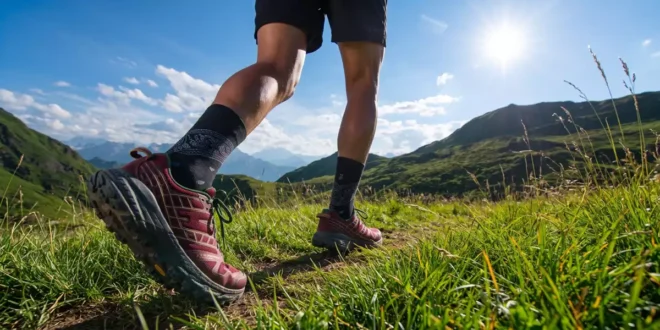

Connect directly with nature, put your biomechanical abilities to the test and unleash your wild side. Discover everything you need to know to get started in trail running with confidence.
“In the mountains, you learn that you are very small: a falling rock or a sudden storm can wipe you off the map. That makes me put everything into perspective and understand what really matters.” — Kilian Jornet.
What is trail running?
Trail running is a discipline where you and the mountains are on exactly the same team. Put simply, trail running consists of running off-road, surrounded by nature.
Unlike road running —where asphalt and even terrain predominate—, mountain runners face technical trails, steep elevation changes, muddy sections, loose rocks (scree) and roots.
According to the definition of the ITRA (International Trail Running Association), trail running includes any foot race held in a natural environment (mountains, forests, deserts or plains) on unpaved surfaces, where asphalt must under no circumstances account for more than 20% of the total route.
Trail running has gone from being a niche discipline to becoming a rapidly growing global phenomenon.
Trail running distances vary widely: they range from explosive orienteering events or routes of less than 5 km (such as Vertical Kilometres) to ultra-distance events (UTMB) that comfortably exceed 100 or 160 km, with staggering cumulative elevation gains.
Trail running and connecting with nature
Running outdoors doesn’t just train your legs; it recalibrates your central nervous system.
If you regularly practise conventional running, you’ll know that heading outdoors for a run produces an unparalleled feeling of freedom. This response is not purely subjective: scientific evidence supports the benefits of physical activity performed in green environments (a phenomenon known as Green Exercise), showing positive effects on serum cortisol reduction, heart rate variability (HRV) and overall mood.
Trail running enhances emotional adaptations and strongly stimulates proprioceptive focus thanks to the biomechanical richness of the environment.
If you want to learn more about how your surroundings influence your adaptations, don’t miss our post on the benefits associated with training outdoors.
Tips for getting started with trail running
Your road-running pace doesn’t apply in the mountains. And that’s perfectly fine: the key here is effort management and proprioception.
It is very common for runners with impressive 10K or Half Marathon road times to experience considerable frustration during their first trail runs. The reason is simple: the energy demands and mechanical patterns are completely different.
The irregularity of the terrain directly affects running technique and stride type. While road running prioritises linear running economy and the elastic rebound of the Achilles tendon, in the mountains the following become particularly important:
- Eccentric quadriceps strength (essential for absorbing impacts on descents).
- Stability of the ankle-knee complex (proprioceptive work).
- Variability in stride frequency and length to avoid obstacles.
Trail running equipment
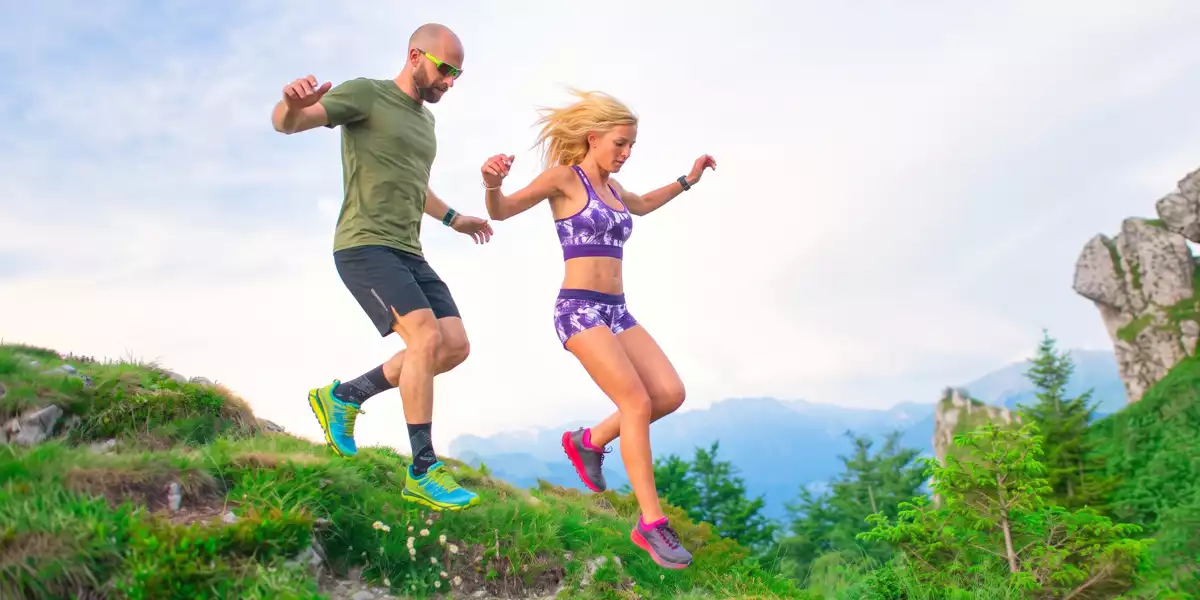
Unlike road running, the mountains require you to be self-sufficient. Equipment is not just a matter of comfort, but of biomechanical safety and basic survival.
Technical clothing
Prioritise garments made from highly breathable synthetic fabrics (such as high-density polyester or polyamide) that efficiently wick away sweat and help prevent chafing.
- Visibility: Choose bright colours (fluorescent shades, reds, oranges). If you get lost or have an accident, rescue teams will be able to locate you much more quickly.
- Durability: Remember that mud, low vegetation and potential falls are all part of the experience; wear abrasion-resistant technical clothing.
Trail-specific running shoes
Making the mistake of heading into the mountains in conventional road-running shoes drastically increases the risk of ankle sprains or falls due to insufficient traction. Investing in mountain-specific footwear should be a priority.
Hydration and nutrition strategy
Sweat rate and muscle glycogen consumption increase considerably during trail running due to the constant eccentric and concentric muscular demands of climbing.
Running with a rigid bottle in your hand alters the biomechanics of your arm swing and is inefficient. The most recommended solutions include:
- Hydration packs or vests: Designed to provide an anatomical fit without bouncing.
- Soft flasks: They reduce in volume as you drink and prevent the constant sloshing of liquid.
- Electrolytes: Don’t drink only water; sodium replacement is essential to help prevent hyponatraemia during long-duration outings. You can find more recommendations in our article on how to maintain optimal hydration during a race.
A good trail running vest allows you to carry hydration, electrolytes, energy gels and mandatory equipment without compromising your mobility.
Lighting and safety equipment
Mountain conditions are changeable, and visibility can quickly deteriorate due to fog or nightfall.
- Headlamp: Essential for evening outings. Choose models with a minimum output of 200-300 lumens for short outings and good battery life.
- Emergency blanket and whistle: Extremely lightweight items that should always be carried in your trail running pack to call for help or prevent hypothermia if an injury leaves you unable to move.
Post-workout change of clothes
As most training sessions involve travelling by car to the start of the trail or track, keep a complete set of dry clothes ready in the boot (T-shirt, clean socks and comfortable footwear).
This will help you avoid peripheral vasoconstriction caused by cooling down and help support your immune system after exercise.
Tips for your first trail running races
Experience is the only way to progress. Adapt your mindset to the environment and enjoy the learning process. If you’re ready to take the leap and tackle your first kilometres in the mountains, follow these tactical recommendations to ensure a smooth, injury-free transition:
Running technique on slopes and continuous decision-making are skills that improve with practice.
Start with less technical routes
There are two main categories of trails: non-technical (wide forest tracks, greenways and compact dirt paths) and technical (ridges, narrow trails with plenty of loose rocks and steep gradients).
- Start on wide, non-technical tracks. This will allow your muscular and joint structures to adapt to elevation changes without placing excessive stress on your neuromuscular system.
Forget about pace per kilometre
In trail running, min/km is not meaningfully comparable with road running. On average, your pace per kilometre may be 20-40% slower depending on positive elevation gain (D+) and terrain difficulty. Use RPE (Rate of Perceived Exertion) or your heart rate zones as a guide rather than the stopwatch.
- The main objective on your first outings is efficient energy management and completing the route safely.
Walking is a strategy, not a defeat
In professional trail running, walking on steep climbs is part of the energy-management strategy. Power hiking while placing your hands on your quadriceps (or using trail running poles) optimises glycogen expenditure and preserves your muscles for flat or downhill sections.
- If the gradient exceeds 10-15%, walking at a brisk pace is more energy-efficient than trying to maintain a forced running pace.
Constantly scan the terrain
To avoid trips or twisted ankles, train your visual focus. Don’t stare directly at your feet or look too far ahead towards the summit. Keep your gaze focused between 3 and 5 metres in front of you to anticipate your foot placement.
- Apply the “terrain-reading” technique: your brain will process obstacles before you reach them, allowing you to adjust your cadence and lift your knee sufficiently to clear roots or rocks without compromising your balance.
Prioritise safety over performance
Caution is your best ally in the mountains. Before heading out to train:
- Let a family member or friend know your planned route.
- Load the GPS track onto your watch or mobile device beforehand.
- Carry emergency food supplies (gels, bars or nuts) and a small first-aid kit.
- Check the mountain-specific weather forecast (temperatures and conditions can change dramatically at altitude).
Related Posts
- All About Obstacle Races
- Nutrition for Endurance Competition Day
- Carbohydrate Intake in Ultra-Endurance Races
- Improve Your Power with Hill Repeats.
- Do you know the differences between Hiking and Trekking? Click here.