Fitness, Nutrition, Health and Sports Blog In the HSNstore Blog you will find tips about Fitness, sport in general, nutrition, and health – HSNstore.com

Leg raises are one of the most commonly used exercises for working the abdominal muscles and improving core control. Although it may seem like a simple movement, proper pelvic positioning and a controlled lowering phase are key to performing it correctly and avoiding compensation in the lower back.
How do you perform leg raises?
To perform leg raises, lie on your back with your legs extended and keep your abs engaged. Raise your legs in a controlled manner until they are almost vertical, then slowly lower them without losing the position of your pelvis or excessively arching your lower back during the movement.
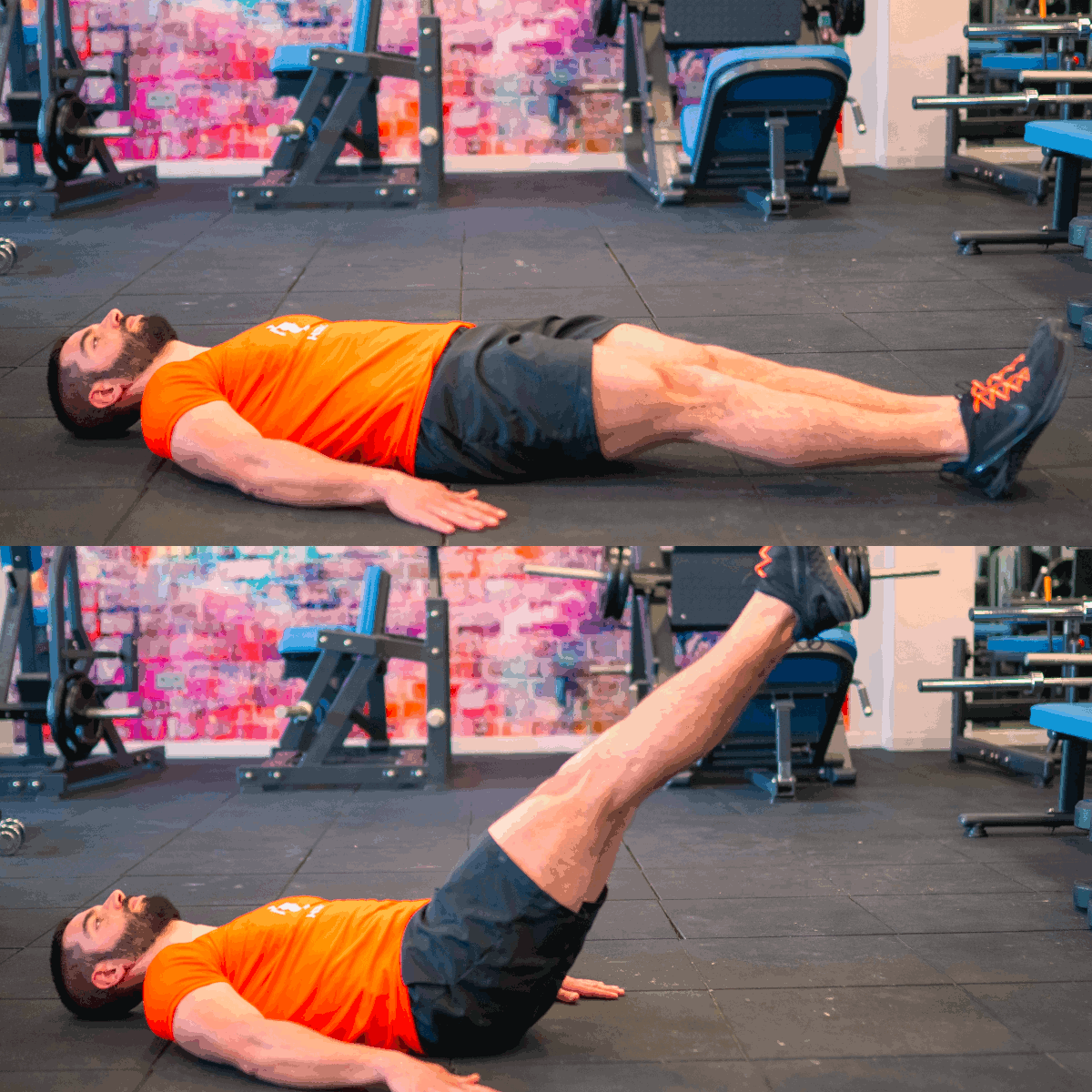
- Lie on your back with your legs extended and together.
- Place your arms alongside your body and adopt a stable position.
- Engage your abs and control the position of your pelvis before starting.
- Raise your legs while keeping them extended until they are almost vertical.
- Keep your torso stable and avoid using momentum as you raise your legs.
- Slowly lower your legs without excessively arching your lower back.
- Repeat the movement, maintaining control throughout the entire set.
How do you do hanging leg raises?
One variation of the leg raise exercise is to perform it while hanging, so that your body is suspended. This is the most intense option and requires greater strength and control of the abdominal area.
If performed with the legs extended, without bending the knees, you need to maintain good stability not only in the shoulders (remember that your body is suspended), but also throughout the core.

This is a very intense variation.
Another variation, which can be used before progressing to the more intense option above, is to bend and extend the knees:
In other words, from the starting position, bend your knees and then extend them, bringing your legs back towards the vertical position without swinging.
Leg raise workout routine
Based on the above and depending on your level, you could incorporate some of these variations into your training sessions:
Start with lying leg raise variations: 3 sets x 10 raises. Once you have developed sufficient abdominal strength and control, you can progress to knee raises from a hanging position.
- For example: 3 sets x 5 reps.
Once you have mastered the previous variations (which may take a few weeks of progression), you can move on to hanging leg raises:
- 3 sets x 10 reps (alternating between knee raises and leg raises).
Other tips
Before moving on to the more intense variations, start by learning to control the leg raise movement with the easier options and consult a trainer beforehand so they can assess which variation is best for you.
Related Posts
- Low Pressure Fitness Method
- How to Do the Stomach Vacuum
- How to Get Defined Abs
- Ab Exercises at Home
- Complete Pull-Up Guide