Fitness, Nutrition, Health and Sports Blog In the HSNstore Blog you will find tips about Fitness, sport in general, nutrition, and health – HSNstore.com

- Konjac is a popular dietary fibre in weight loss diets and is used as a substitute for foods such as pasta and rice, producing a satiating effect.
- Various studies have positively linked glucomannan to therapies for obesity and overweight, regulation of lipid metabolism, laxative, anti-inflammatory and prebiotic effects, among others.
- The satiating effect of glucomannan is due to its ability to increase the viscosity of gastrointestinal contents and delay gastric emptying, which prolongs the feeling of fullness and reduces food intake and calorie intake.
- Glucomannan can be taken in the form of food supplements in powder or vegan capsule form, recipes that use glucomannan flour to make food products.
Konjac is a dietary fibre that has become increasingly popular as a supplement because of its recommended application in weight loss diets, many use these products as a substitute for typical foods absent in these diets such as pasta and rice, producing a satiating effect.
Benefits of Glucomannan for weight loss
The addition of this product in sports supplementation shops has been related to body fat loss and weight control, with its use being focused on diets for this purpose.
- Satiating effect
Glucomannan is virtually caloric and highly soluble (1 gram can absorb up to 200 ml of water). For this reason, glucomannan provides a strong feeling of satiety. Moreover, due to its ability to increase the viscosity of gastrointestinal contents, it delays gastric emptying, thus prolonging the fullness effect.

When taken with plenty of water, it increases the volume of the stomach, thus triggering hormonal signals to the appetite centre in the brain.
In this way, food intake and calorie intake are reduced, inducing the mobilisation of fat tissue for energy.
- Laxative effect
Another important effect of konjac is its laxative effect, which is useful in the treatment of constipation. An intake of 18-27 g of this fibre has been shown to be useful for this purpose. It acts directly on the intestinal flora or microbiota.

It works directly on the intestinal flora or microbiota, increasing the faecal mass by absorbing water.
- Intestinal diseases
An important application of this fibre would be in the treatment of inflammatory bowel disease (IBD), which consists of a series of multifactorial disorders that occur in the digestive system.
The development of this disease is closely related to diet and lifestyle.
However, there are also other endogenous factors such as the gut microbiota itself.
- Thyroid treatment
Another fascinating study has linked glucomannan to the treatment of thyroid disorders. The study linked it to the reduction of thyroxine in patients with hyperthyroidism. Patients receiving KGM versus placebo were found to have significant reductions in T3, T4, FT3 and FT4.
- Prebiotic
In the sports field, the prebiotic effect of these compounds is very important, improving the immune system, which is often depressed in athletes who train intensively.
How to include glucomannan in my diet
There are several ways to take glucomannan, products containing KGM are very useful as appetite suppressants as they produce great satiety due to water retention.
They form a viscous solution that prevents the absorption of other nutrients.
You can find:
- Glucomannan supplements: food supplements in powder or vegan capsule form, made from the extract of the Amorphophallus konjac bulb, standardised to 95% glucomannan.
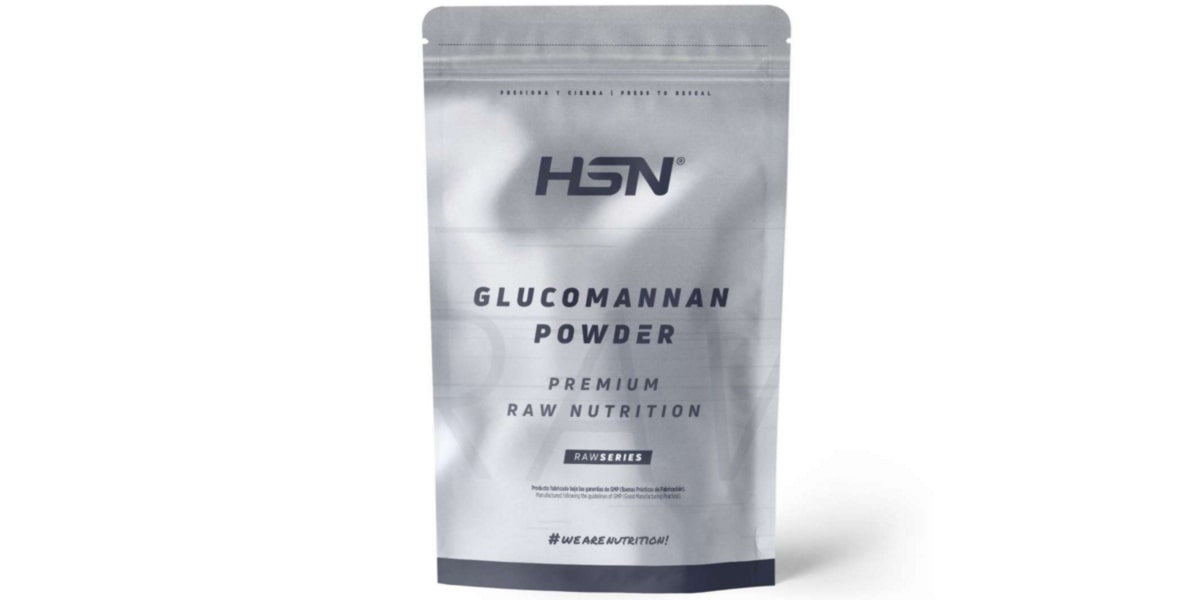
Glucomannan powder by RawSeries.
- Cooking recipes: Glucomannan flour is used to make the dietary products we are referring to, such as Japanese shirataki noodles, wok noodles, pasta substitutes, and rice.

Contraindications of taking Glucomannan
Glucomannan is generally safe to consume responsibly, however, there may be some adverse effects:
- Flatulence or abdominal discomfort
According to some authors and researchers, consumption of this fibre poses a risk of oesophageal obstruction, as it absorbs a lot of water, expanding widely and rapidly. However, in normal amounts, this is not common and can be resolved by eliminating its administration and gradually introducing it into the diet.
- Nutrient absorption
This is reduced as it constitutes a barrier that protects them from the action of enzymes and makes it difficult for them to reach the intestinal mucosa. For this reason, it is not suitable for times close to training, because we must remember that, although our objective is to lose weight, it is important that meals close to training (both before and after) are rapidly absorbed.
- Other medicines
It may interact with some drugs due to its ability to delay intestinal absorption, so it is not suitable for people with gastrointestinal problems.
Related Entries