 Fitness, Nutrition, Health and Sports Blog In the HSNstore Blog you will find tips about Fitness, sport in general, nutrition, and health – HSNstore.com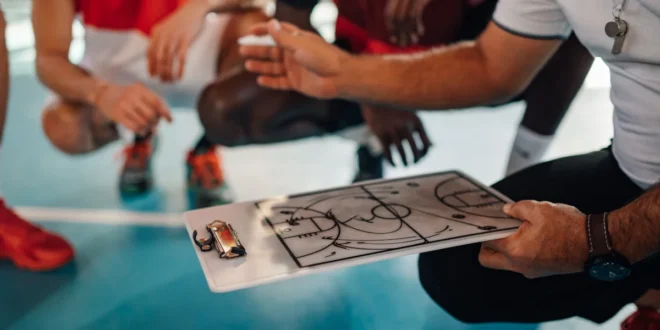

Sports planning should be based on establishing your season objectives
The gym may become our best tool for maximising our sporting performance
What’s the first thing that comes to mind when you think of the gym?
The vast majority of people reading this will have established a perfectly logical relationship and their choice will probably be related to the words health or aesthetics.
Perfect, there is nothing more important than health, and, let’s face it, we all like to look in the mirror and see ourselves in good shape.
The gym for improving sports performance
Evidently, the gym improves our physique and our health, yes, but, hey, it can also make us faster, more powerful, more resistant, stronger, in short, more functional in our sporting and daily activities.
If you learn about Sports Planning, I assure you’ll achieve more remarkable results
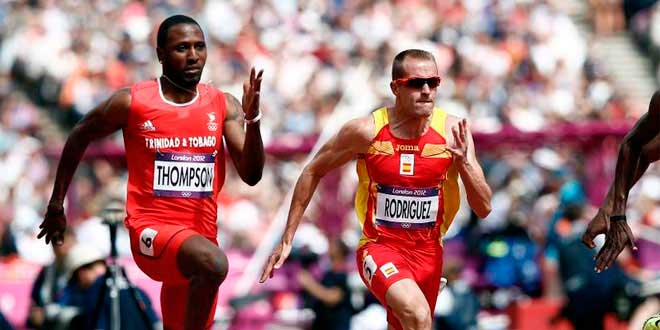
Training like an athlete
Some of you may be thinking: Well, I’m not a top sportsman, why are you telling me this?
I will confess something, unfortunately, neither am I, but like the rest of you I like to have fun when I play sports and nothing amuses me more than winning and feeling competitive.
So why not use the gym for something other than health or aesthetics?
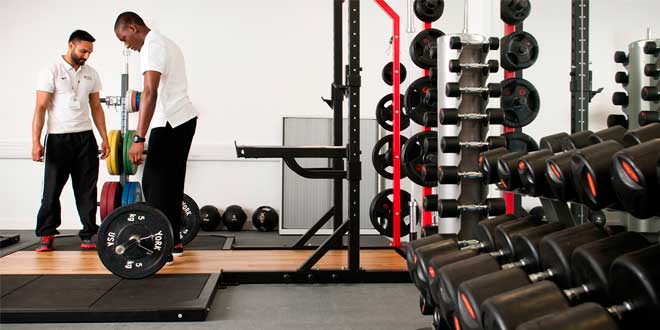
How to be better at our respective sporting activities, regardless of the level we practice them at
Annual planning
Annual planning is an indispensable element in optimising the performance of any sportsperson.
To do this, it’s necessary to have an organised training programme that develops the athlete’s work throughout the 12 months of the year, based on previously established performance, results and calendar objectives.
The need for the programme to be perfectly organised aims to maximise the physical and psychological capabilities required to bring our performance to its peak.
The periodisation divides the annual planning in cycles and sub-cycles
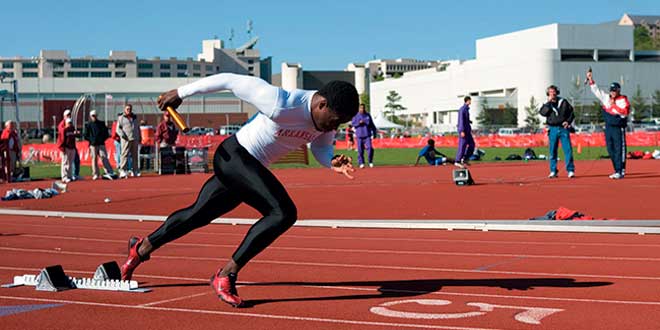
These make the organisation and distribution of training more manageable.
Traditional planning model
Although there are various planning models, we’ll focus on the traditional or classic model, based on the concept of regular loads in which progressive increases in the load will result in an increase in performance in the various qualities required in our sport, due to the increase in stimulus.
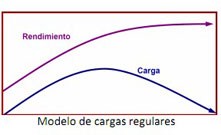
Disadvantages
I have to say, the tradition model does have some disadvantages. Above all in terms of the difficulty in working on a lot of skills at the same time.
For example, aerobic resistance work doesn’t help with strength gain
Still, this will be an advantage in our case, as the necessity in focussing on a few trainable aspects helps control the activity for beginners.
Periods
The traditional model is divided into three phases: preparation, competitive and transition.
- Preparatory phase. We will look for the development of basic physical capacities on which we will progressively base the specific capacities we’ll need in our sport.
- Competitive period objective. Development of our performance in competition through increased training specificity.
- Transition period. A focus on active rest to avoid Detraining.
Planning periods throughout the season
Having said that, what should we take into account when organising the periods within the season?
Well, it’s as easy and as complicated as marking the key moments of the season in our competitive calendar.

Training load
Finally, we must assess how the training load will vary throughout the season.
During the preparatory period
The preparatory period will be characterised by a generally high work volume that will progressively decrease following an increase in intensity, always going from more general to more specific work.
During the competitive period
In the competitive period, however, a low training load with a very low volume of work and very high intensity will predominate.
Considerations to be taken into account
The order of the cycles must be logical, aiming for the next cycle to benefit from the work done in the previous one.
In addition, let’s remember that our work evolves from more general to more specific
With this in mind, our first task will be to establish what type of strength is most decisive in our sport:
- Maximum strength
- Resistance strength
- Explosive strength, both the maxim and its reactive manifestations
In general, we’ll classify maximum force as a basic load, while resistance strength and explosive strength are much more specific loads, as it’s unusual for a competitive action to require maximum manifestations of strength.
Example of a preparation macro cycle
Let’s look at an example that would be valid for a large number of sports. To do so, we’ll use the work of Julio Tous (1999), who proposes the Bompa model of 1993 as a fundamental basis for the periodisation of strength, offering some phases that we’ll call mesocycles:
Anatomical adaptation phase
This is characterised by the varied work of all muscle groups.
We’ll work with high volumes and low intensities.
The aim of this phase is to adapt the muscular insertions in the bone, to work in balance between the agonist and antagonist muscles, and to work the stabilising muscles so that the increased load in the following phases of the training is supported without causing discomfort and minimising the risk of injury (Bompa, 2000).
Hypertrophy phase
Normally we’re not interested in gaining much muscle mass, as this can negatively affect our relative strength. However, there are specific situations, sports and positions that require weight increases.
We could talk for example about rugby, American football, handball or combat sports in which you want to move up a category.
Maximum strength phase
In this phase, we’re looking to work on neuromuscular coordination by increasing the recruitment of fibres made by our motor neurons, which are the neurons in charge of carrying the nerve signal to the muscles, as well as the neuronal discharge
That is, the speed with which the nerve impulse is transmitted
As we said in the previous phase, our goal is to be as strong as possible with as little weight as possible. Athletes do not necessarily have to have large muscles and increase their body weight to become stronger.
Transition or conversion phase
The aim will be to convert the strength gains acquired in the previous phase into the specific type of strength required in the sport in question (Tous, 1999). In this way, we’ll give priority to explosive or resistance strength work.
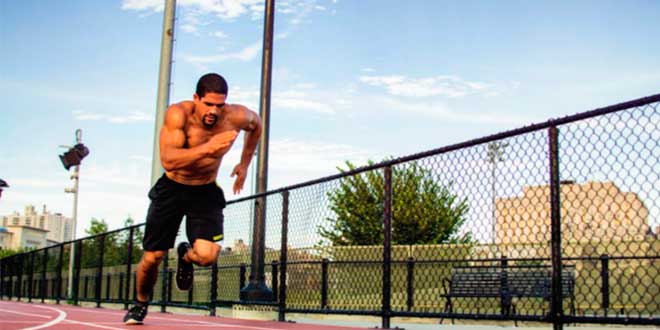
Competitive phase
The aim of this period is to develop competitive performance through increased specificity.
The success of this period will depend on our ability to extend the peak form until the end of the competitive period.
What kind of training will we do?
During this stage, we’ll focus on our tactical and technical training, leaving the physical training in the background slightly, in which only small reminders of all the trained skills will be made to keep the level reached in each of them as long as possible.
This way, instead of continuing to carry out prolonged periods of maximum strength, explosive strength or resistance strength, we’ll plan one or two weekly training sessions dedicated to each aspect, so that we can maintain a minimum stimulus that allows us to preserve the gains acquired in the preparatory period.
Maintenance phase
We would then talk about a maintenance phase, which fulfils two objectives in view of our specific preparation for competitions:
- Avoiding possible overtraining that could result from an extension of our preparation macrocycle.
- Stopping the lowering of the physiological performance base as much as possible, avoiding underperformance on competition days.
Some coaches consider it necessary to abandon strength training 5 to 7 days before the competition indicated as a priority, in order to maximise the process of overcompensation.

Transition period
After a long period of work, the rigour of training and competition diminishes the psycho-physical abilities of athletes. That’s why a period of active rest is necessary, although this shouldn’t exceed 4 weeks to avoid detraining.
Although we all know that muscle fatigue disappears after a few days, mental fatigue can drag on much longer in the sportsperson
Therefore, for this period the objective will be psychological rest, biological regeneration and the maintenance of an acceptable overall physical level (Bompa, 2000).
Sources
- BOMPA, Tudor O. (2000). Periodización del entrenamiento deportivo. Ed. Paidotribo.
- TOUS, Julio. (1999). Nuevas tendencias en fuerza y musculación. Ed. Julio Tous Fajardo. Barcelona.
- BOMPA, Tudor O.(2004). Entrenamiento de la potencia aplicado a los deportes. Ed. Inde.
- NAVARRO, Fernando. OCA, Antonio. RIVAS, Antonio. (2010). Planificación del entrenamiento y su control. Ed. Cultivalibros.
Related Entries