Fitness, Nutrition, Health and Sports Blog In the HSNstore Blog you will find tips about Fitness, sport in general, nutrition, and health – HSNstore.com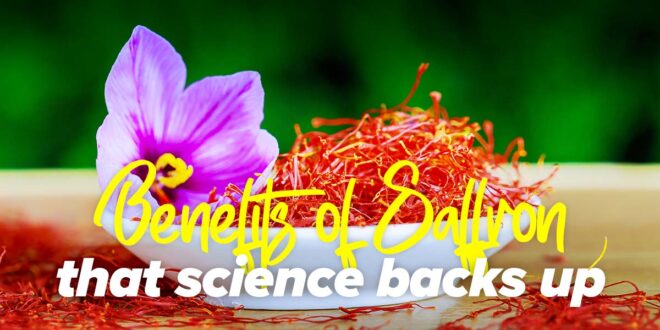

Beyond being a delicious and prized culinary spice, saffron has revealed itself as an extraordinary remedy to help boost mood, aid digestion, and relieve pain, among other benefits. Let’s highlight Saffron and Its Benefits
Its virtues are so remarkable that, recently, this spice has been studied for its medicinal properties, even compared to certain medications. Check them out!
And enjoy the wide range in the HSN online store.

1. Saffron as a powerful antioxidant
The incredible variety of plant compounds in Crocus sativus (the scientific name for saffron) acts as an antioxidant, meaning molecules that protect cells against free radicals and oxidative stress.
Among the most notable antioxidants in saffron, stand out crocins, crocetin, kaempferol, and safranal:
- Crocins and crocetin are carotenoid pigments responsible for saffron’s red color. With antidepressant properties, they protect brain cells from progressive damage, improve inflammation, reduce appetite, and help with weight loss.
- Safranal gives saffron its distinctive flavor and aroma. Research has shown it can improve mood, learning ability, and memory, protecting brain cells against oxidative stress.
- Kaempferol is a compound found in saffron flower petals linked to various health benefits, such as reducing inflammation, and is also attributed with anticancer properties and boosting antidepressant activity.
2. Boosts mood and eases depression symptoms
Did you know saffron is called “the spice of the Sun”? This name isn’t just about its characteristic color but also because it can help brighten the mood of those who consume it. So, if you feel like you need a pick-me-up, this spice can be your natural go-to.
A review of five studies shed light on how effective saffron was compared to placebo for treating mild to moderate depression symptoms.
Other studies showed that taking 30 mg of the so-called “red gold” daily matched the effectiveness of fluoxetine, imipramine, and citalopram—common antidepressants. And unlike these meds, it has no side effects.
Saffron petals and stigmas have proven effective for treating mild to moderate depression.
However, more complex studies on depression are needed before recommending it as a solid treatment option.
3. Eases premenstrual syndrome symptoms
Not only that, but it also soothes menstrual pain and helps regulate menstrual cycle irregularities, like amenorrhea or absence of menstruation. This effect is linked to increased blood flow to the uterus, which also brings a complementary contraceptive and abortive capacity that shouldn’t be overlooked.
4. Acts as an aphrodisiac
If your libido is low, saffron can be a great ally. Its aphrodisiac properties, especially in people taking antidepressants, have been confirmed by studies.
Also, a meta-analysis of six studies showed saffron’s ability to significantly improve erectile function, libido, and overall satisfaction, though not semen characteristics.
Finally, for women with low sexual desire for the same reasons (antidepressant use), the same 30 mg daily dose for four weeks brought benefits. It reduced pain during sex while increasing sexual desire and lubrication compared to placebo.

5. Crocus sativus helps with weight loss
Saffron for weight loss? That’s right. Take note that, according to recent research, taking saffron could be a great way to cut down on unhealthy snacking, as it curbs appetite.
An eight-week study showed women taking saffron supplements felt fuller, ate less often, and lost weight more significantly than those in the placebo group.
However, science still doesn’t fully understand how saffron suppresses appetite and aids weight loss. One theory is that by boosting mood, it reduces food cravings.
6. Lowers risk factors for heart disease
Several studies, some in animals and others in vitro, suggest that saffron’s antioxidant properties help reduce blood cholesterol, preventing blood vessel and artery blockages. This means a lower chance of heart disease and cardiovascular events.
7. Has positive effects on eyesight
Thanks to its antioxidant effect, saffron is believed to delay degeneration of the eye’s photoreceptor cells, improving retina function.
Specifically, it may improve vision in adults with age-related macular degeneration (AMD), protecting against free radical damage linked to AMD.
8. Saffron and diabetes
It’s been shown that people with type 2 diabetes can benefit from saffron in various ways, such as protecting nerves from damage caused by high blood sugar, preventing vision problems—a common issue in this disease.
9. Boosts memory
The antioxidant properties of carotenoids in saffron make it a food that enhances memory and learning ability. Research is underway to prove the hypothesis that it can inhibit the buildup of certain proteins linked to Alzheimer’s disease markers.
10. Properties to fight other diseases
Although this info should be taken with caution, saffron’s high antioxidant content may help neutralize harmful free radicals. Damage caused by these radicals has been linked to diseases like cancer.
In test-tube studies, saffron and its compounds selectively kill colon cancer cells or suppress their growth, while leaving healthy cells intact.
This effect also applies to skin, prostate, bone marrow, cervix, breasts, and other cancer cells.
While results are promising, saffron’s anticancer effects haven’t been thoroughly studied in humans yet, so research is still in early stages.
Some other benefits of the ‘Red Gold’
Besides the benefits described so far, we don’t want to wrap up this post without mentioning a few more, which include:
- Reduces muscle weakness and general fatigue, known as asthenia
- Acts as an anti-inflammatory and pain reliever in dental tissues
- Works as an antispasmodic to ease visceral colic pain
- Is a decent bronchodilator, making it useful in asthma treatment
- Strengthens hair by nourishing the hair fiber
- Helps regulate body fluids, making it suitable for people with high blood pressure
- Prevents degenerative joint diseases
- Fights iron-deficiency anemia thanks to its high iron content
- Boosts the immune system and combats hyperthyroidism
Without trying to cover every saffron benefit, we hope this post has given you useful info. This spice can do so much for your health that we want it to take the place of honor it deserves in your pantry.